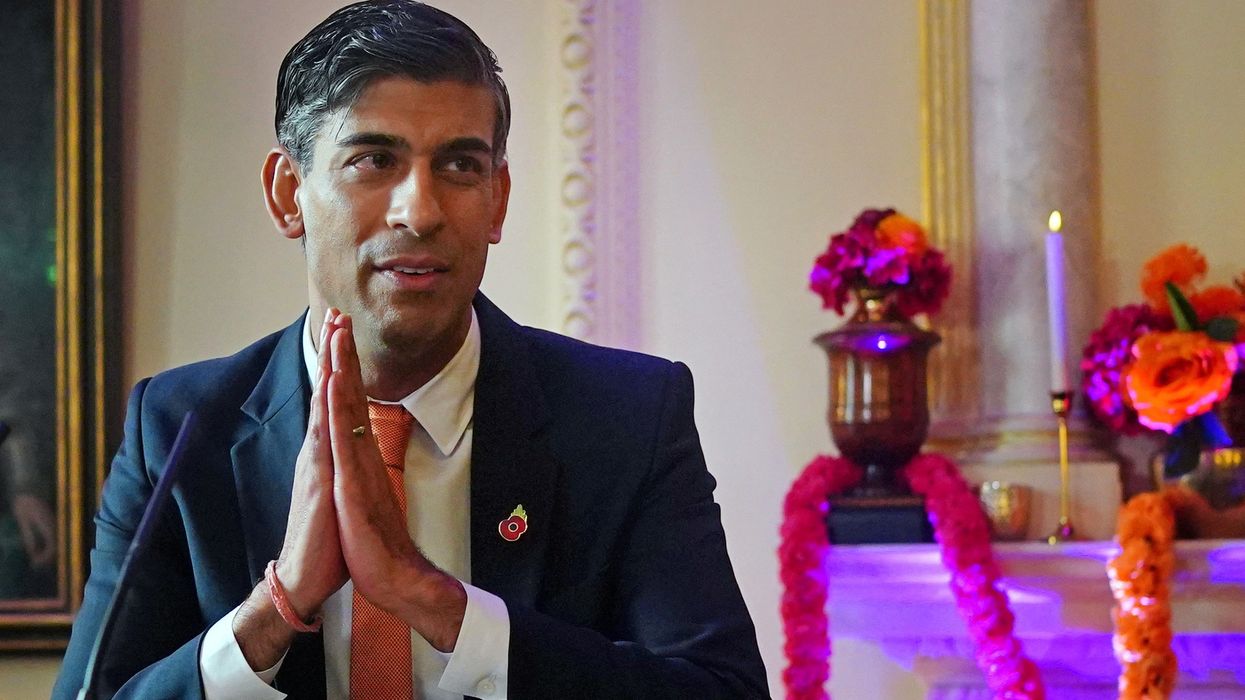

BRITISH inflation cooled more than expected in October as household energy prices dropped from a year ago and there was also a wider softening of price pressures, offering relief to the Bank of England and prime minister Rishi Sunak.
Annual consumer price inflation plunged to a lower-than-expected 4.6 per cent from 6.7 per cent in September, official data showed. The increase was the smallest in two years and prompted investors to increase their bets on BoE rate cuts next year.
"Now we are beginning to win the battle against inflation we can move to the next part of our economic plan, which is the long-term growth of the British economy," finance minister Jeremy Hunt said.
He is expected to offer investment incentives to businesses in a budget update on Nov. 22.
The BoE's forecasts and the consensus from a Reuters poll of economists had pointed to an October reading of 4.8 per cent.
The ONS said the fall in the annual CPI rate was the biggest from one month to the next since April 1992.
Sterling fell slightly against the dollar after publication of the data, which showed key inflation measures watched closely by the BoE also slowing by more than expected. The FTSE 100 rose more than 1 per cent to its highest level in nearly a month. The mid-cap FTSE 250 hit a two-month high.
Although inflation has more than halved from its October 2022 peak of 11.1 per cent, the BoE has warned that the "last mile" of getting it down will be tougher. The central bank forecasts that inflation will only return to its 2 per cent target in late 2025, though many economists say it will happen sooner.
With Britain's economy now stagnant, the inflation figures reinforced expectations that the BoE's hiking cycle has ended, with the US Federal Reserve and European Central Bank also seemingly having reached the peak for interest rates.
"The UK economy is still very much facing stagflation and, in our view, the road ahead will likely continue to be bumpy," Julien Lafargue, chief market strategist at Barclays Private Bank, said, predicting no BoE rate changes for a few months.
Core inflation, which strips out energy and food prices, fell to 5.7 per cent from 6.1 per cent, while service sector inflation also fell by more than the central bank had expected to 6.6 per cent from 6.9 per cent.
The data represented some rare welcome news for Sunak, who had promised to halve price growth this year before an expected 2024 election that opinion polls show his Conservative Party is likely to lose.
"In January, I made halving inflation this year my top priority. Today, we have delivered on that pledge," Sunak said on social media platform X.
The National Institute of Economic and Social Research, a think tank, said the BoE's interest rate hikes and moves in energy prices were the reasons for the drop, adding it was not the government's job to control inflation.
"It would therefore be helpful to move the narrative away from this halving objective, and back towards the (BoE's) 2 per cent target," NIESR said.
Despite the sharp fall in inflation last month, Britain retains the highest rate of consumer price growth among Group of Seven nations - narrowly above France's 4.5 per cent. Italy is due to publish an updated estimate for October later on Wednesday.
BoE Chief Economist Huw Pill said on Tuesday (14) that the expected fall in inflation to just under 5 per cent would still leave it "much too high".
The BoE has sought to stress that it is nowhere near cutting interest rates from their 15-year peak, even as the economy flat-lines close to a recession.
(Reuters)