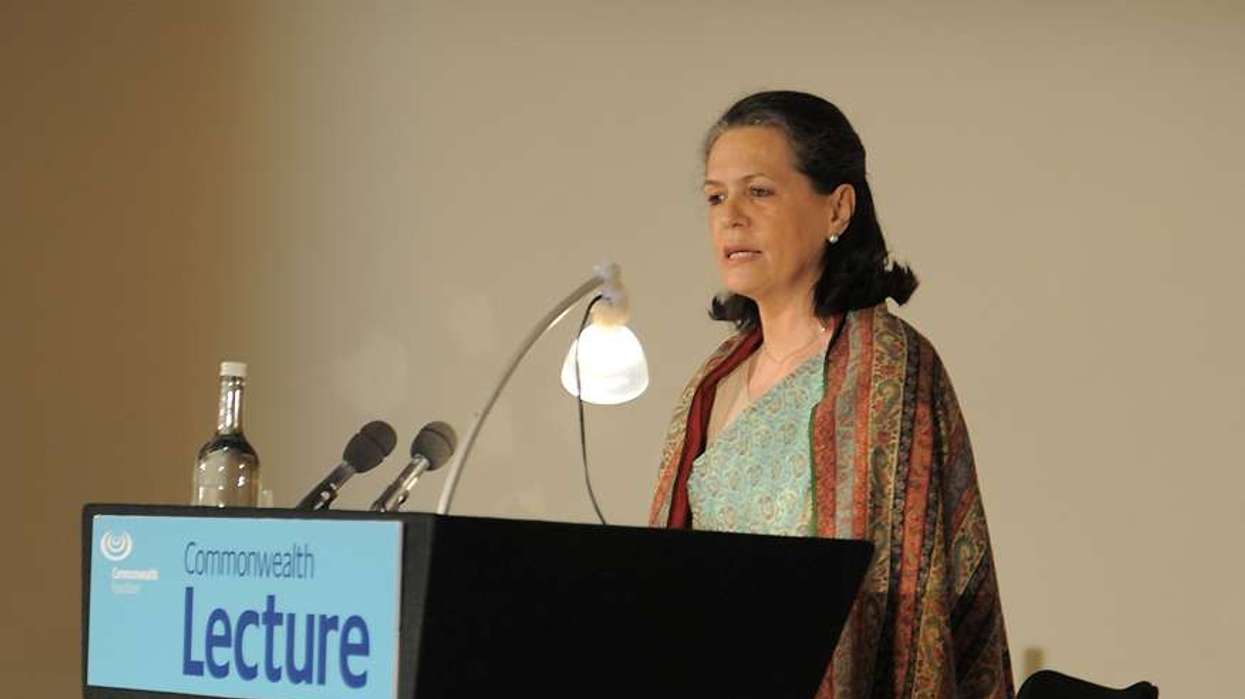

THE news that Sonia Gandhi is publishing her memoirs has taken almost everyone by surprise, because she has hardly ever spoken about the private side of her life.
The launch on November 10 of Belonging: A Journey of Love by Alfred A Knopf in America and William Collins in the UK is going to be a publishing phenomenon.
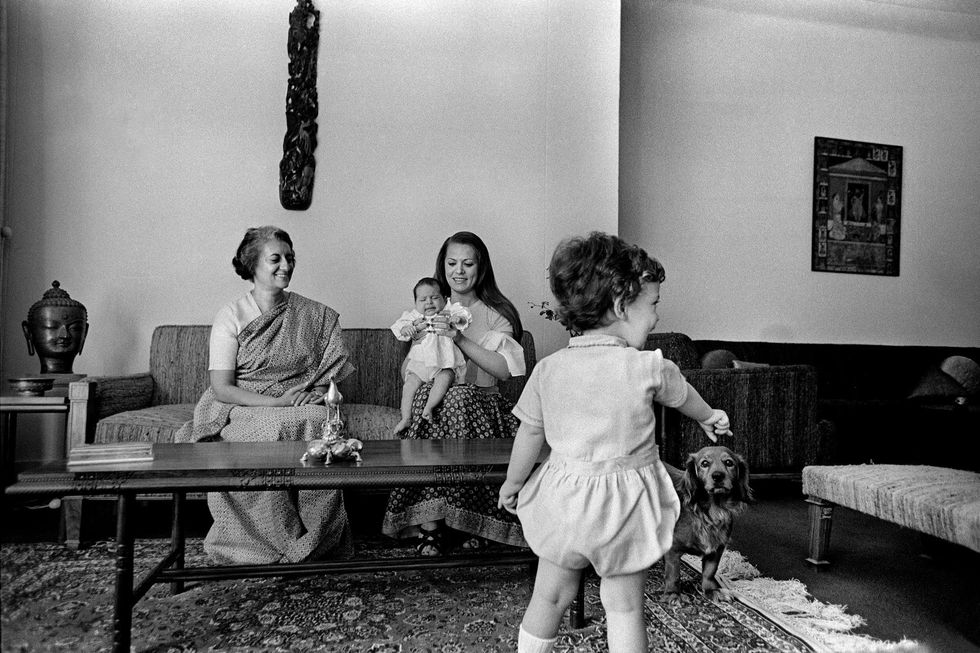 Indira Gandhi with Sonia and her children, Rahul and PriyankaAgencies
The cover picture is probably from when she was Sonia Maino, a 19-year-old Italian language student in Cambridge, where she met Rajiv Gandhi, an undergraduate at Trinity College who was meant to be studying natural sciences. She could not then have imagined the tragedies that lay in store. After she married Rajiv – her mother-in-law Indira Gandhi made them wait – all she wanted was a quiet domestic life with her husband, who had become an Indian Airlines pilot.
Rajiv was forced to enter politics after his younger brother, Sanjay, was killed in a flying accident in 1980. Then Mrs Gandhi was assassinated in 1984 and Rajiv in 1991, when Sonia was also forced into politics by the Congress party. She could have become prime minister in 2004, but instead stepped aside for Manmohan Singh.
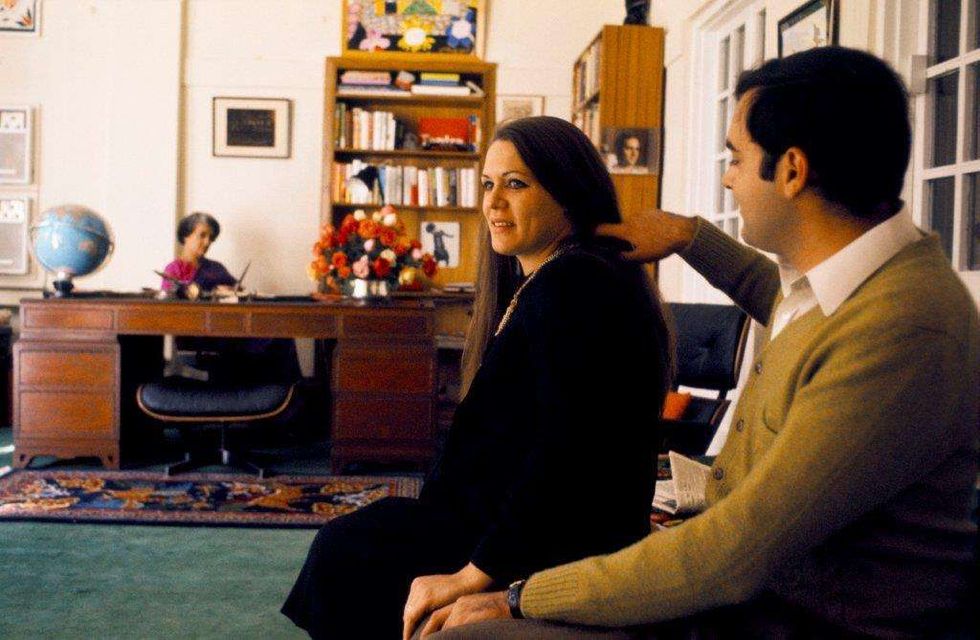 Sonia and Rajiv Gandhi in Indira Gandhi’s officeMarilyn Stafford
She remained at the centre of power as president of the ruling Congress party and, to this day, at the age of 79, the matriarch still exercises enormous influence, especially as the mother of Rahul Gandhi and Priyanka Vadra. By any measure, hers has been a remarkable life.
I have heard her speak – in Cambridge and in London.
A friend, the late Jagmohan Mundhra, wanted to make a biopic on her, with the Italian actress Monica Bellucci cast in the lead role. Sonia gave Jag a polite hearing in Delhi, but ultimately decided to keep her life private.
“Her desire to guard her privacy is still the hurdle in my getting an approval for making this film,” Jag told me in 2006, five years before his death.
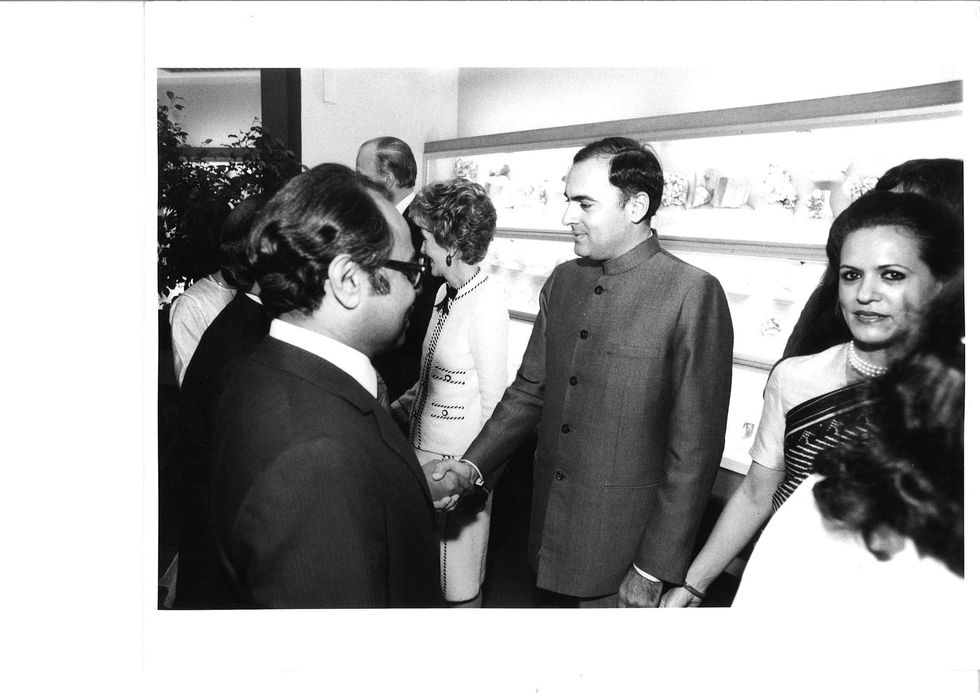 Rajiv and Sonia GandhiAgencies
“It was heartbreak and loss that threw me into the public world of politics,” Sonia said in a statement released through Knopf.
“Up till then I had guarded my privacy fiercely. Writing about my life did not come easily to me. It meant opening myself up, sharing moments and experiences I had always held deep inside. Yet as I gradually removed myself from the political sphere and looked back at all I had seen, the thread of love and loyalty that wove through my story began to define itself, from the simplicity of my childhood in small-town Italy, to the complexity of my years in India as the wife of Rajiv Gandhi and the daughter-inlaw of Prime Minister Indira Gandhi.
“I wanted this memoir to be a testament of my heart’s journey through the tender joys and dark despair that have marked my life. Much has been written about my family, but few narratives were able to reach into the truth of their motivations, their actions and even their very human failings. In many ways, this book is a homage to their humanness. My story also offers readers a unique perspective of the social and political changes I have witnessed for six decades in the beautiful country of my belonging.”
As a white woman, she has never been accepted by her political enemies in Delhi, who will now go through the book in order to find ammunition to attack the Nehru-Gandhi family.



 Rishi SunakLeon Neal/Getty Images