
INDIA'S Partition clearly left an indelible mark on the psyche of both Hindus and Muslims. Today, that has filtered down to four generations, but the verbal accounts concerning one of the most tumultuous events in history is fading away.
Although historians have recorded, documented and published the political machinations of the movers and shakers of the time, individual voices – those first-hand accounts of ‘lived experience’ – are largely unrecorded, and remain only in the nightmares of those who witnessed the atrocities that unfolded after the British withdrawal from India in August 1947.
The dominant argument depicted by left-wing critics concerning the ensuing violence and exodus of more than 14 million people is that it was the fault of the British ‘divide and rule’ policy and Cyril Radcliffe (British lawyer and first viscount) who had been given the unenviable task of dividing up a culturally diverse continent almost the size of western Europe. In essence, any division of India was likely to cause bloodshed at an unprecedented level – and everyone knew it. It was unavoidable.
In this narrative, little focus is placed on the Muslim leader, Mohammed Jinnah, who - through personal ambition and bloody mindedness - insisted on creating an Islamic state; Gandhi put up only tacit, or weak resistance against the proposed division of his country.
Adapted from Kavita Puri’s book Partition Voices: Untold British Stories, Silence is the latest offering from Tara Theatre.
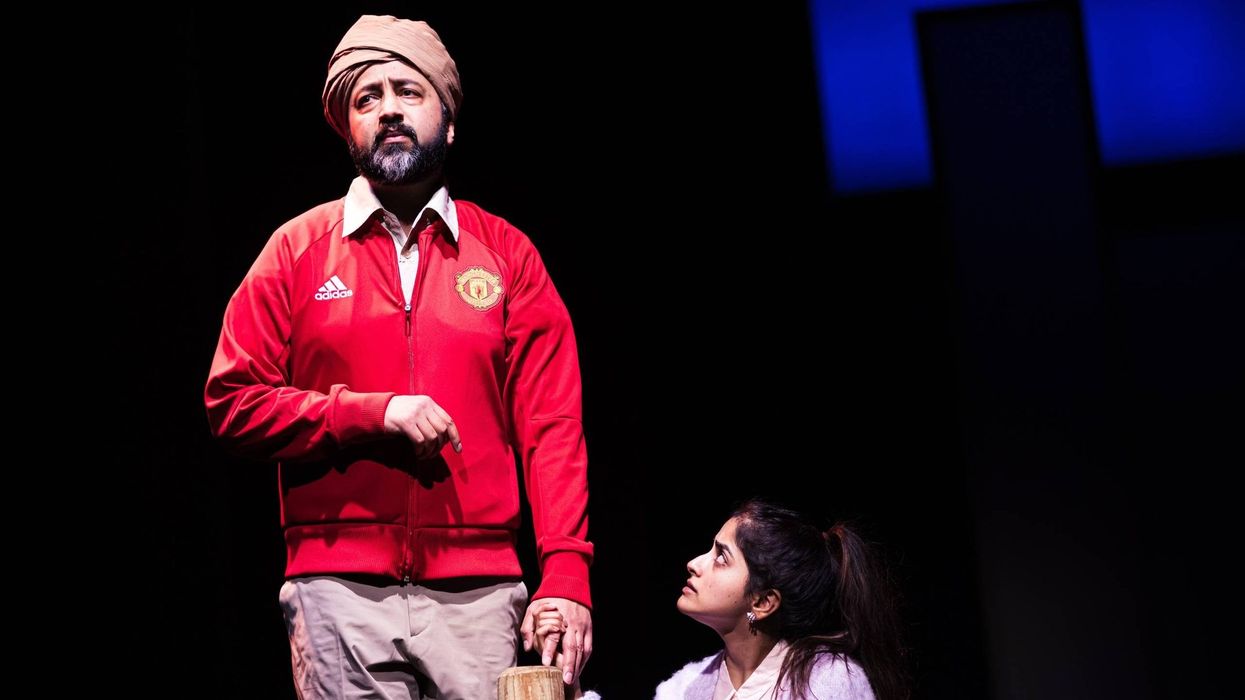
Directed by Iqbal Khan, it features a cast of half a dozen actors taking on different characters. They present their accounts of Partition (1946-1947) through monologues, inspired by real personal testimonies, creating a production that lasts over two hours. It is also one-sided, flat, and disappointing due to style.
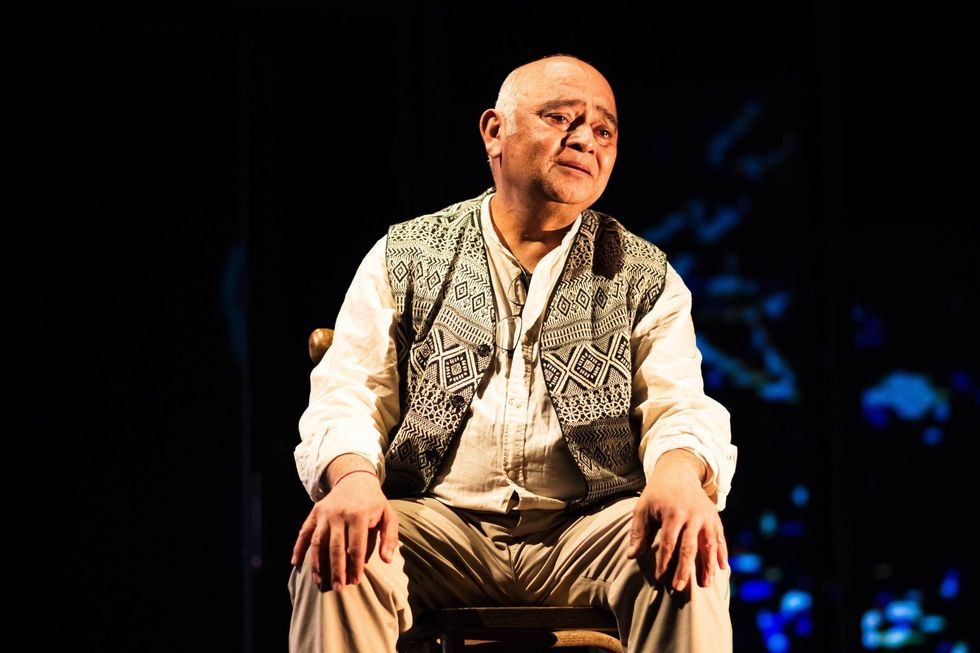 Bhaskar Patel in Silence (Harry Elleston)
During the press night, for instance, all the actors seem to display animated accents and heightened delivery that might sit more comfortably in Bollywood melodrama than the modern stage. There were also some awkward moments when it felt that the actors had forgotten their lines littering the stage with questionable pauses. The lack of a climactic ending to the first part also left the audience wondering whether they had got to the interval or not; whether they should clap or let the scene dissipate quietly.
During the interval, I bumped into Neena Shea, the senior producer, who asked if I was enjoying it. I thought – though I refrained from saying so – it lacked entertainment value, a proper thread to the narrative, political impartiality, and a script that connected the characters to the audience. In addition, bearing in mind that more young men were massacred than women, I thought it was telling that the script should emphasise a feminist aspect – that it was a problem orchestrated by men and that women were the victims, caught in the middle.
Shea stated the Partition was a heavy subject to present on stage. Yes, it is, but to be perfectly frank, adopting an unbiased approach at the outset might help matters and not just churning out the dominant, but flawed narrative.
Rating: ** (2 stars out of 5)
Silence
Written by Sonali Bhattacharyya, Gurpreet Kaur Bhatti, Ishy Din and Alexandra Wood
Directed by Iqbal Khan
At Tara Theatre