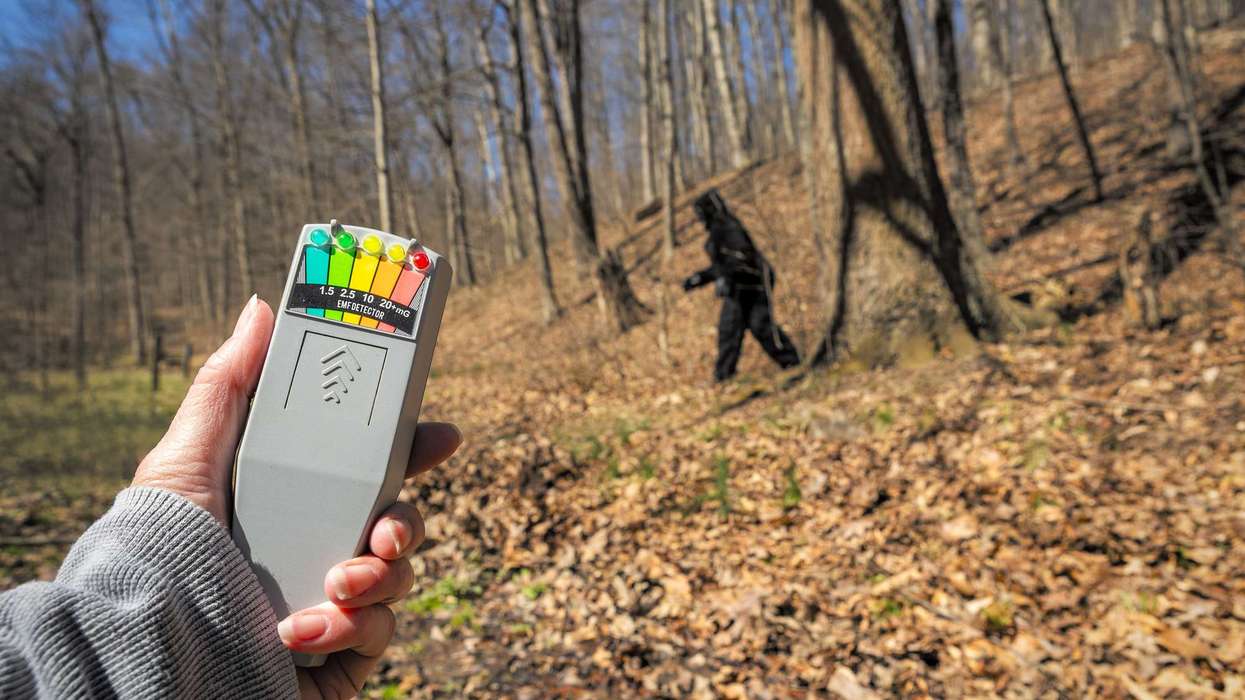

Highlights
- Researchers say low-frequency infrasound may explain why some locations feel “haunted”
- A new study found exposure to the sound increased stress levels in participants
- Volunteers could not hear the frequency but still showed physical stress responses
- Scientists believe the findings could reshape how paranormal experiences are understood
The science behind a feeling many people struggle to explain
People visiting allegedly haunted locations often describe a similar experience. They feel uneasy, unsettled and deeply uncomfortable, even when there appears to be no obvious reason why. For years, these reactions have fuelled stories about ghosts, spirits and supernatural activity. Scientists are now offering a very different explanation, and it begins with a sound humans cannot even hear.
A new study published in Frontiers in Behavioral Neuroscience suggests that infrasound, which refers to acoustic frequencies below 20 hertz, may be responsible for triggering feelings often associated with paranormal encounters. Although the human ear cannot detect these frequencies, researchers found that the body may still respond to them in significant ways.
What researchers discovered in the experiment
To better understand the link, researchers recruited 36 undergraduate psychology students from MacEwan University and monitored how they reacted to hidden exposure to infrasound.
Participants were placed alone in a room where they listened to both calming and unsettling music. Some sessions included an 18-hertz infrasound frequency, while others did not. Before and after each session, researchers collected saliva samples to measure cortisol levels, which are commonly used to track stress.
What made the findings notable was that participants could not consciously identify when the low-frequency sound was being played. Despite that, those exposed to infrasound showed higher cortisol levels, suggesting their bodies were reacting to something they were unable to hear.
Researchers also found that participants exposed to the frequency reported feeling more irritable, less engaged with the music and more emotionally negative overall.
Why haunted places are part of the conversation
The findings have renewed scientific interest in reports of paranormal activity because infrasound is often present in environments people associate with unexplained experiences.
Natural sources include volcanic eruptions, avalanches, storms and stampeding animals, which has led some researchers to believe humans may have evolved to treat these frequencies as warning signals. In modern settings, infrasound can be produced by industrial machinery, air conditioning systems, traffic, railways and wind farms.
That has prompted scientists to examine whether some locations believed to be haunted may actually be exposing visitors to environmental conditions that create fear.
Rodney Schmaltz has even taken students to paranormal attractions such as Deadmonton to explore possible scientific explanations behind frightening experiences. Previous experiments found that visitors moved more quickly through the attraction when infrasound was introduced.
Why the findings matter beyond ghost stories
Researchers acknowledge that the study was small, partly because cortisol testing is expensive, but they believe the findings open the door for larger investigations.
The research may have implications far beyond paranormal tourism. Scientists say it could help experts better understand environmental noise pollution and how hidden frequencies affect both humans and animals.
While the study does not claim to explain every ghost story, it offers a compelling possibility that some paranormal experiences may be rooted in biology rather than the supernatural. Sometimes, the scariest thing in the room may be something you cannot hear at all.





 Trent Alexander Arnold of Real Madrid in action during the LaLiga EA Sports 2026/27 match between Real Betis Balompie and Real Madrid at Estadio La Cartuja on September 04, 2026 in Seville, Spain. Photo by Fran Santiago/Getty Images
 Trent Alexander-Arnold of Real Madrid is challenged by Marcus Thuram of Internazionale during the UEFA Champions League 2026/27 League Phase MD1 match between Real Madrid C.F. and FC Internazionale Milano at Estadio Santiago Bernabeu on September 08, 2026 in Madrid, Spain. Photo by Angel Martinez/Getty Images
