By Amit Roy
IT IS claimed that Sajid Javid and Boris Johnson remain on friendly terms, but there are indications “our Saj” is not expecting a quick recall to government.
Seven months after he resigned as chancellor on February 14 – Valentine’s Day, incidentally, though there was little love lost between him and Dominic Cummings who effectively engineered his departure – Sajid has taken a job at an undisclosed salary with JP Morgan as a member of the investment bank’s advisory council for Europe, the Middle East and Africa.
The Advisory Committee on Business Appointments (ACOBA) – it lays down rules for ministers taking a job in the private sector within two years of leaving government – has warned that the former chancellor’s “privileged access to information” carries “potential risks”.
More to the point, Sajid has declared he cannot support the prime minister’s decision to flout the Withdrawal Agreement signed with EU and by-pass the Brexit treaty with an Internal Market Bill. He said: “I am regretfully unable to support the UK Internal Market Bill unamended. One of Britain’s greatest strengths and traditions is respect for the rule of law. Breaking international law is a step that should never be taken lightly.”
It is worth remembering most of the Tory MPs who opposed Boris before the general election have been forced out of politics.
Sajid has been an important ethnic minority role model, but the halo which surrounded him as the first Asian home secretary has vanished. Only last year he topped Eastern Eye’s Power List. A return to the cabinet cannot be ruled out, but by attacking Boris in robust terms, he has made it less likely.












 LONDON, ENGLAND - JUNE 22: Baroness Floella Benjamin speaks during the unveiling of the National Windrush Monument at Waterloo Station on June 22, 2022 in London, England. The photograph in the background is by Howard Grey. (Photo by John Sibley - WPA Pool/Getty Images)

 Ed Sheeran and Arijit Singh
 Aziz Ansari’s Hollywood comedy ‘Good Fortune’
 Punjabi cinema’s power-packed star cast returns in ‘Sarbala Ji’
 Mahira Khan
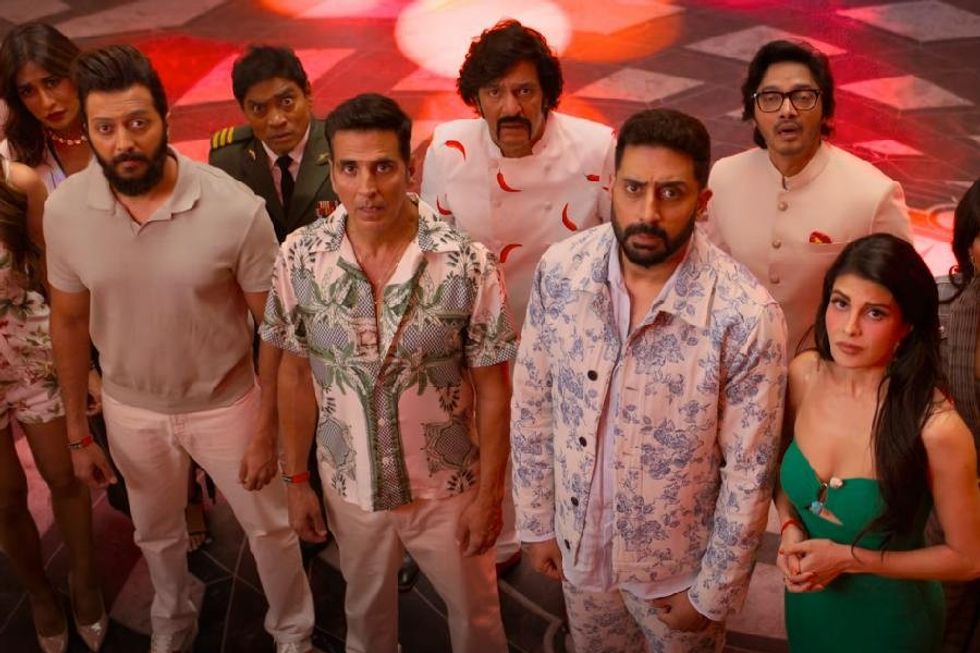 ‘Housefull 5’ proves Bollywood is trolling its own audience
 Brilliant indie film ‘Chidiya’
  John Abraham
 Hina Khan and her long-term partner Rocky Jaiswal
  Shanaya Kapoor's troubled debut
 Sana Yousuf