
PRIME MINISTER Rishi Sunak on Monday (18) launched measures to help small businesses navigate the weak economy, as he seeks to boost his standing before this year’s general election.
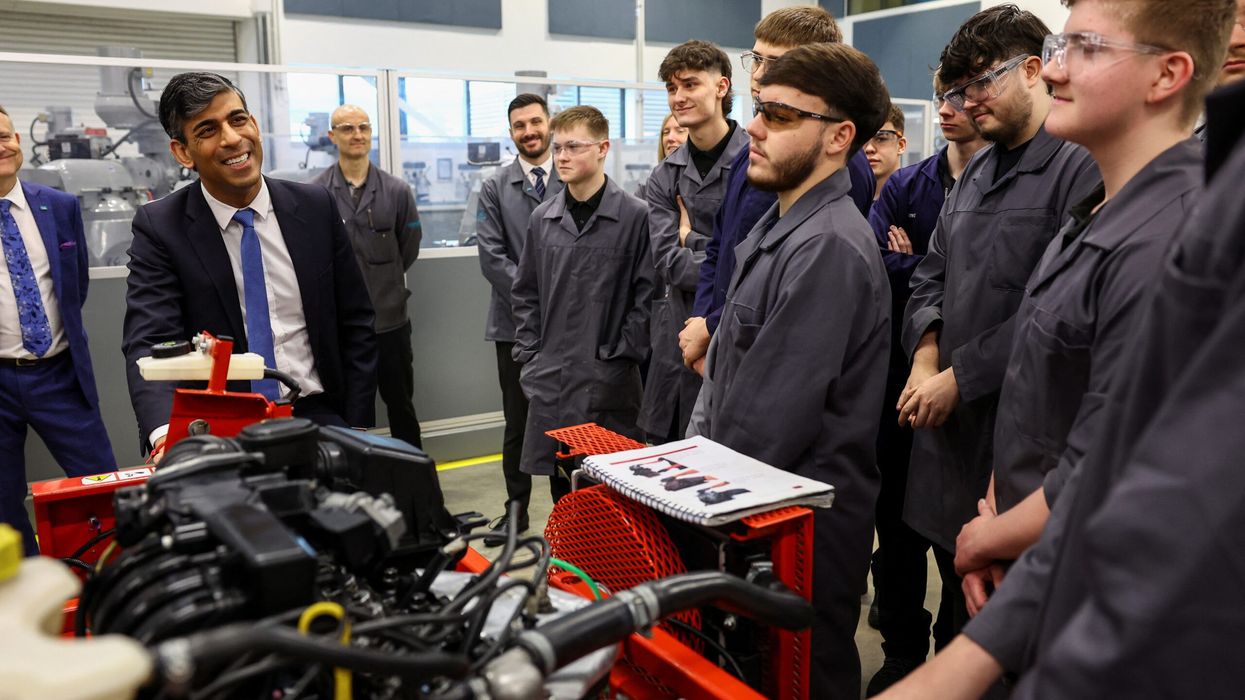
Sunak unveiled a £60 million investment aimed at cutting red tape and generating 20,000 apprenticeships.
“This government is sticking to the plan and leaving no stone unturned to make the UK the best place to do business,” Sunak told a business conference in central England. “Taken together, these measures will unlock a tidal wave of opportunity and make a real difference to businesses and entrepreneurs across the country.”
The prime minister said that from next month, the government will pay full apprenticeship costs for small and medium sized enterprises.
The scheme seeks to boost professional job opportunities for workers aged under 21 years and save about £150m per year for SMEs, Sunak added.
While Britain officially remains in recession, recent official data showed that the economy eked out slender growth in January. However, with British annual inflation standing at four percent, it remains double the Bank of England’s target rate.
“Inflation is falling fast,” Sunak said on Monday. “There is more that we need to do,” he said ahead of fresh consumer-price data due on Wednesday (20), after Eastern Eye went to press.
Last week, data showed Britain’s economy had returned to growth in January after entering a shallow recession in the second half of 2023. Gross domestic product grew by 0.2 per cent following a slight 0.1 per cent decline in December, according to a statement from the Office for National Statistics (ONS). GDP shrank by 0.3 per cent in the final quarter of 2023 and 0.1 per cent in the quarter before, meeting the technical definition of recession widely used in Europe.
According to the ONS director of economic statistics, Liz McKeown, “The economy picked up in January with strong growth in retail and wholesaling. Construction also performed well with housebuilders having a good month, having been subdued for much of the last year.”
“While the last few years have been tough, today’s numbers show we are making progress in growing the economy,” said chancellor Jeremy Hunt in response to last Wednesday’s (13) data.
Labour figures last Tuesday (12) showed British wages, excluding bonuses, grew at their slowest pace since October 2022, while the unemployment rate edged up unexpectedly. The data may slightly ease the BoE’s inflation worries.
Money markets now see a 50 per cent chance of a BoE rate cut in June. Earlier this month they had expected a first cut only in August. Markets expect 68 basis points of interest cuts by December. (Agencies).