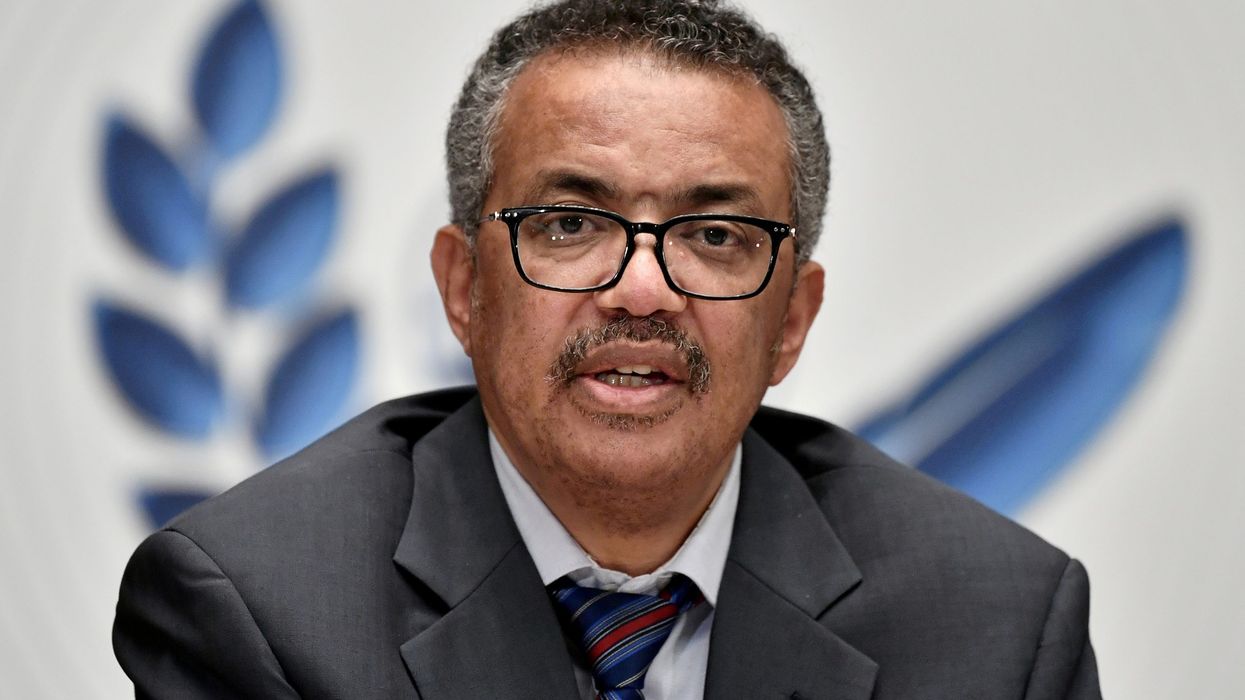

WORLD Health Organization (WHO) has given a grim warning that the second year of the pandemic is going to be "far more deadly.”
"We're on track for the second year of this pandemic to be far more deadly than the first," said WHO director-general Tedros Adhanom Ghebreyesus.
The statement comes amidst growing calls for the Tokyo Olympics to be scrapped this year. Japanese public opinion is firmly opposed to holding the Games this summer where Tokyo, Hiroshima, Okayama and northern Hokkaido are in a state of emergency.
The pandemic has killed at least 3,346,813 people worldwide since the virus first emerged in late 2019.
Earlier, the WHO urged rich countries to reconsider plans to vaccinate children and instead donate Covid-19 shots to the COVAX scheme so that the vaccinations can be shared with poorer nations. France and Sweden reportedly have donated shots to COVAX after inoculating their priority populations to help address the shortfall in vaccination rates in underdeveloped countries.
"I understand why some countries want to vaccinate their children and adolescents, but right now I urge them to reconsider and to instead donate vaccines to #COVAX," Adhanom Ghebreyesus told a virtual meeting in Geneva.
"Because in low and lower-middle-income countries, Covid-19 vaccine supply has not been enough to even immunize healthcare workers, and hospitals are being inundated with people that need lifesaving care urgently."
Canada and the United States are among the countries that have authorized vaccines for use in adolescents in recent weeks. A WHO official said talks with Washington on sharing doses were underway.
COVAX has delivered around 60 million doses so far. It is now struggling to meet supply targets partly because of Indian export restrictions on the AstraZeneca vaccine due to its growing epidemic and shortfall in the vaccines for its own population.