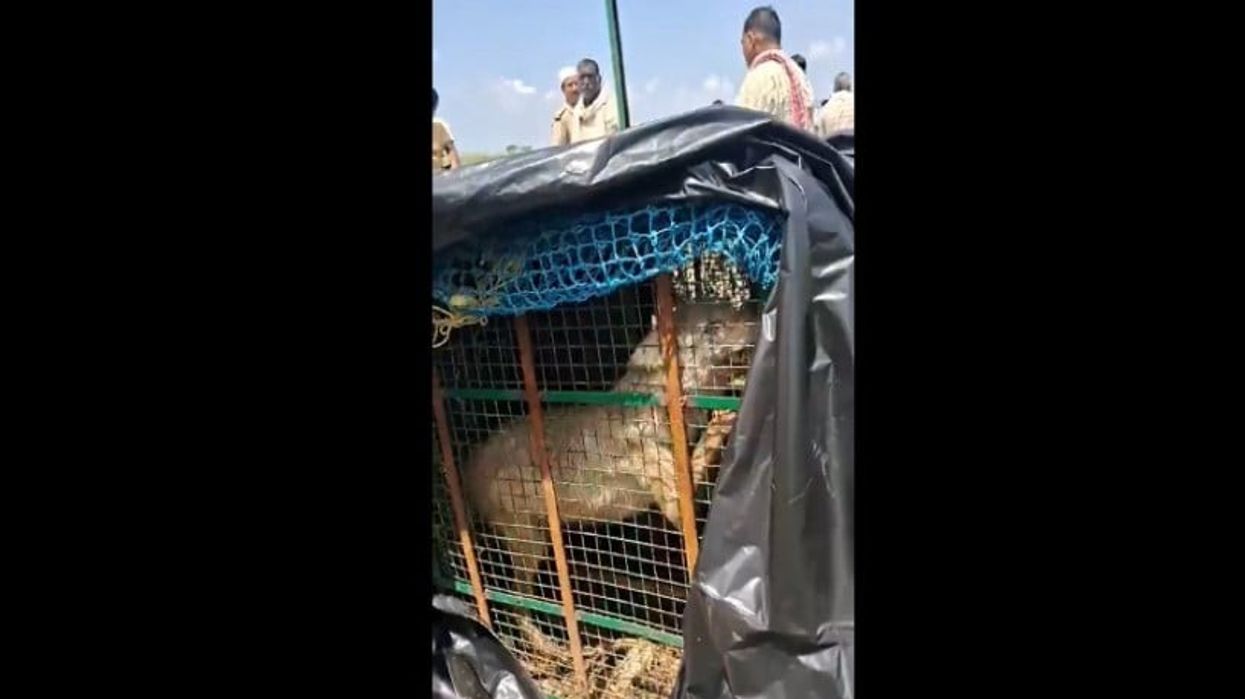

INDIAN authorities have captured one of three wolves that have killed six children and a woman in the northern state of Uttar Pradesh over the past two weeks.
The attacks have affected more than 30 villages in Bahraich district, an area known for its dense forests, according to Akash Deep Badhawan, a senior officer of the Indian Forest Services.
During the summer, villagers in India often sleep outside on mats or beds made from woven rope to stay cool, which made them vulnerable to the wolf attacks.
Three wolves were identified as responsible for the killings, and they were tracked using drones equipped with cameras and thermal mapping software. Efforts are ongoing to capture the remaining two wolves.
"The district administration and forest department have deployed several teams to guard the villages and catch hold of them," Badhawan said.
He noted the difficulty in capturing the wolves, saying, "The situation is a bit tricky as this particular species of wildlife is very cunning in nature. We have advised the villagers to not sleep in the open along with their children."
While attacks by leopards and tigers are more common in India, incidents involving wolves are rare.
In response to the attacks, authorities in Bahraich have installed loudspeakers and floodlights to deter the animals. Forest officials from five nearby districts have also been deployed to assist in capturing the wolves, according to Badhawan.
"We are planning to use elephant dung and urine to keep the pack of wolves at bay from residential areas," he said, explaining that wolves typically live in packs of six to ten and avoid areas where larger animals like elephants are present.
"The burning of the dung cake would create an illusion of elephant presence in the area," Badhawan added.
(With inputs from Reuters)