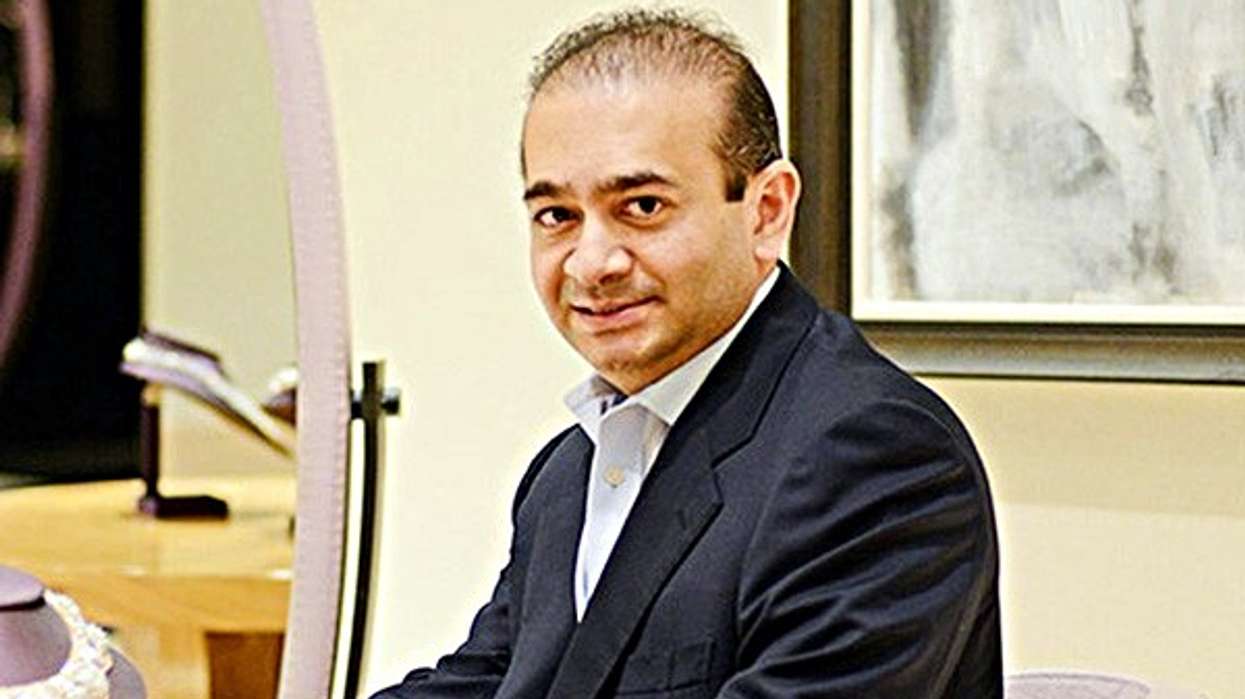

A HEARING on Nirav Modi's application to reopen his extradition appeal has ended at the High Court in London, with his lawyers claiming he faces a "real risk of torture" during interrogation by agencies in India.
Lord Jeremy Stuart-Smith and Justice Robert Jay reserved their judgment at the end of the day-long hearing on Tuesday (17).
"This case is of extreme importance, to Mr Modi and to the Indian officials who have travelled from India. We will deliver the judgment as soon as possible," said Stuart-Smith, as the hearing, due to run over two days, concluded early.
The 54-year-old businessman, wanted in India on charges of fraud and money laundering linked to the estimated $2 billion Punjab National Bank (PNB) fraud case, appeared via video link from Pentonville Prison in north London.
His lawyers drew on the extradition case of Sanjay Bhandari, a defence consultant accused of tax evasion and money laundering, whose extradition was blocked on human rights grounds last year.
The Crown Prosecution Service (CPS), acting for the Indian government, opposed the application to reopen a case in which Modi's extradition was ordered around five years ago.
Edward Fitzgerald KC, acting for Modi, argued that extradition would expose his client to a real risk of inhuman or degrading treatment or torture during interrogation in India.
He also described the assurances offered by the Indian government as "neither adequate nor reliable" to address the risk posed by additional arrest warrants that would not allow bail. He further alleged that his client could be transferred from Arthur Road Jail in Mumbai to Gujarat to be questioned by agencies other than the Central Bureau of Investigation (CBI) and the Enforcement Directorate (ED).
CPS barrister Helen Malcolm KC set out the Indian government's position that Modi's application had not only been filed out of time, but also on a "false premise".
She urged the court to take a "common sense approach", arguing that the case was entirely exceptional and that safeguards existed to ensure the Indian government's assurances would be upheld, not least because any breach could damage future extradition proceedings between India and the UK.
"As to any suggestion that the assurances might be reneged on in secret, the high-profile nature of NDM (Nirav Deepak Modi) and his case make that an unreal proposition," court documents stated.
If permission to appeal is refused, the way would be clear for Modi's extradition to India, where he would be held at Arthur Road Jail in Mumbai ahead of trial.
He faces three sets of criminal proceedings in India: the CBI case relating to the PNB fraud; the ED case concerning the alleged laundering of proceeds from that fraud; and a third case involving alleged interference with evidence and witnesses in the CBI proceedings.
In April 2021, then home secretary Priti Patel ordered his extradition after a case against him was established. Since then, Modi has made several unsuccessful bail applications and appeals in the UK courts.
(PTI)