
The government announced plans on Monday (6) to introduce legislation enforcing "minimum service levels" in essential sectors during strikes. The legislation is set to be unveiled in parliament on Tuesday (7), sparking criticism from unions, who have expressed discontent with the proposed measures.
The new legislation, which builds on a minimum service law passed in July, will require striking rail workers, ambulance staff, and border security staff to maintain certain levels of service.
Expected to come into force before the end of the year, the measures aim "to mitigate disruption and ensure vital public services continue," the government said.
The move follows months of disruptive stoppages across the private and public sectors, as decades-high inflation helped create the worst cost-of-living crisis in a generation and demands for hefty pay rises.
The government insists the "effective and proportionate" legislation brings Britain into line with European countries and the US, where it says "public services reliably continue during strikes".
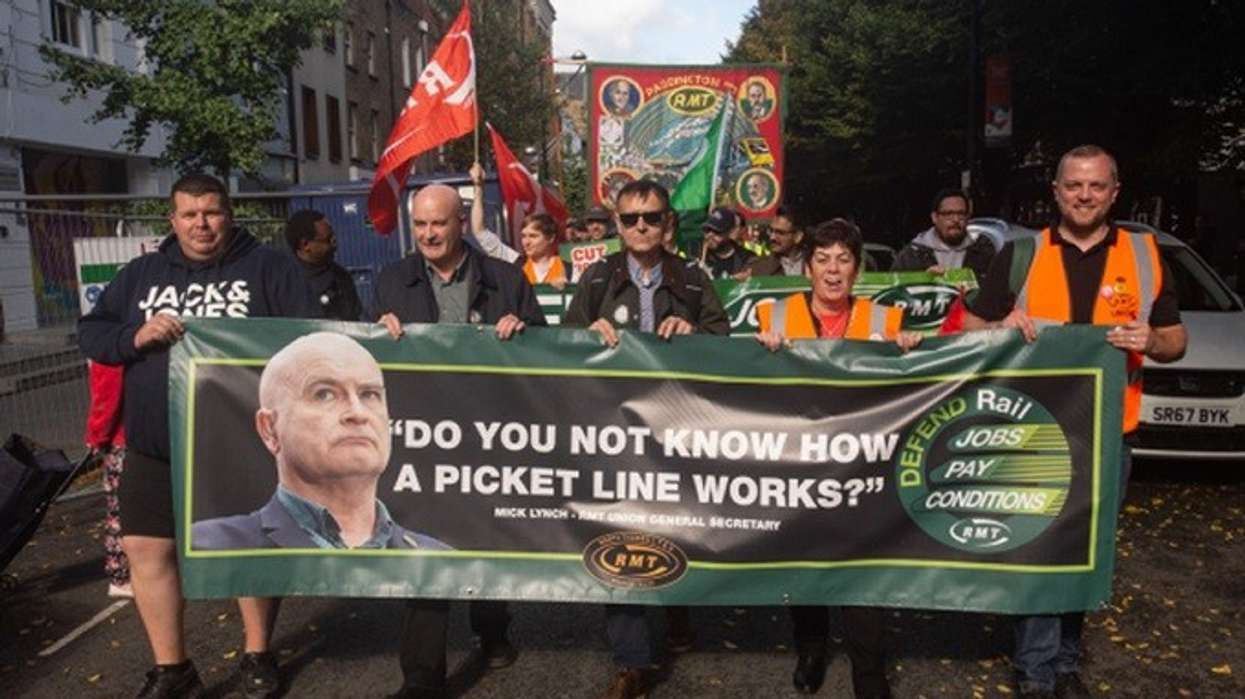
But the move has drawn the ire of unions, who claim imposing minimum service levels is unworkable and a threat to the right to strike.
The latest legislative rollout ahead of an expected general election next year is also seen as politicised, and intended to draw dividing lines with the main opposition Labour.
Well ahead in the polls for more than a year, the centre-left party has deep historic links with Britain's trade union movement and still receives sizeable donations from several unions.
In a statement announcing the law, prime minister Rishi Sunak said it was part of efforts to "stop unions de-railing Christmas for millions of people".
"This legislation will ensure more people will be able to travel to see their friends and family and get the emergency care they need," he added.
"We cannot go on relying on short term fixes -- including calling on our Armed Forces or civil servants -- to mitigate the disruption caused by strike action."
However, Paul Nowak, general secretary of the Trades Union Congress (TUC -- an umbrella group of 48 unions comprising more than 5.5 million members -- said "these anti-strike laws won't work".
"Rather than engaging constructively with unions, they are attacking the right to strike, and they are punishing paramedics and rail staff for daring to stand up for decent pay and better services."
He added, "These new laws are unworkable, undemocratic and almost certainly in breach of international law."
The TUC said in September it had lodged a case with the International Labour Organisation (ILO) over the minimum service levels legislation already passed, arguing it "falls far short" of international legal standards.
(AFP)