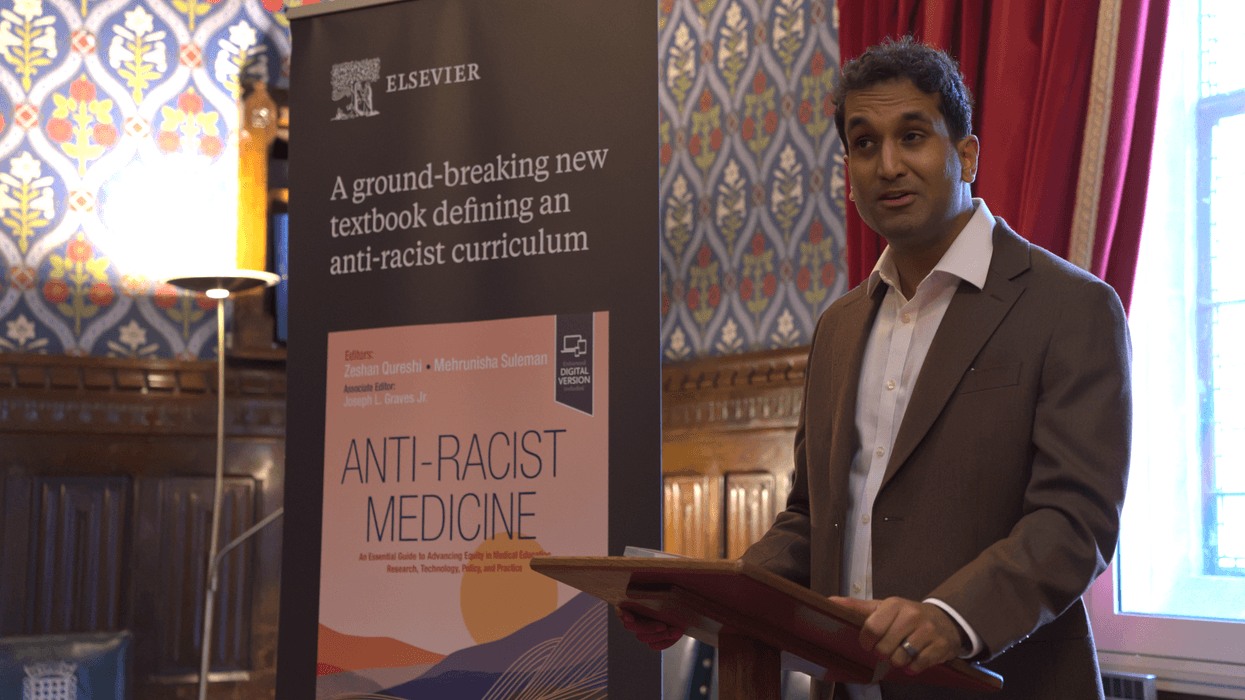

A NEW textbook calling on doctors and healthcare institutions to actively tackle racism in medicine was launched in parliament last month. Anti-Racist Medicine is the first medical textbook in the UK dedicated to the subject.
It was co-edited by Dr Zeshan Qureshi, an NHS doctor completing a PhD at the University of Cambridge, and Professor Mehrunisha Suleman, associate professor and director of Medical Ethics and Law Education at the Ethox Centre, University of Oxford.
The launch event at Westminster on April 20 was attended by MPs, clinicians, professors, students and patient advocates.
Qureshi said, “Racism affects how diseases are understood, how patients are treated, who progresses in medical careers, and whose data counts.”
The book warns of persistent disparities in health outcomes and career progression across the NHS.
“Sadly, the NHS is still failing ethnic minorities, 75 years after it promised care for all,” he added.
According to the book’s authors, gaps and inconsistencies in how ethnicity is recorded across the health service mean that the scale of inequality is often difficult to measure, and therefore difficult to address.
This matters particularly as artificial intelligence becomes more widely used in medicine, they said.
If AI systems are trained on data that does not reflect the diversity of the population, the authors warned, ethnic bias will be built directly into clinical decision-making.
Qureshi cautioned that ethnicity should only be used in treatment algorithms where there is clear evidence for doing so, something he described as rare in practice.
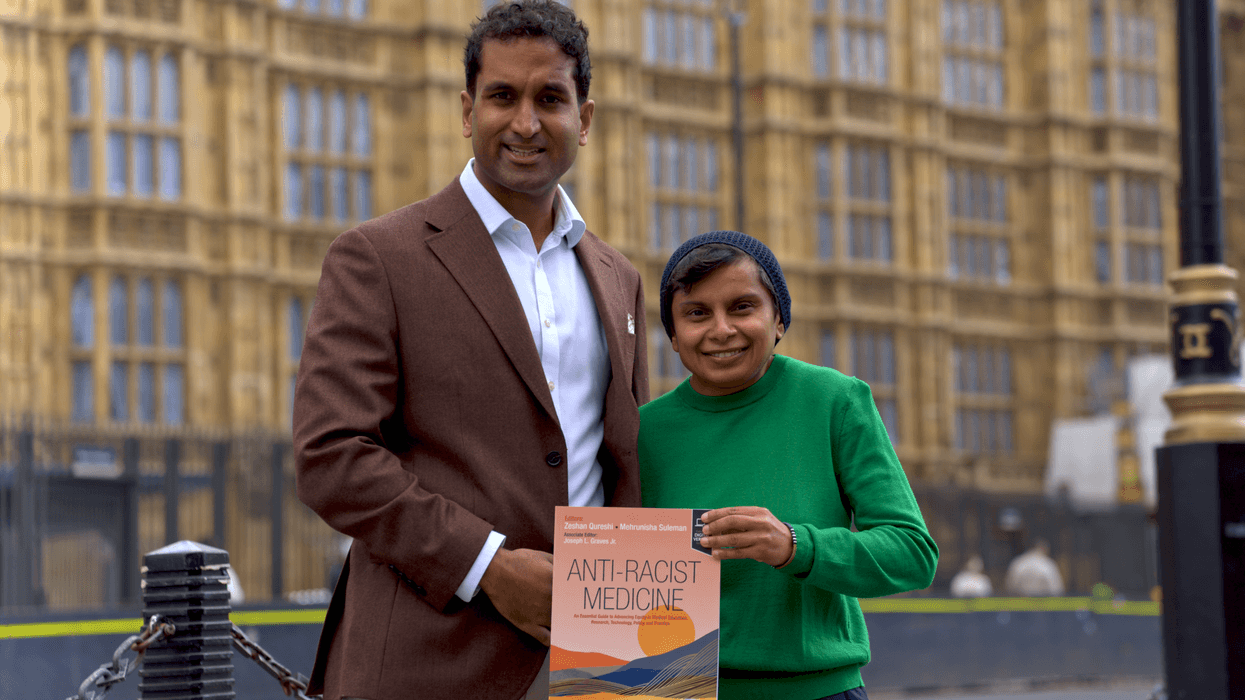 Dr Zeshan Qureshi and Professor Mehrunisha SulemanDr Zeshan Qureshi
Recommendations in the book include reforms to professional regulation, changes to medical training curricula, greater support for international medical graduates and protections against bias in digital health tools.
There are also calls for teaching cultural humility, an awareness of the individual circumstances and experiences of patients from all backgrounds.
Qureshi said the book makes not only a moral case for change, but also a clinical and economic one.
“Anti-racist medicine is not about lowering standards or favouring one group over another,” he said. “It is about removing barriers that worsen outcomes for patients and professionals alike.”
The book draws on research showing that ethnic health gaps begin at birth and persist throughout life.
Black women in England are more than twice as likely to die in childbirth as white women. Infant mortality among Black children is double that of white children. Black patients are between six and nine times more likely to be diagnosed with schizophrenia, and four times more likely to be detained under the Mental Health Act.
It is known that type 2 diabetes is between two and six times more common among south Asian and black populations in the UK than among white populations. The authors noted that Gypsy, Roma and Traveller communities face some of the worst health outcomes of any group in Britain.
These disparities are not confined to patients. The book also documented inequalities in career progression within the NHS itself.
Across London, black doctors are on average six times less likely to be appointed as a consultant, a figure that rises to 15 times in some trusts. Women from ethnic minority backgrounds and international medical graduates also face persistent disadvantage.