
AUTHORITIES in Mumbai tore down several Muslim-owned makeshift shopfronts after religious clashes sparked by the inauguration of the Ayodhya Ram temple last week by prime minister Narendra Modi.
Minor clashes broke out on January 21 in parts of Mumbai, including one provocative incident where Hindus chanting religious slogans passed through a Muslim neighbourhood on the city’s outskirts.
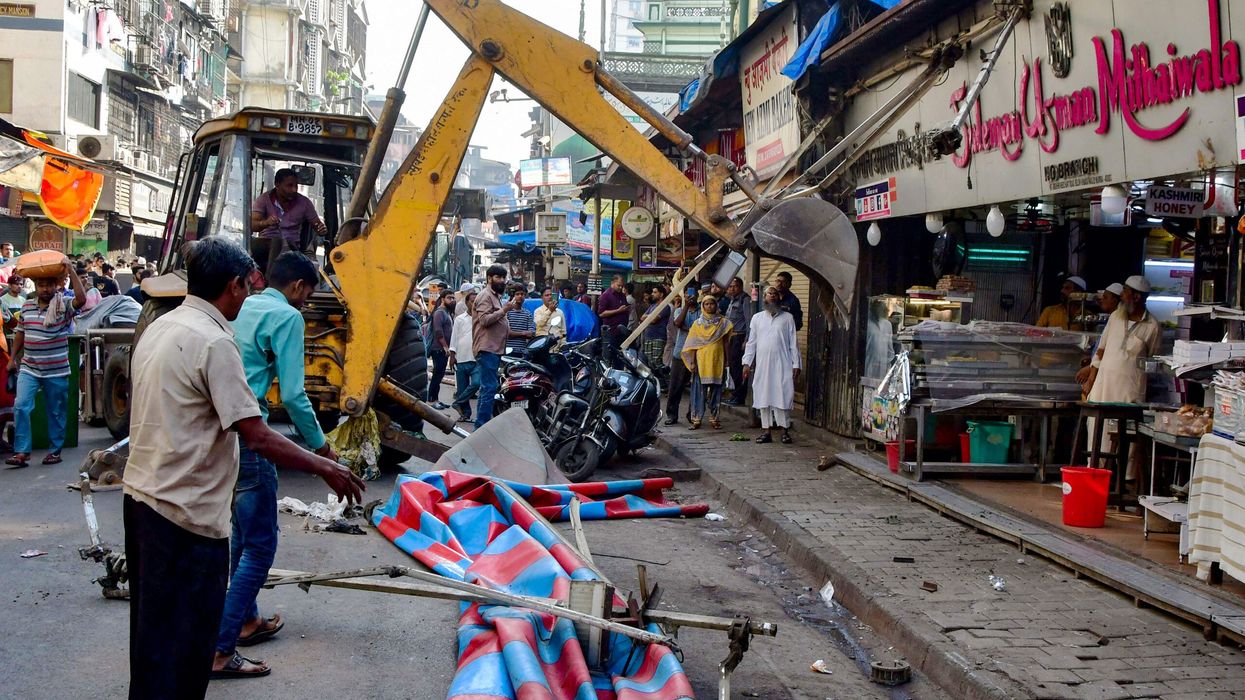
No serious injuries were reported in the melee, but by last Tuesday (23), authorities had called in excavators to knock down more than a dozen shopfronts belonging to Muslims in that locality, according to local media reports.
The following evening, another 40 shopfronts were knocked down on Mohammed Ali Road, a major downtown thoroughfare and centre of local Muslim commerce that had also seen weekend clashes.
“We were undertaking deep clearing of the road in which some temporary hawkers and so forth were removed,” a local municipal officer, who declined to be named, said last Thursday (25).
Numerous traders of all faiths often build makeshift shopfronts out of canvas and wood to shield their businesses and patrons from the city’s scorching sun and pounding monsoon rains.
“I cannot fathom why this was done,” Abdul Haseeb Khan, owner of a restaurant hit in the clearance drive, said.
“If they didn’t want these structures here, they should have informed us and we would have removed them. This is no way to take action,” he added.
Municipal officials told local media the campaign was “routine” and planned before the clashes on January 21, and that it was aimed at clearing illegal encroachments and easing pedestrian traffic.
So-called “bulldozer justice” has been an increasingly common tool of local officials in India to punish suspected criminals by demolishing their property.
Rights groups have condemned the practice as an unlawful exercise in collective punishment.
Aaker Patel of Amnesty International said in a press statement that last week’s drive in Mumbai represented a “policy of arbitrarily and punitively demolishing Muslim properties following episodes of communal violence”.
Officials elsewhere in India customarily say that the demolitions are lawful as they only target buildings constructed without receiving official approval.





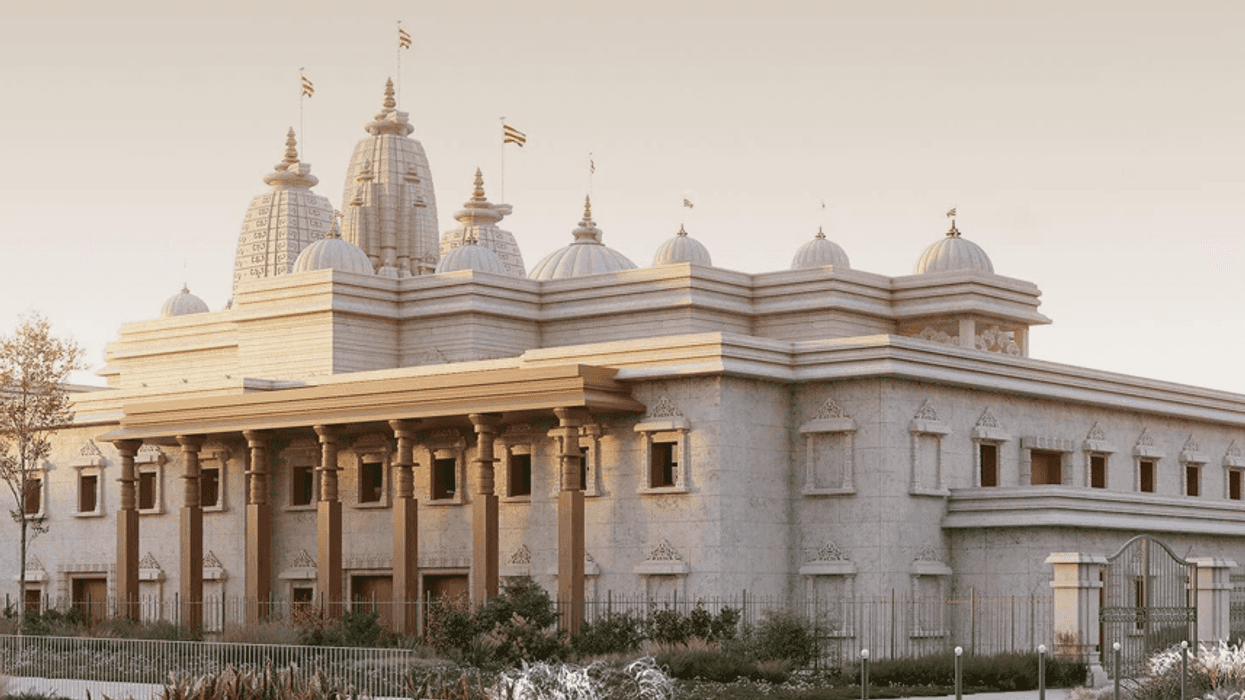
 Mahant Swami Maharaj arrives in France ahead of the Paris Mandir Mahotsav BAPS Paris Media
  Historic Jal Yatra starts at the iconic Eiffel TowerBAPS Paris Media
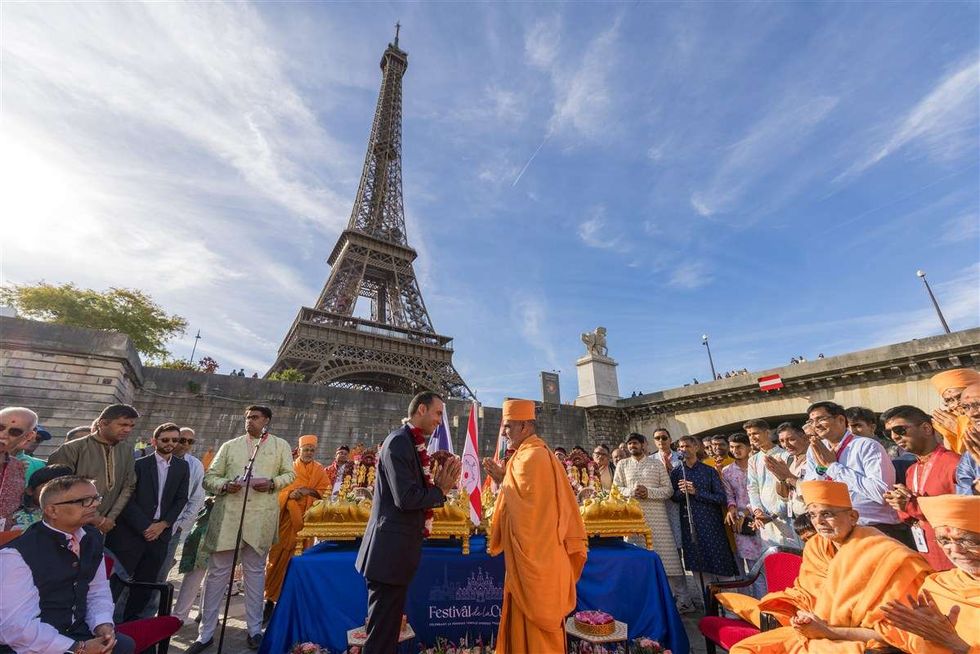 Organisers called it the largest coordinated flotilla to sail the Seine since the opening ceremony of the Paris 2024 Olympic GamesBAPS Paris Media
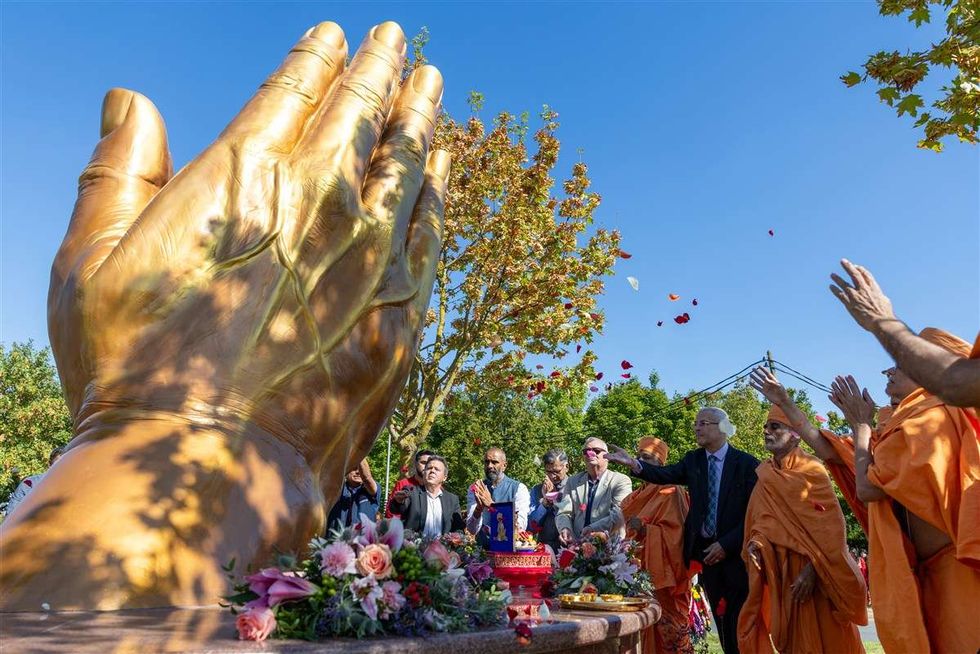 A sculpture of folded hands in the traditional Indian gesture of namaste was unveiled at a roundabout in Bussy-Saint-Georges this weekBAPS Paris Media