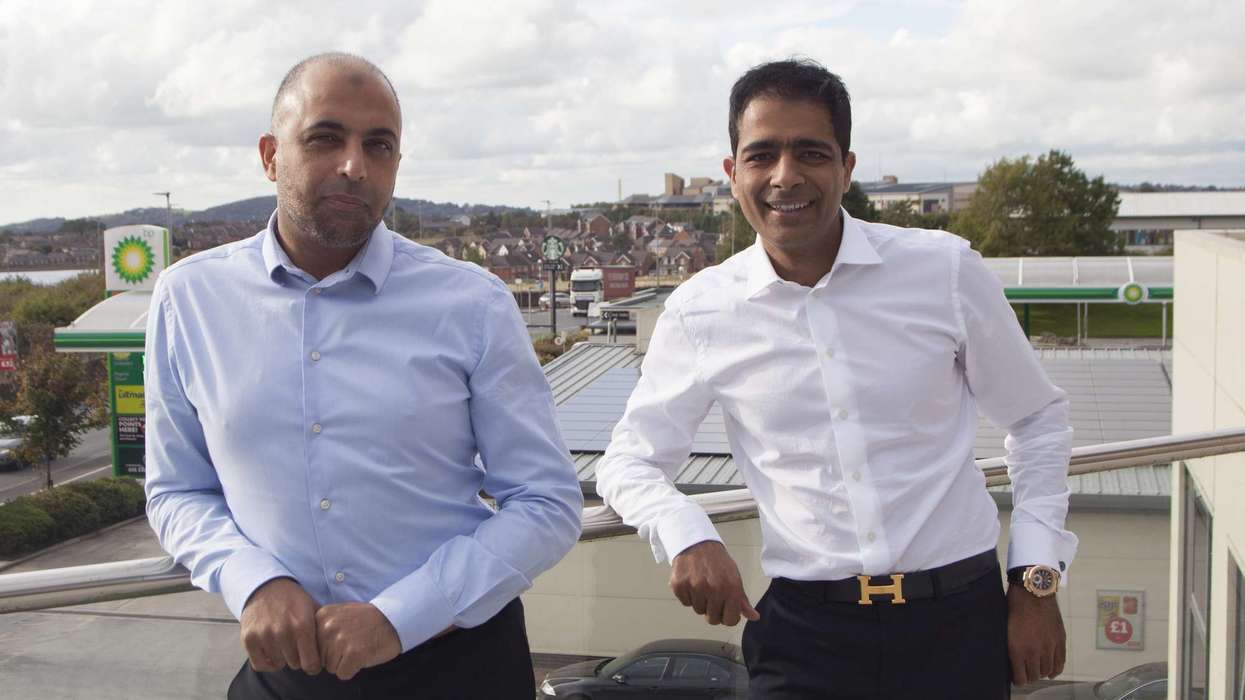

A NEW mosque in Blackburn, built in memory of their father and funded by the Issa Foundation, opened its doors in early 2026 – an architectural landmark and a symbolic reminder that, despite the global scale of their business interests, Mohsin and Zuber Issa remain deeply rooted in the Lancashire town where their story began.
For the billionaire brothers, founders of EG Group and once joint owners of supermarket giant Asda, the past year has been one of recalibration. Their corporate empire, spanning thousands of forecourts, convenience stores and foodservice sites across multiple continents, has entered a new phase, marked by leadership changes, asset sales and increasingly distinct business paths for the siblings.
The new £5 million mosque, Masjid E Vali, named after their late father Vali Issa, was funded through the brothers’ charitable foundation.
“Masjid E Vali stands as a tribute to my father's values of compassion, humility and service to others,” Zuber Issa said at the opening, expressing the hope that it would become “a place of unity, learning, understanding and lasting friendships for generations to come.”
That sense of legacy is particularly resonant at a moment when the brothers’ business interests are evolving rapidly. For more than two decades they worked almost inseparably, transforming a single petrol station in Bury into one of the world’s largest independent forecourt and convenience retail networks. The enterprise began in 2001 with the acquisition of a BP forecourt and grew into Euro Garages, later EG Group, built on a model that fused fuel retail with branded food and convenience offerings.
The growth accelerated dramatically after private equity firm TDR Capital invested in 2015, enabling a wave of acquisitions across Europe, Australia and the US. The group’s purchase of Kroger’s convenience store network and the acquisition of Cumberland Farms cemented its position as a global player in fuel and convenience retail.
The brothers’ profile rose further in 2020 when, alongside TDR, they acquired Asda from Walmart in a £6.8 billion deal, placing them at the centre of Britain’s grocery sector.
Yet the speed of that expansion also brought complexity, particularly in the form of substantial debt. In a higher interest rate environment, strategic adjustments have become inevitable. Over the past year EG Group has embarked on a programme of disposals aimed at focusing on core markets and strengthening its balance sheet.
The company sold its Italian business to a consortium of domestic operators and agreed to divest its Australian operations to fuel retailer Ampol. Both transactions form part of a broader effort to streamline the portfolio and reduce leverage while prioritising growth opportunities in the US and key European markets.
Another significant development came in April 2025, when Mohsin Issa stepped down as chief executive of EG Group. He retained his shareholding and board role as a non-executive director, signalling continued involvement in shaping the group’s strategic direction while stepping back from day-to-day management. The board appointed former chief financial officer Russell Colaco as chief executive, reflecting the company’s increasingly international focus, particularly on the US market where EG now generates its largest share of revenue.
The brothers’ business trajectories have already begun to diverge more visibly. After selling his 22.5 per cent stake in Asda to TDR Capital in June 2024, Zuber Issa stepped away from executive leadership at EG Group later that year, while retaining his shareholding, and acquired the group’s remaining UK forecourt network and certain foodservice operations.
These assets were folded into a new venture, EG On The Move, giving him direct control over a network built around the convenience retail model that first propelled their success.
The business has expanded rapidly. It completed the acquisition of Applegreen UK’s forecourt network, adding 98 sites and dozens of foodservice concessions, and has been developing partnerships with retailers such as the Co-op to expand roadside convenience offerings. It now trades from over 400 sites.
Further expansion is under way beyond Britain. In early 2026, EG Group agreed to sell its French operating business to Zuber’s company as part of its exit from the market, illustrating both the group’s restructuring strategy and the growing scale of EG On The Move.
Differences in strategic outlook have occasionally surfaced in public discussion. One example emerged amid preparations for a potential US stock market listing for EG Group, valued by some reports at up to $9bn (£6.8bn). Zuber suggested that selling the group’s American operations could be a more effective way to reduce debt, saying such a process would allow the company to “repay the debt more quickly than through an IPO.”
While commentators have interpreted such remarks as evidence of diverging visions, the brothers have consistently emphasised that their shared investments and philanthropic work continue. Both remain involved in joint ventures and in the Issa Foundation’s charitable activities, particularly in their hometown.
Alongside their retail interests, the brothers’ property business has also expanded. Monte Blackburn, the property company they established in 2016, reported record profits in its latest accounts as rental income and asset disposals boosted performance. The group continues to build a portfolio of commercial developments across the north-west of England while exploring further investment opportunities.
Such diversification reflects the broader shift in the Issa empire as it matures. EG Group itself now operates thousands of sites across multiple continents and employs tens of thousands of staff, serving hundreds of millions of customers annually. Yet the business environment that once rewarded aggressive expansion has changed, prompting a period of consolidation and strategic focus.
Against that backdrop, the opening of Masjid E Vali carries symbolic weight. It connects the brothers’ global commercial ambitions with the community that first shaped them, even as their professional paths grow more distinct.
The Issa story has always been one of bold decisions – from the first forecourt purchase in Bury to multibillion-pound acquisitions across the world. The next chapter may be defined less by rapid expansion and more by the choices that determine how their vast enterprise evolves, and ultimately how the Issa legacy will be remembered.