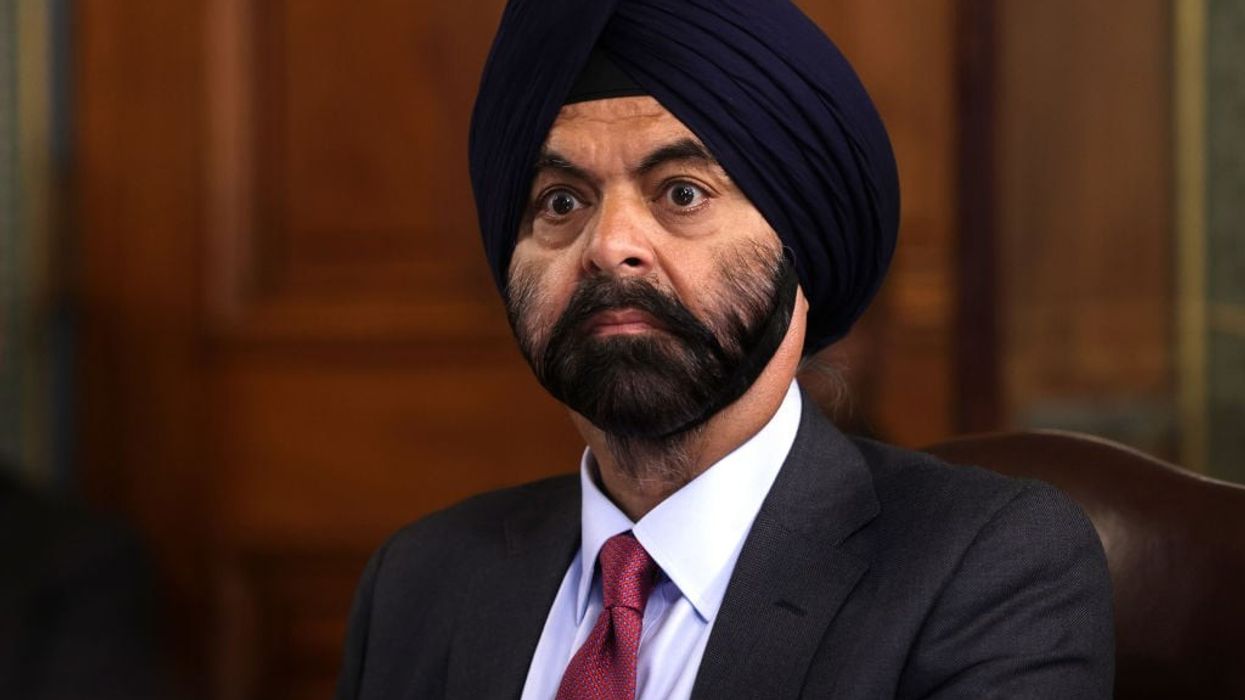
AJAY BANGA, the United States' candidate to lead the World Bank, has helmed large institutions and "helped bring 500 million unbanked people into the digital economy," according to US authorities.
And those who have worked with him describe him as a straight-talking leader who is able to work with people of different cultures.
Banga, 63, has walked an unusual path to potential leadership of the development lender.
Born in Pune, near Mumbai, his father was an Indian army officer and he moved around regularly in his childhood.
Banga, who is Sikh, wears a turban and has a full beard, started out at Nestle in India taking on sales and marketing assignments before moving to PepsiCo and eventually joining Citigroup in 1996.
There, he worked his way up to chief executive officer of the Asia-Pacific region before joining Mastercard in 2009 as chief operating officer and being named its chief executive a year later.
In 2021, he joined private equity firm General Atlantic.
While he was born and raised in India, spending a part of his career there, the Indian-American leader has also been described as an Americanized baseball lover who "owns practically every Elvis Presley album that you could think of," according to a Financial Times interview.
Banga's nomination as a candidate for World Bank president comes as current World Bank chief David Malpass announced recently he would step down nearly a year early.
The Washington-based development lender is accepting candidate nominations, in a process that will run until March 29.
"His working style is 'get it done,'" said David Beasley, executive director of the World Food Program, who worked with Banga during his time at Mastercard.
"He's very articulate, he gets to the point... and is incredibly diplomatic when he does it," Beasley said.
He added that Banga "knows how to work with people from different cultures."
The next World Bank president will need to "unite a very large group of countries behind a common agenda," said Clemence Landers, policy fellow with the Center for Global Development.
"I think having someone who can speak to many different identities and speak to many different constituencies is absolutely critical," she said.
Looking ahead, the candidate would need to make the lender more able to respond to changing needs of countries, and the costs required to do this job is rising, she said.
"It's absolutely essential that this person isn't just seen as representing the US voice, but representing the voices of many of the different parts of the institution," added Landers.
The president of the World Bank is typically American, while the leader of the International Monetary Fund is customarily European. But in recent years, growing emerging market countries have challenged the unwritten arrangement.
(AFP)
Meet Ajay Banga - a straight-talker who 'gets things done'