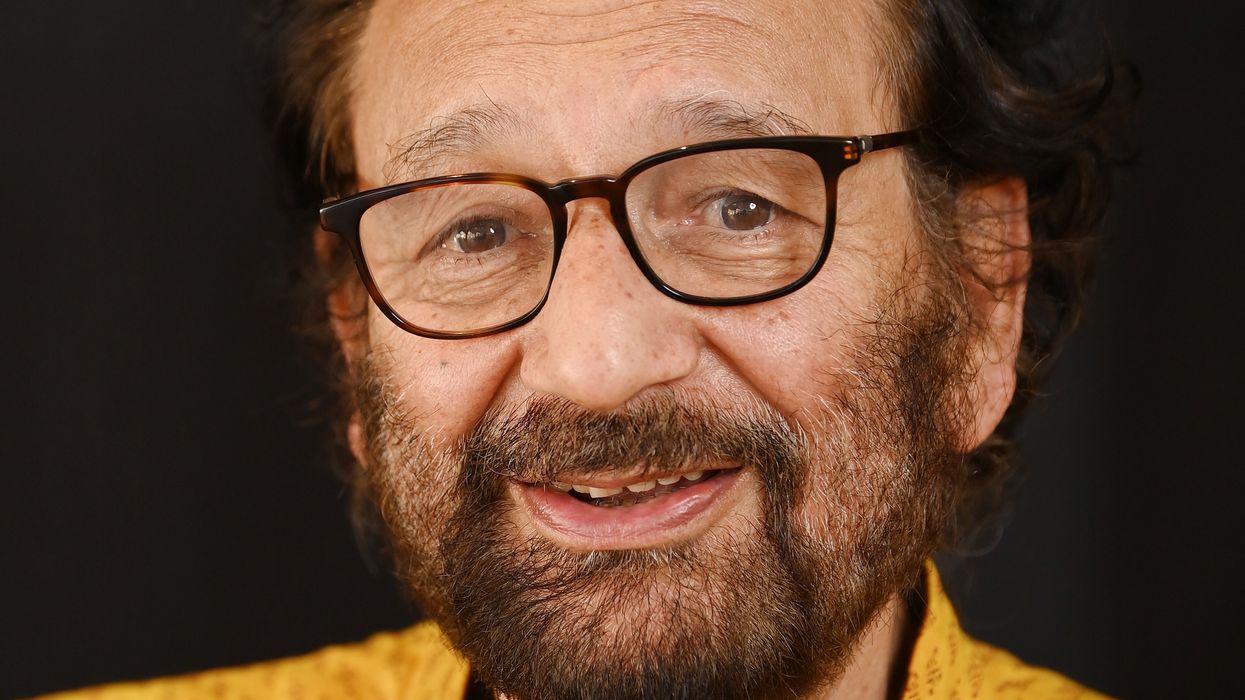

VETERAN Indian filmmaker Shekhar Kapur said he is trying to rediscover the creative naivety that shaped Masoom as he prepares for its much-awaited sequel, set to begin filming soon.
Shabana Azmi and Naseeruddin Shah, who played lead roles in the 1983 film, are set to return for the sequel, for which shooting will start this year.
At the inaugural Indian Film Festival Germany, where Masoom was to be screened, Kapur said his inexperience gave it a unique quality.
“It’s like an attempt to go back to my childhood. And how do I become naive again? Because even Picasso said that. They asked him, ‘what do you really want?’ He said, ‘I want to paint like I’ve never made a painting before.’ And that was Masoom,” the filmmaker said.
“Masoom was made by a person that did not know a thing about it. So I just said, ‘okay, let me try.’ And so I just had to concentrate on the story because I didn’t know what a camera was and how that worked and everything. So maybe something worked,” he said.
Based on American author Erich Segal’s book Man, Woman and Child, Masoom followed a happily married couple whose lives are upended when the husband’s illegitimate son from a past affair comes home.
Kapur said, “I was not a trained filmmaker. I’d never made a film. I’d never assisted anybody. I had not studied filmmaking. I knew nothing about film and then one day I just made a film and I was a chartered accountant in London.
“In fact, I worked in Berlin as an accountant also for a while, then I went back and I made a film. There was a certain naivety to it. And there’s an innocence to when you’re absolutely naive about what you’re doing. You do things differently. So when people say, can you make Masoom again? I say, ‘Can you make me naive again?’” he added.
The Indian Film Festival Germany, which began last Friday (10), is organised by the Embassy of India, Berlin and The Tagore Centre. Kapur said when he received a call from the embassy for the festival, he thought they would be screening his Oscarwinning 1998 movie Elizabeth or his most recent directorial What’s Love Got to Do with It? (2022).
“They said, Masoom. I said Masoom is 30 years old. What are you talking about? They said no, we just want to show it. It’s popular. I haven’t seen it for about 30 years. So it’ll be interesting for me to see it on screen.”
The Indian Film Festival Germany will also feature simultaneous screenings and panel discussions in Hamburg, Frankfurt, and Munich, making it one of the largest non-commercial film festivals to be held outside India.