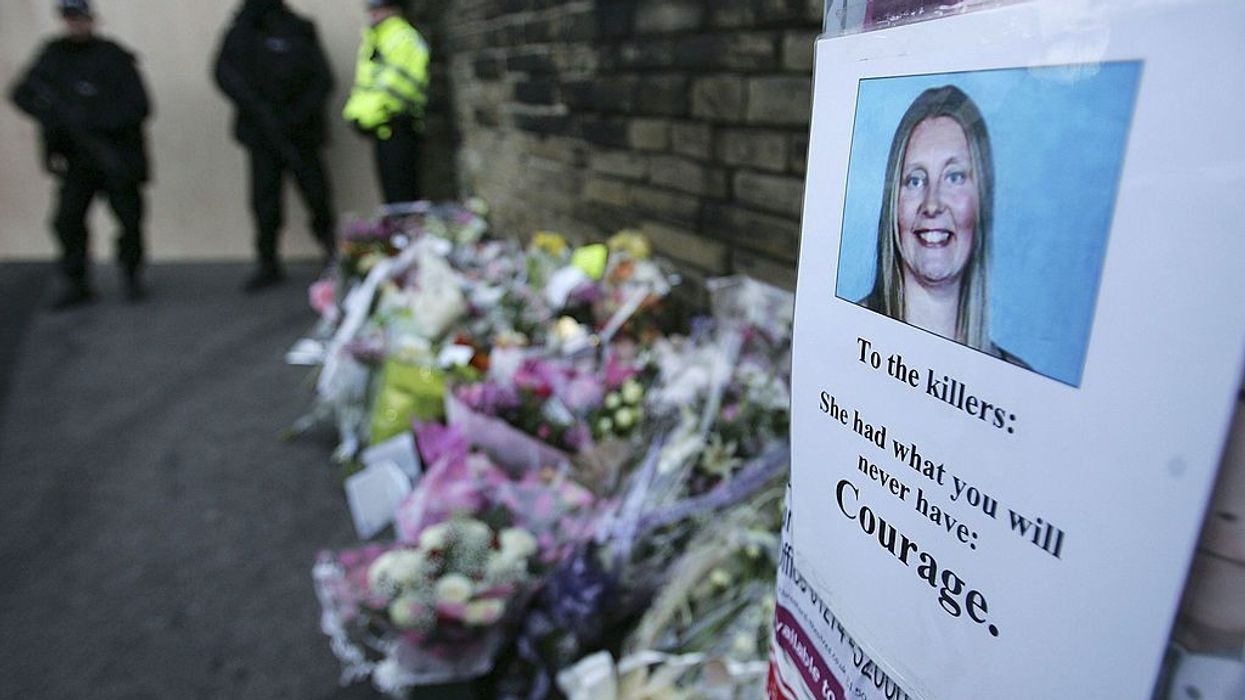
A 74-YEAR-OLD man accused of being involved in the killing of police constable Sharon Beshenivsky 18 years ago has pleaded not guilty to her murder.
Piran Ditta Khan, extradited from Pakistan, however, admitted to one charge of robbery on the day of the West Yorkshire Police officer’s murder but denied he had possessed a firearm with intent to endanger life.
Beshenivsky, 38, was shot dead during a robbery in Bradford in November 2005 and her colleague was seriously injured in the incident.
Beshenivsky, a probationer with only nine months' service at the time of her death, was the seventh female officer to die in the line of duty in England and Wales.
She had three children and her end came on her youngest daughter’s birthday.
Khan was assisted by a Punjabi interpreter when he appeared at Leeds Crown Court on Friday (6) for the pre-trial hearing.
Justice Hilliard remanded Khan in custody until his next hearing and the defendant is set to go on trial in February next year.
Two firearms charges brought against him relate to the possession of a Mac 10 submachine gun and a 9mm pistol.
The court heard that the submachine gun had been allegedly “designed or adapted so that two or more missiles could be successfully discharged without repeated pressure on the trigger”.
Man, 74, denies involvement in Beshenivsky murder
Piran Ditta Khan admits to one charge of robbery on the day of the West Yorkshire Police officer's killing