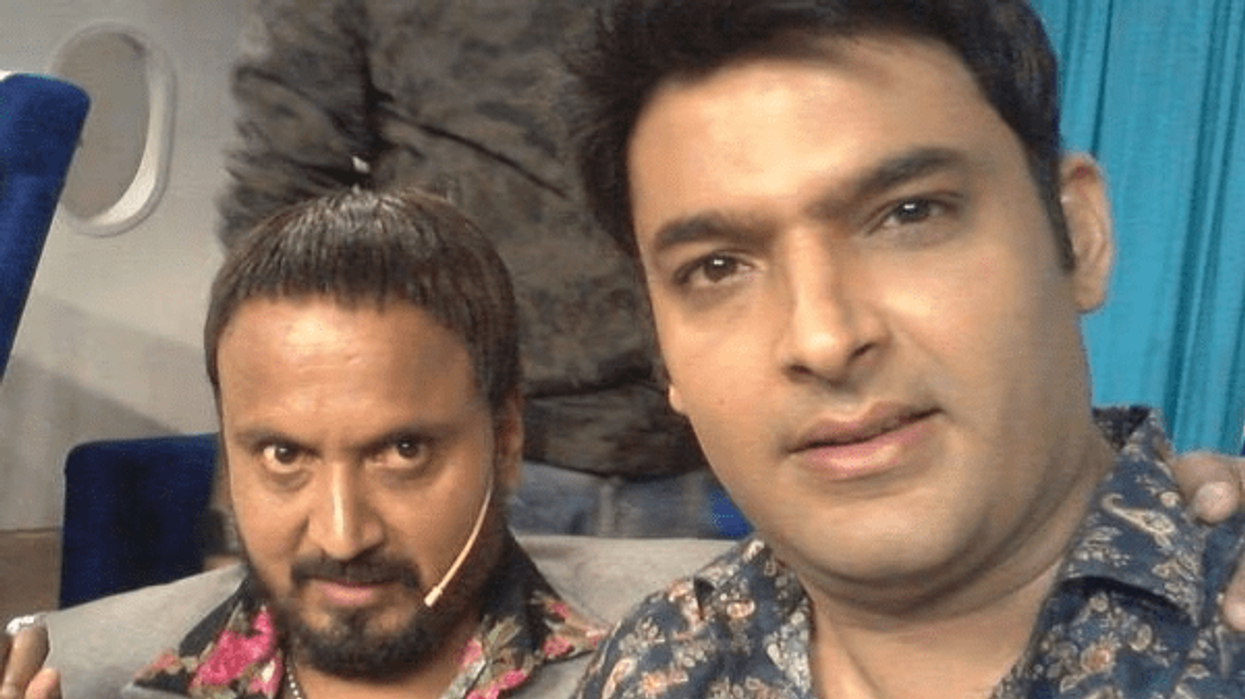

Mimicry artist Tirthanand Rao, who has previously worked with celebrated comedian Kapil Sharma, attempted suicide during Facebook Live on Tuesday.
He consumed phenyl after an argument with his live-in partner.
In the video, he accused his live-in partner of ‘blackmail’ and ‘extortion’.
“I met a woman. She has two daughters. We were also living together. During the relationship, I came to know that she works as a prostitute. I wanted to get rid of her. But that woman started threatening me. On the contrary, she filed a case against me. Due to that fear, I have been running away for a long time. I could not go to my house for many days and was forced to sleep on the footpath. I am fed up with this and that is the reason why I want to kill myself,” Rao said in the video.
The actor added, “I am in debt of ₹3-4 lakh because of this woman. I have known her since October last year. She had filed a police complaint against me in Bhayandar and I didn’t even know for what reason. Then she would also call me and say she wanted to meet.”
As soon as Rao’s friends saw his Facebook Live, they contacted the nearest police station.
Officials said that the actor was rushed to a hospital by his friends who arrived at his home after watching the video, officials said.
Rao was later quoted saying by The Indian Express, “I live in Mira Road with my partner, after the incident where I attempted suicide, I was rushed to a hospital but now I am home and I am alright.”
This was not the first time the actor attempted suicide during a live session. He had done the same in 2021 also.