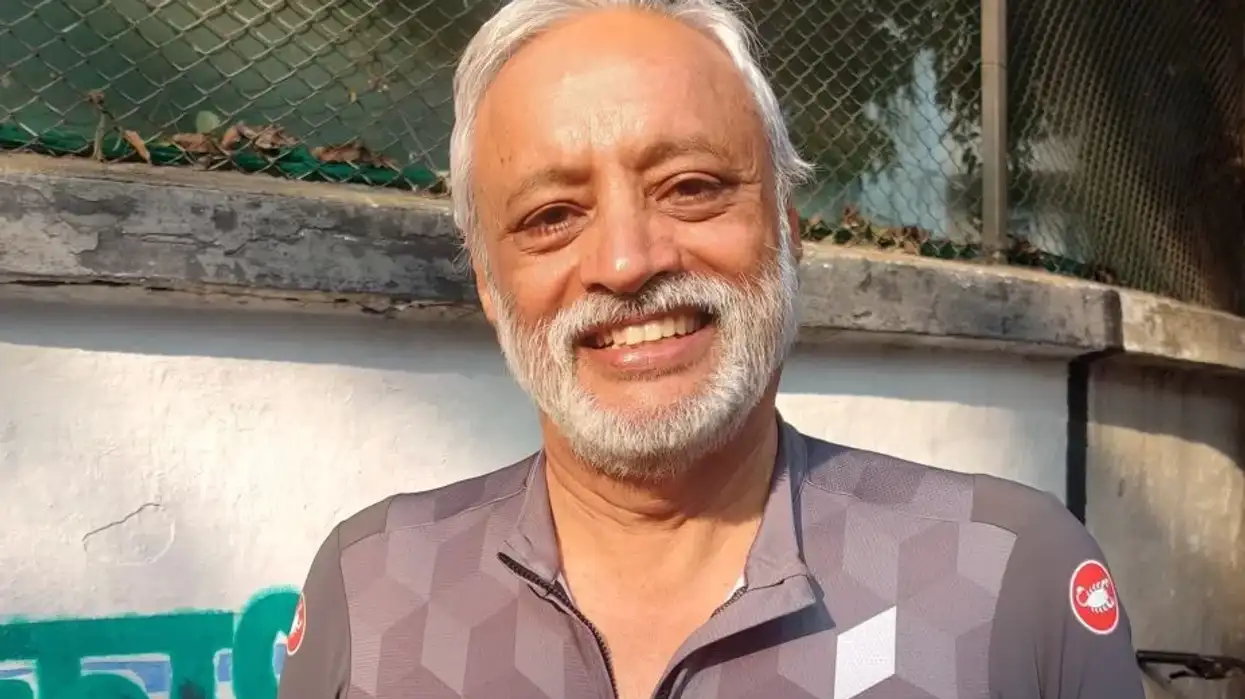

THE former head of Intel India, Avtar Saini, who spearheaded the development of the Pentium processor, tragically lost his life on Wednesday (28) morning when a speeding car collided with his bicycle in Navi Mumbai, according to authorities.
Saini, 68, was cycling with a group of fellow riders on Palm Beach Road in Nerul around 5.50am when his bicycle was struck from behind by a speeding taxi.
Despite wearing a helmet, he sustained grave injuries and was rushed to a nearby hospital, where medical professionals pronounced him dead on arrival.
The driver of the taxi attempted to flee the scene, but was apprehended by other cyclists and handed over to the police.
According to reports, Police have registered a case of reckless driving and negligent causing death against the driver, though he has not yet been arrested.
A resident of Chembur, Saini had been living alone since his wife's passing three years ago. His son and daughter live in the US, and he was scheduled to visit them next month.
Saini served as vice president at Intel India from 1982 to 2004, during which he played a pivotal role in the design of various processors, including the Intel 386, Intel 486, and the widely acclaimed Pentium processor.
Intel India president Gokul V Subramaniam expressed grief over Saini's death saying the prolific inventor would be remembered as a valuable mentor at Intel.
"At Intel, we are deeply saddened by the demise of former country manager and director Intel South Asia, Avtar Saini. Avtar played a key role in setting up the Intel R&D center in India. Avtar will be remembered as a prolific inventor, an outstanding leader and a valuable mentor," he wrote in a post on LinkedIn.
Saini earned bachelor's and master's degrees in electrical engineering from VJTI, Mumbai, and the University of Minnesota, respectively. At Intel, he played a key role in developing the Pentium processor and was involved in the initial stages of Intel's 64-bit architecture, the Itanium processor.
Starting as a product engineer in April 1982, Saini worked on magnetic bubble memories. In the 1980s, he contributed as a circuit designer for the Intel 80386 and as a micro-architect/logic designer for the 80486.
In 1989, he advanced to co-lead the Pentium processor design, overseeing its development and production. Later, he served as general manager of Intel's Santa Clara Microprocessor Division, managing the company's 64-byte architecture microprocessor.
By May 1996, he led the Platform Components Division in Folsom, California, focusing on Chipset and Graphics solutions for Intel's Architecture platform.
In September 1999, Saini became the director of South Asia after relocating to India. He left Intel in January 2004, leaving behind a legacy that includes seven patents in microprocessor design.
(with inputs from PTI)