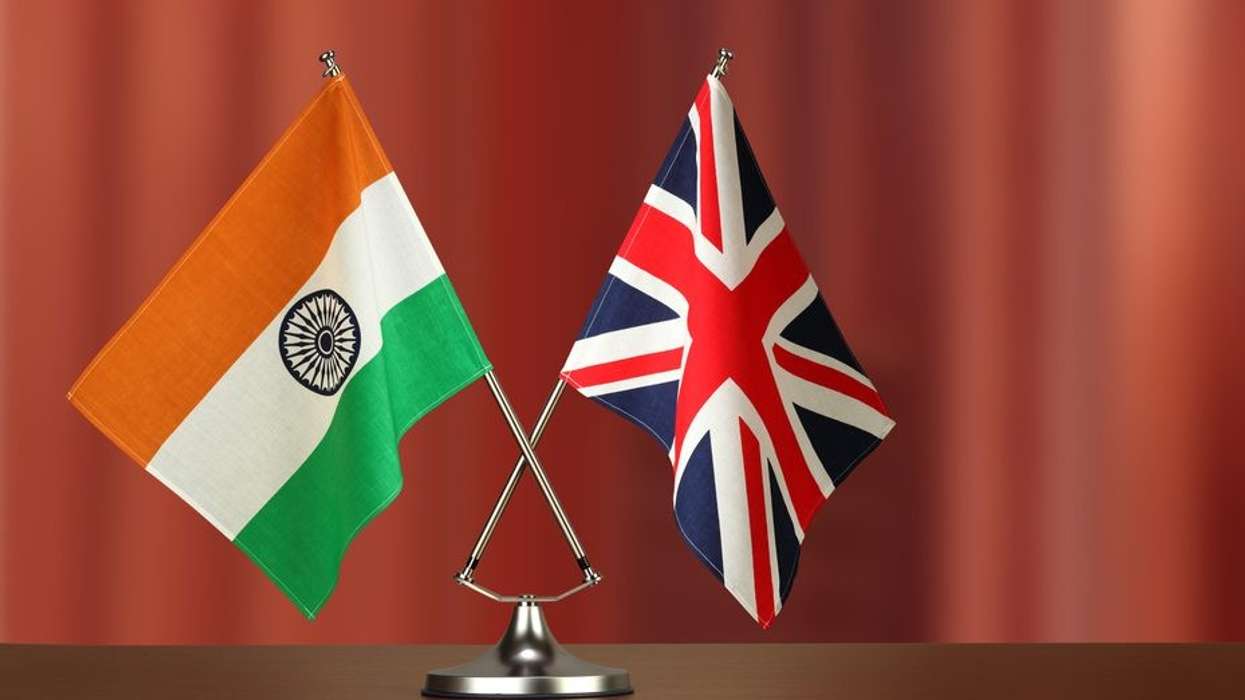

INDIA and the UK are making progress in talks to resolve pending issues linked to the implementation of the free trade agreement, including Britain’s steel safeguard measure, an Indian official said on Monday.
The safeguard measure and the UK’s carbon border adjustment mechanism (CBAM) have emerged as key issues in implementing the Comprehensive Economic and Trade Agreement (CETA), signed on July 24, 2025.
“Talks are going on, and the progress is good. We have ironed out one of the three issues. On the second and third issues, they (UK) have given us some proposals, we (India) have given some counter questions. Both teams are working on that,” the official said without sharing details of the issues, PTI reported.
Asked if India's commerce and industry minister Piyush Goyal would travel to London, the official said: “If things get ironed out, then maybe”.
India and the UK are also expected to hold the Joint Economic and Trade Committee (JETCO) meeting later this month in Britain.
On June 2, Goyal held talks with UK secretary of state for business and trade Peter Kyle on these issues.
From July 1, 2026, the UK will limit tariff-free steel imports by reducing overall quota volumes by 60 per cent compared with the current steel safeguard measure. Imports above those levels will face a 50 per cent tariff.
The measure will apply to steel product imports that can also be produced in the UK.
Britain previously had safeguard measures that imposed import quotas. The new measures reduce those quotas.
The UK government also decided in December 2023 to implement its Carbon Border Adjustment Mechanism from 2027.
According to economic think tank GTRI, India’s exports worth $775 million to the UK could be affected by Britain’s decision to introduce a carbon tax from 2027 on products such as iron and steel, aluminium, fertiliser and cement.
After the European Union, the UK will become the second economy to implement CBAM. Britain refers to the move as the import carbon pricing mechanism, which will initially cover sectors including iron, steel, aluminium, fertiliser, hydrogen, ceramics, glass and cement.
The tax could range between 14 and 24 per cent of the import value after the full phase-out of free allowances under the ETS (Emission Trading System).
India’s exports of iron and steel and related products to the UK stood at $893.4 million in 2025-26. Total merchandise exports to the UK were valued at $13.4 billion.