Billionaire fugitive jeweller wants asylum in Britain
INDIAN authorities have urged Britain to extradite a fugitive billionaire businessman who has reportedly sought asylum in the UK.
The Central Bureau of Investigation (CBI) confirmed they had sent a request to Interpol to issue a notice seeking the detention of Nirav Modi, a jeweller whose designs have been worn by Hollywood and Bollywood stars.
“A request has been sent to the Interpol,” CBI official RK Gaur told an international news source.
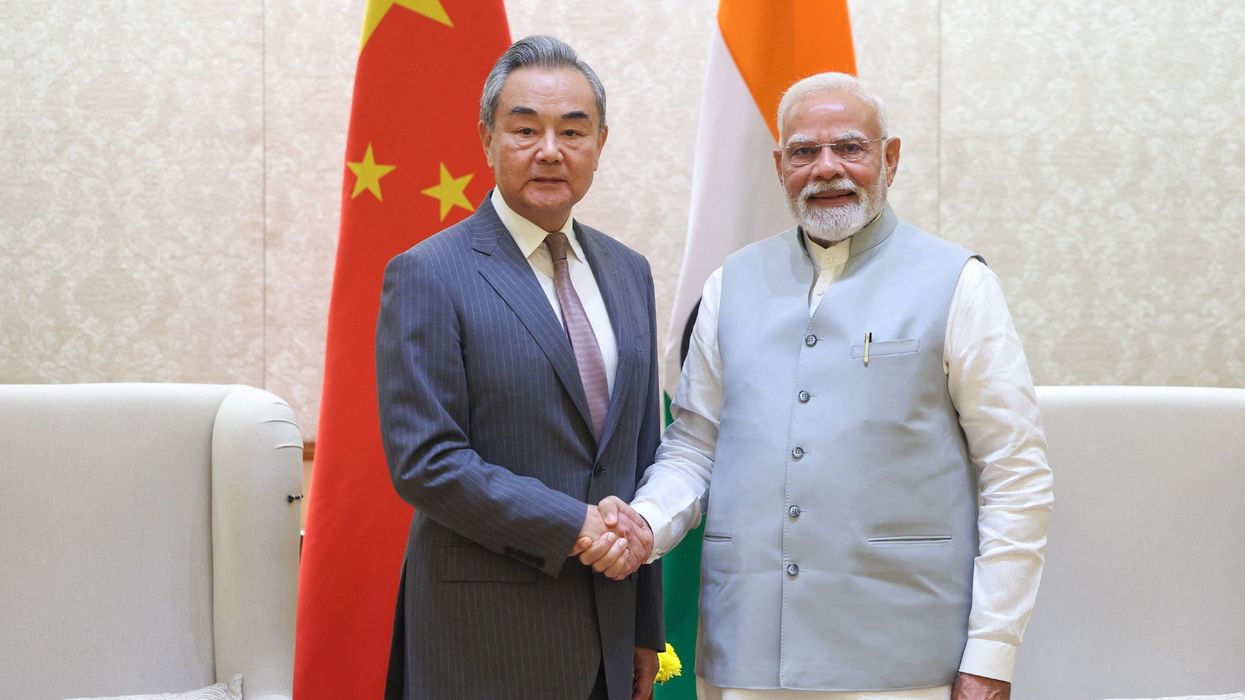
An Indian government statement said that Kiren Rijiju, India’s deputy interior minister, told his visiting British counterpart, Baroness Susan Williams on Monday (11) that Britain “should not be viewed as a safe haven for men wanted by the law”.
Nirav Modi’s presence in the UK was reportedly confirmed during the meeting between Rijiju and Baroness Williams.
Another Indian businessman, Vijay Mallya, who is resident in England, is also being sought by India. He is fighting extradition in a British court.
Officials in India said on Tuesday (12) that Britain may link the extradition of jeweller Modi and businessman Mallya with the signing of a much-delayed agreement that will facilitate deportation of more than 75,000 Indians who are allegedly illegally living in the UK.
Britain and India appear to be at a diplomatic standstill as reports from New Delhi suggest the UK wants India to sign a treaty to enable the return of illegal immigrants as it takes into account New Delhi’s request to extradite Nirav Modi, who is being investigated for alleged fraud.
Mallya is wanted in connection with alleged unpaid loans to his troubled Kingfisher Airlines after he fled to Britain in 2016. Nirav Modi is the founder of his self-named global diamond jewellery house and is believed to have a personal wealth of £1.25 billion.
According to Forbes, he is the 85th richest person in India. His jewellery is known for being adorned by some of the world’s most high-profile stars including Naomi Watts and Kate Winslet.
Bollywood star Priyanka Chopra acted as a global ambassador for the brand until she terminated her contract after the fraud allegations came to light.
Nirav Modi, 47, is accused alongside his uncle and business partner Mehul Choksi, and was initially accused by India’s Punjab National Bank (PNB) of defrauding it of `2.8bn (£31.35 million) in February. PNB then announced it had detected fraud of almost £1.2bn at a single branch in Mumbai.
This figure is said to be just a part of the total losses. Authorities say he diverted large sums of the loan money illegally to invest in foreign-based companies, using illegal guarantees provided by rogue PNB employees.
The federal investigation agency has so far arrested 19 people for enabling the defrauding of the bank with forged documents.
Nirav Modi is thought to have left India in January to an unknown location prior to the case being filed. His escape had caused a massive public outcry, with opposition political parties accusing prime minister Narendra Modi (unrelated to the jeweller) of helping him flee.
According to reports from India, talks on finalising the memorandum of understanding (MoU) on illegal immigrants was raised by Baroness Williams during her talks with Rijiju, in which she stressed the need for formal signing of deal to enable the return of illegal Indian migrants within a month of their detection by the British authorities.
It is said that India raised the issue of extradition of Modi, Mallya and others to face the law in the country. According to British authorities, who are eager to proceed with deporting illegal immigrants, the largest group of such people in the UK is fr-om India.
British officials said around 5,000 Indians voluntarily returned to India in 2017 and an estimated 700 were deported.
And while the UK claims that the number of illegal migrants still in the country is between 75,000 and 100,000, Indian agencies believe only 2,000 Indians are overstaying in the UK.
Previously in January, Rijiju had signed a draft agreement on the issue of illegal immigrants in London while the formal MoU was supposed to be inked during Narendra Modi’s visit to the UK in April.
However, New Delhi has delayed the signing of the final agreement, apparently due to the concerns raised by certain quarters in the government, another official said.
Rijiju signed the draft agreement following the approval of the Indian cabinet, chaired by Modi late last year.
Another official said that this was perhaps one of the few instances when India delayed formalising a bilateral agreement despite signing the draft deal.
The range of concerns include fear of mass deportation, a consent clause and possible security breaches. The consent clause is whether a person’s approval is sought before the process starts to ascertain his or her nationality.
India wants this clause, which will give relief in certain cases, but the UK is apparently not keen as this would effectively be making an exemption for a person staying illegally in Britain.
New Delhi is concerned that a large number of Indians could potentially be sent back without any humanitarian consideration.
India has also made it clear that it will accept those Indians whose nationality is established after verification within a fortnight. According to reports, India will not accept those whose nationality could not be verified – as the physical features of the citizens of Pakistan, Bangladesh, Sri Lanka and Nepal are similar to Indians.
Britain has assured India that the agreement is merely codifying the existing immigration rules and it has similar deals with Nigeria, China, Pakistan and Ghana – countries with a large number of citizens living illegally in Britain.
According to the initial agreement, the British authorities will first identify the illegal migrant, the Indian authorities will be informed and then the verification will be done by police agencies back home.
If the claims of the British authorities are found to be correct, then travel documents will be readied and the person deported by the UK authorities. This process will take a month, the official said.
A spokesperson for the Home Office said they do not comment on individual cases. (Agencies)