
INDIAN authorities are restricting major religious festivals that start this week and attract huge crowds, warning that a new Covid-19 wave had already begun in the financial capital Mumbai.
State governments across the country of 1.3 billion people, which saw a devastating coronavirus surge in April-May, are clamping down on mass gatherings.
"The third wave is not coming, it is already here," Mumbai's mayor Kishori Pednekar told reporters.
"We can celebrate festivals later. Let us first prioritise the lives and health of our citizens," added Uddhav Thackeray, the chief minister of Maharashtra, of which Mumbai is the capital.
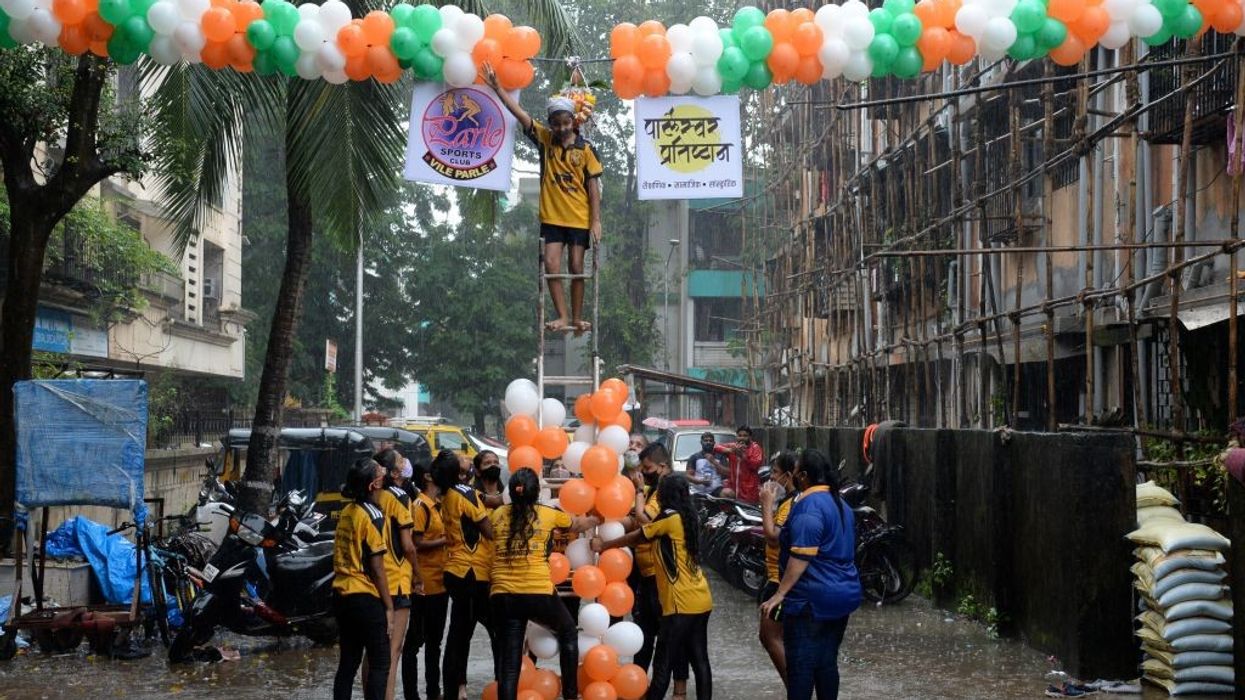
He was speaking ahead of the 11-day Hindu Ganesh Chaturthi festival, which starts Friday (10).
The last Covid-19 wave overwhelmed India's hospitals and was known to have killed more than 200,000 people.
It struck after one of the world's biggest religious gatherings, the Kumbh Mela, which attracted some 25 million Hindu pilgrims.
That gathering, large state election rallies and the infectious Delta virus variant -- first detected in India -- were blamed by experts for fuelling the surge.
Authorities said a recent spike in cases in the southern state of Kerala after the Onam festival in August should be cause for alarm.
But festive crowds have still packed markets in Maharashtra and other states in recent days, ignoring the warnings.
The state government will limit the height of effigies of the elephant-headed god Ganesha to reduce the number of devotees carrying them during the festival.
Processions on the festival's first and last days will be banned.
Restrictions on movements and activities are expected to be introduced this week as cases rise in another major Maharashtra city, Nagpur.
In the neighbouring state of Karnataka, a night curfew will remain in place and districts posting higher positive test levels will be banned from holding Ganesh celebrations.
Karnataka health minister, K. Sudhakar, has said that officials were also concerned the recent resumption of high school classes could increase cases.
Viti Kumar, a resident of Lucknow in the northern state of Uttar Pradesh, said she feared people would let down their guards during the festivals.
"I cannot take chances with my daughter. I am not sending her to school," she said.
The southern state of Tamil Nadu has banned public festival celebrations, while the eastern state of West Bengal was expected to impose curbs on the nine-day Durga Puja in October.
India has the world's second-highest known caseload, with more than 33 million infections, and 441,000 deaths.
(AFP)