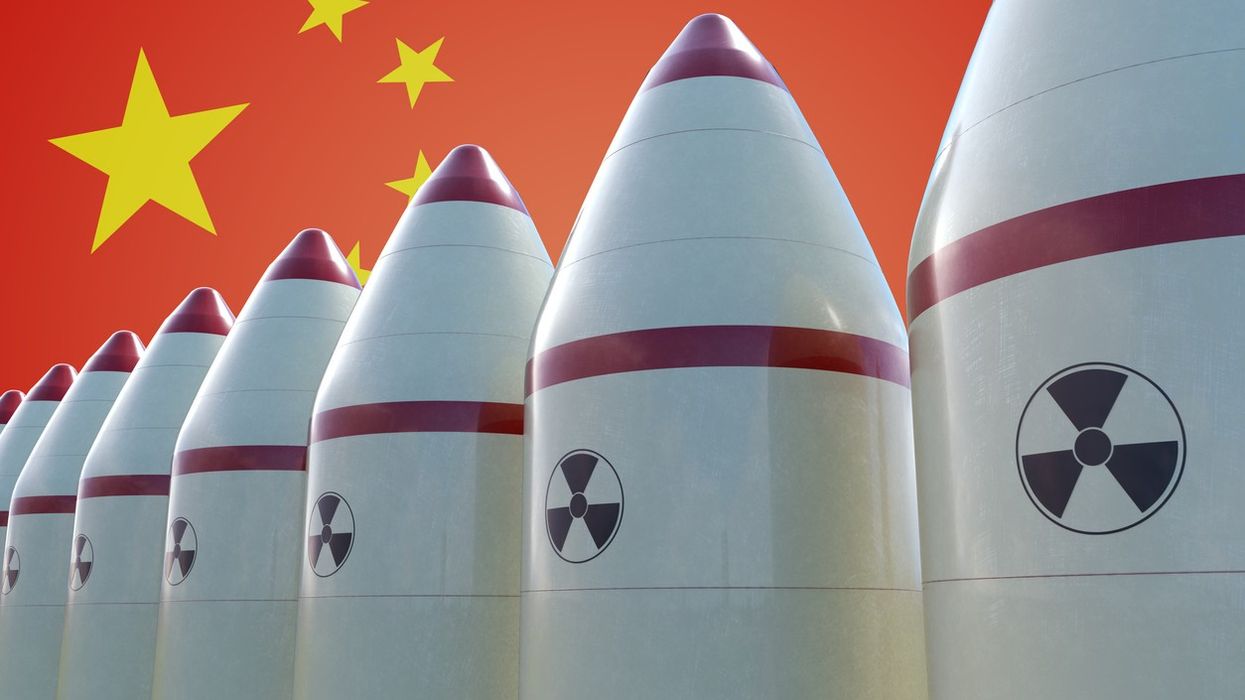

CHINA, Pakistan and India appear to be expanding their nuclear arsenals, a study by Stockholm International Peace Research Institute (SIPRI) has said.
China had 350 nuclear warheads as of January last year, Pakistan 165 and India 156, while Russia and the US together possess more than 90 per cent of the estimated 13,080 global nuclear weapons, the SIPRI’s study said on Monday (14), citing its assessment.
Nine countries in the world have nuclear weapons: the US, Russia, the UK, France, China, India, Pakistan, Israel and North Korea.
"China is in the middle of a significant modernisation and expansion of its nuclear weapon inventory, and India and Pakistan also appear to be expanding their nuclear arsenals," the study said.
It has been more than a year since a military standoff between the armies of India and China erupted in eastern Ladakh on May 5, 2020, during which there were fatalities on both sides for the first time in 45 years.
India and China have made limited progress in achieving disengagement at the Pangong lake area while negotiations for similar steps at other friction points remained deadlocked.
India and Pakistan had on February 25 this year released a joint statement announcing a ceasefire along the Line of Control, following talks between their directors general of military operations.
The SIPRI's study also talked about the fissile raw material stocks that the countries have for their nuclear weapons.
"The raw material for nuclear weapons is fissile material, either highly enriched uranium (HEU) or separated plutonium... India and Israel have produced mainly plutonium, and Pakistan has produced mainly HEU but is increasing its ability to produce plutonium," it said.
China, France, Russia, the UK and the US have produced both HEU and plutonium for use in their nuclear weapons, the study mentioned.
"The governments of India and Pakistan make statements about some of their missile tests but provide no information about the status or size of their (nuclear) arsenals," it noted.
Approximately 2,000 of the total 13,080 global nuclear warheads in the world are "kept in a state of high operational alert", said the study mentioned in the SIPRI Yearbook 2021.
It also said Saudi Arabia, India, Egypt, Australia and China were the five largest importers of major arms in the world between 2016 and 2020.
Saudi Arabia had an 11 per cent share and India 9.5 per cent in the global imports of the major arms in this period, it added.