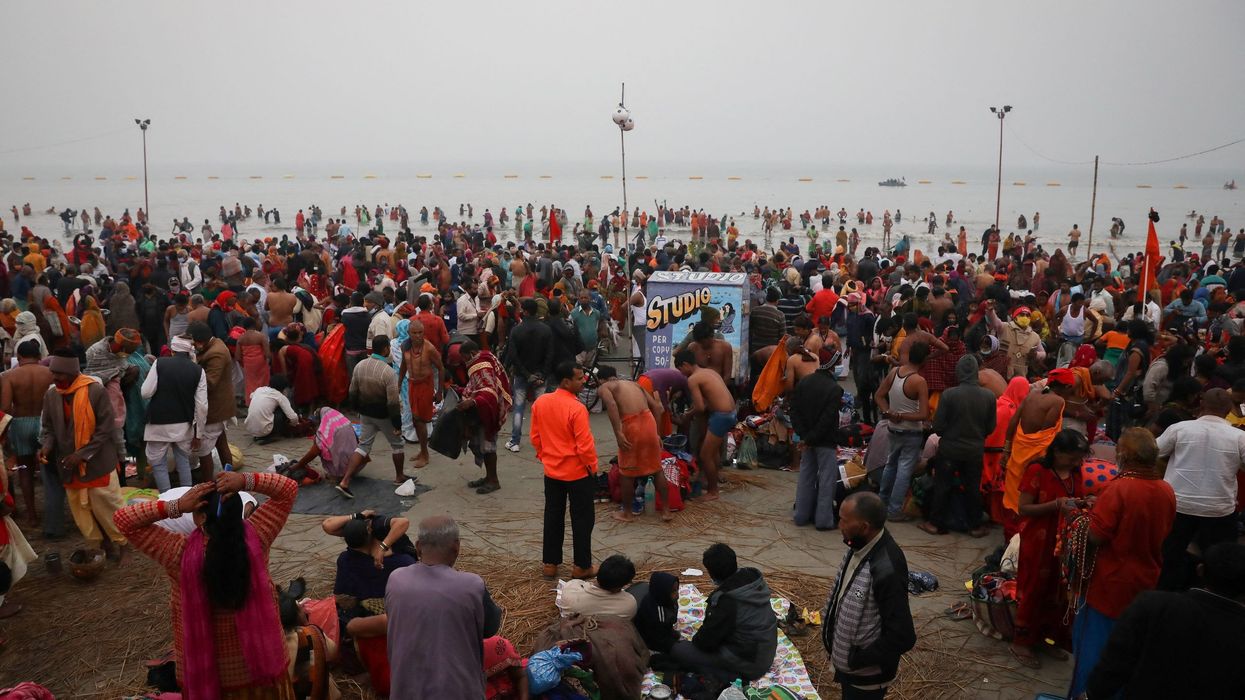

HUNDREDS of thousands of Hindu worshippers gathered on the banks of India's Ganges river on Friday (14) for a holy bath despite a 30-fold rise in coronavirus cases in the past month.
Hindus believe a bath in the holy river on the Jan. 14 Makarsankranti festival washes away sins.
A large number of devotees were taking a dip in the sacred river where it flows through the eastern state of West Bengal, which is reporting the most number of cases in the country after Maharashtra state in the west.
In the northern state of Uttar Pradesh, thousands of devotees, few wearing masks, thronged the river's banks in the holy city of Prayagraj.
"I can't breathe with a mask," Ram Phal Tripathi, who came with his family from a village in Uttar Pradesh state, said after emerging from the river.
"Every year I come for a holy dip. How could I have missed it this year?"
India is again facing a surge in coronavirus cases, fuelled mostly by the highly transmissible Omicron variant, but hospitalisations are low, with most people recovering at home.
Doctors had appealed unsuccessfully to the West Bengal state high court to reverse a decision to allow the festival this year, worrying it will become a virus "super spreader" event.
Last year, a big religious gathering in northern India contributed to a record rise in coronavirus cases.
On Friday (14), the health ministry reported 264,202 new cases of the coronavirus in the previous 24 hours, taking India's total tally to 36.58 million.
Deaths from Covid-19 rose by 315, with total now at 485,350, the ministry said.
(Reuters)