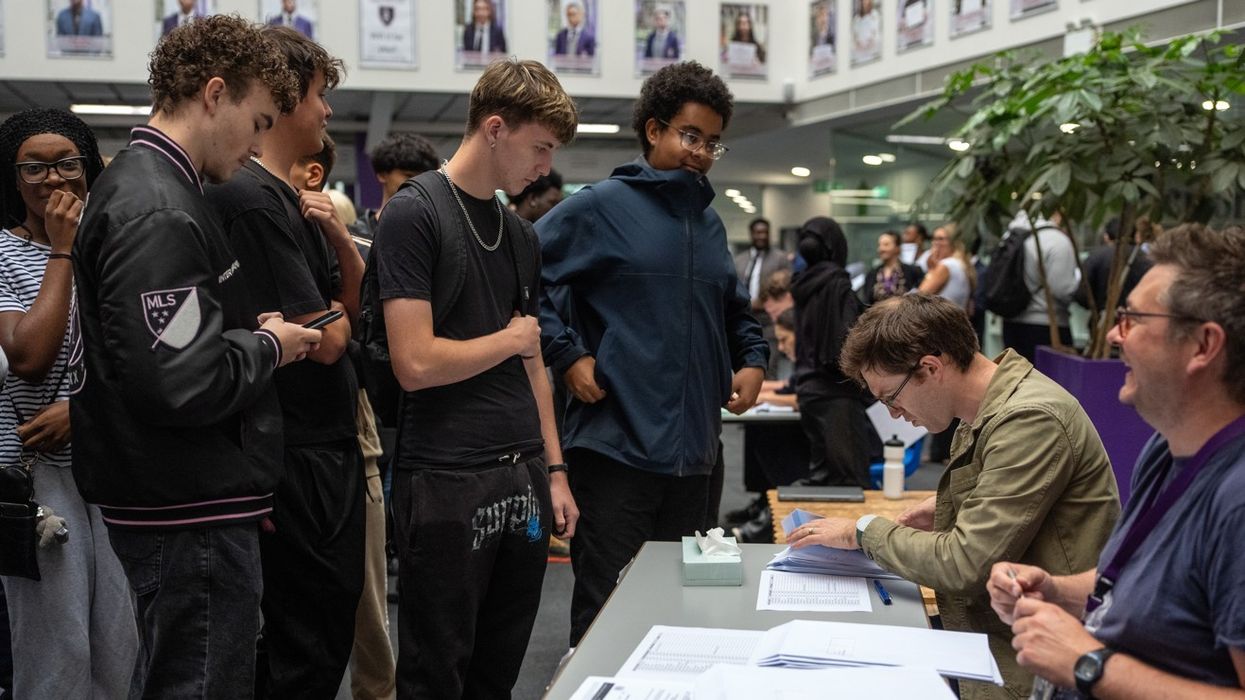

HUNDREDS of thousands of teenagers received their GCSE results on Thursday, with figures showing a slight increase in top grades but a growing number of pupils failing English and maths.
Data from the Joint Council for Qualifications showed that 21.9 per cent of entries were awarded at least grade 7 or A, up from 21.8 per cent last year. The overall pass rate at grade 4 or C fell slightly to 67.4 per cent, compared with 67.6 per cent last year, though still above pre-pandemic levels.
Among 16-year-olds, 39.8 per cent did not achieve a standard pass in English language and 41.7 per cent failed in maths, both worse than last year. More students are expected to retake exams in autumn or next year, The Times reported.
Among older students retaking exams, results were also low: only 18.2 per cent of those aged 17 or above passed maths, while 23.1 per cent passed English.
Regional disparities continued. London had the highest proportion of top grades, with 28.4 per cent at 7 or A, compared with 17.8 per cent in the northeast, the lowest performing region. London also had the highest pass rate at grade 4 or C, 71.6 per cent, down from 73.1 per cent last year.
Gender differences persisted. Girls achieved 24.5 per cent top grades, compared with 19.4 per cent for boys. The gap of 5.1 percentage points was the smallest in 25 years. At least grade 4 or C was achieved by 70.5 per cent of girls and 64.3 per cent of boys.
Ofqual figures showed 1,302 pupils achieved grade 9 in all their GCSEs, with girls making up 61.7 per cent.
Subject choices shifted, with Spanish overtaking French, and entries rising in statistics, music, business studies and physical education, while history, religious studies, English literature and single sciences saw declines.