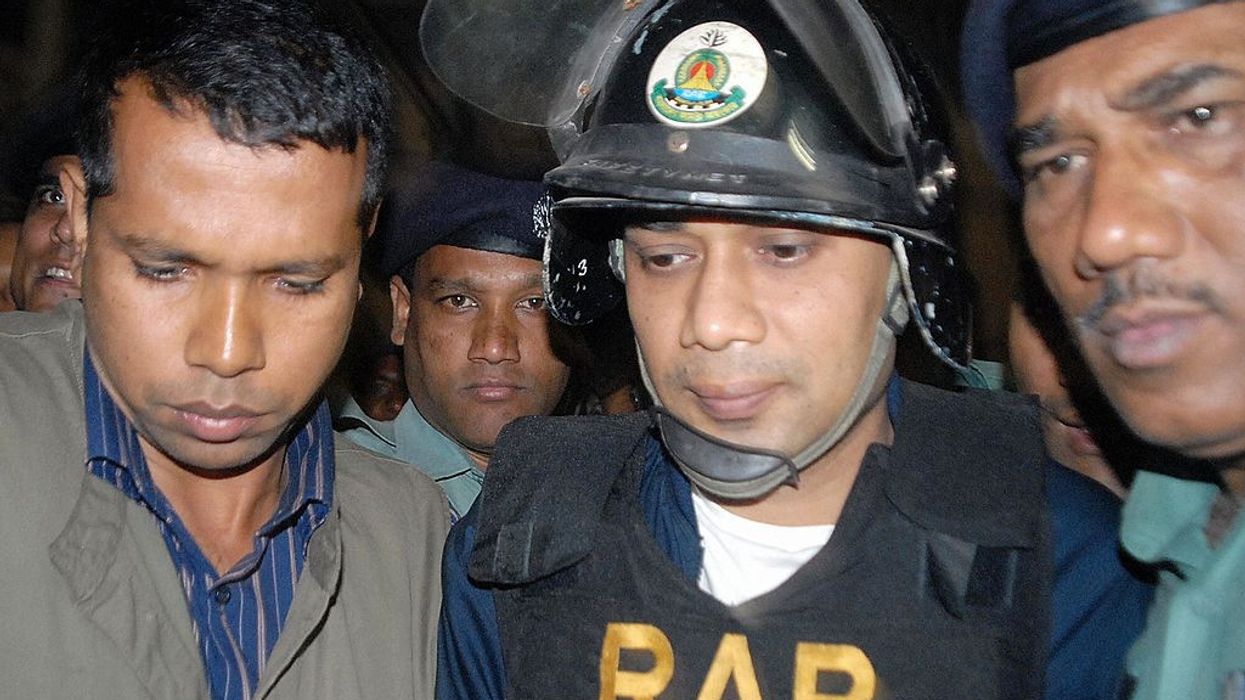
BANGLADESH'S exiled opposition leader was sentenced in absentia to nine years jail for corruption on Wednesday (2), lawyers said, triggering protests from hundreds of supporters who called the trial politically motivated.
Tarique Rahman, 55, acting chairman of the Bangladesh Nationalist Party (BNP), was handed the nine-year sentence and his wife, Zubaida, was given three years, Anti-Corruption Commission lawyer Khushid Alam Khan said.
"He was sentenced to nine years in jail for concealing income and accumulating wealth disproportionate to his income, and his wife was sentenced to three years in jail for abetting her husband," Khan said.
BNP lawyer Masud Ahmed Talukder called the sentence "100 per cent politically motivated", saying the case was meant to keep Rahman "off from politics ahead of the December-January general election".
The BNP and its allies have staged a series of protests since last year demanding prime minister Sheikh Hasina step down and allow a caretaker government to oversee the elections.
Around a thousand BNP supporters rallied outside party headquarters in Dhaka after the Rahmans' sentencing, senior police official Rawshanul Huq Saikat said.
Western governments have expressed concern over the political climate in Bangladesh, where the ruling party dominates the legislature and runs it virtually as a rubber stamp.
Rahman, based in London since 2008, had already been given a life sentence in 2018 for his role in a 2004 grenade attack that killed more than 20 people during a political rally for then-opposition leader Hasina. Rahman's mother Khaleda Zia was the prime minister at the time.
Zia is under effective house arrest after she was sentenced to 17 years in jail in two separate graft cases in 2018.
Rahman has been leading the party from Britain in her absence.
Zubaida, a doctor, is not involved in politics and has not been sentenced before, with the conviction effectively stopping her return home and making her ineligible to stand in the polls.
(AFP)
Exiled Bangladesh opposition chief sentenced for graft
Based in London since 2008, Tarique Rahman was handed down a jail term in 2018 for his role in a 2004 grenade attack when his mother was the prime minister