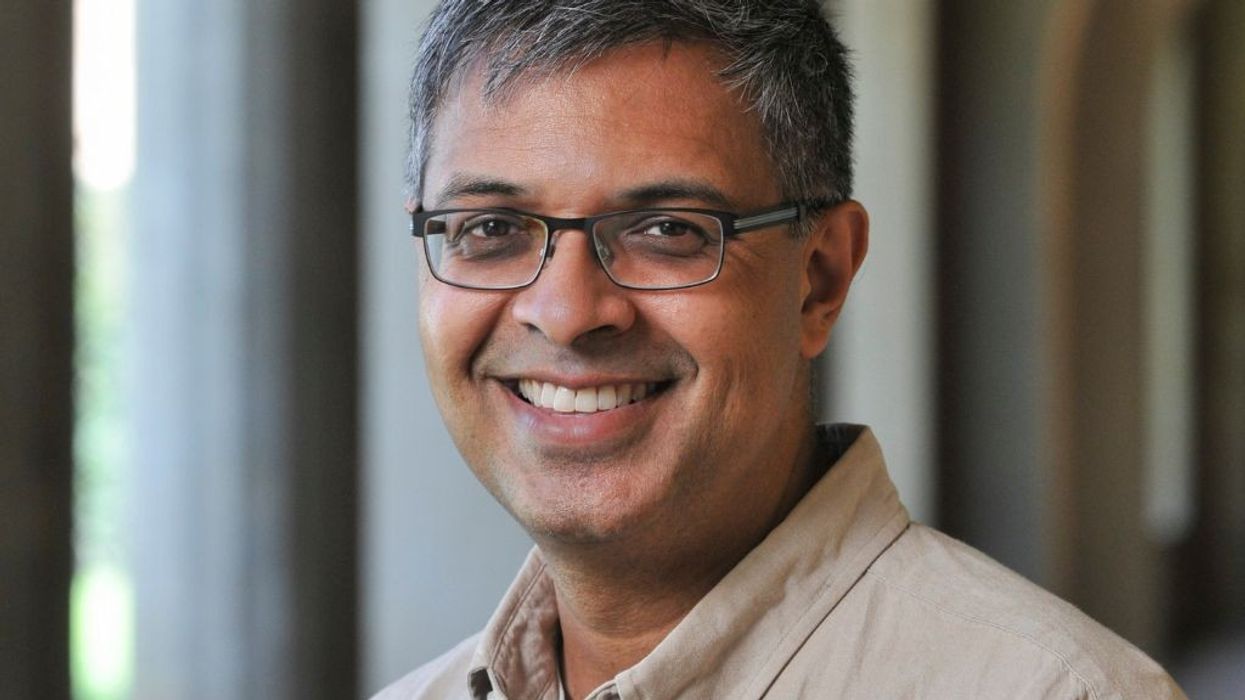

An Indian-origin professor at Stanford claimed Twitter had blacklisted him before the social media company was taken over by billionaire Elon Musk.
Jay Bhattacharya said he visited Twitter’s headquarters in San Francisco after he was invited by Musk to meet him and learn more about the blacklist he was added to.
Bhattacharya, an expert on the economics of health care, said his inclusion in the blacklist on the day he joined the social media platform in 2021 was probably because of his pinned tweet in which he shared the Great Barrington Declaration.
The declaration is a letter co-authored by Bhattacharya, British infectious disease epidemiologist Sunetra Gupta and former Harvard Medical School professor Martin Kulldorff.
It talks about the ill effects of lockdowns on children and the working class.
The Joe Biden administration rejected the paper which advocates herd immunity, saying the concept if implemented would lead to more hospitalisation and fatalities.
Bhattacharya tweeted: "I spent the afternoon yesterday at Twitter HQ at the invitation of @elonmusk to find out more about the trend "blacklist" that Twitter placed on me & more..."
Referring to the social media company before Musk took over, the professor said, "Twitter 1.0 placed me on the blacklist on the first day I joined in August 2021. I think it was my pinned tweet linking to the @gbdeclaration that triggered the blacklist based on unspecified complaints Twitter received.”
“Twitter 1.0 rejected requests for verification by me and @MartinKulldorff. Each time the reasoning (never conveyed to us) was that we were not notable enough. They should have asked Francis Collins -- he would have vouched for our standing as "fringe epidemiologists,"” he said.
“It will take some time to find out more about what led Twitter 1.0 to act so imperiously, but I am grateful to @elonmusk , who has promised access to help find out. I will report the results on Twitter 2.0, where transparency and free speech rule”, Bhattacharya wrote.
Musk tweeted in response: “Thank you for your rigorous adherence to science.”