
- Johnson announces Covid-19 public inquiry
- Public inquiry to begin spring 2022
- Britain has world's fifth highest death toll
- Opponents say inquiry must win public confidence
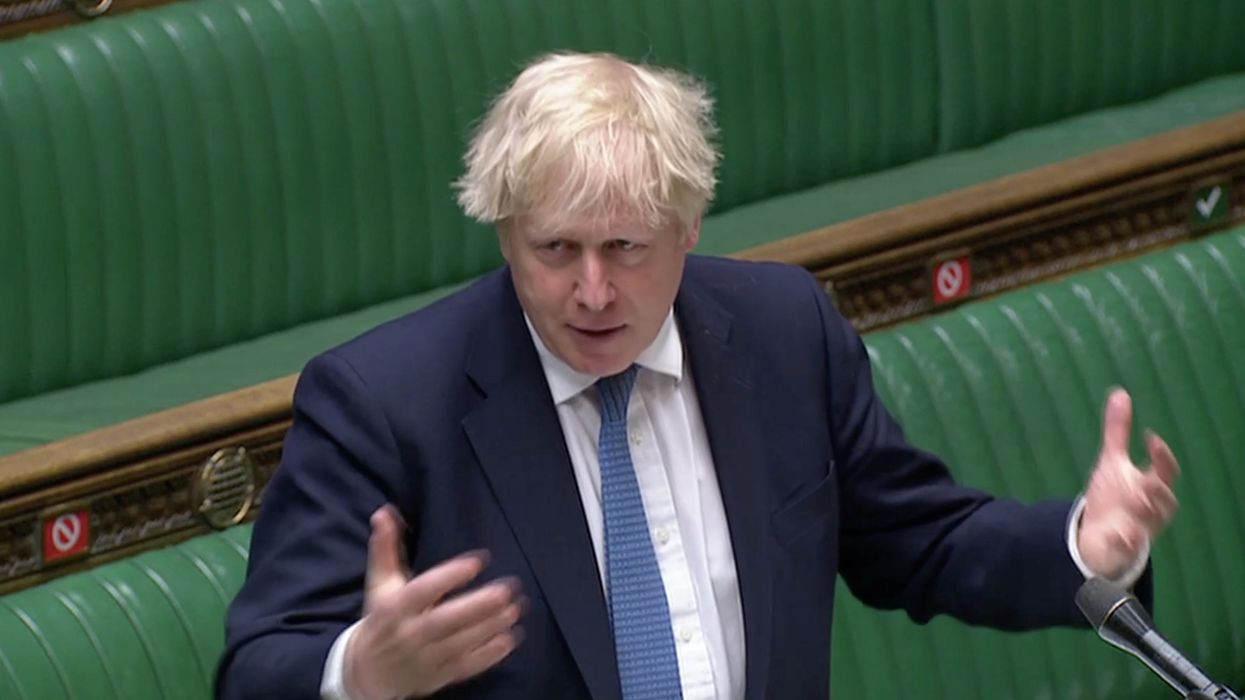
UK prime minister Boris Johnson on Wednesday (12) announced an inquiry next year into the handling of the Covid-19 pandemic that is likely to focus on why the UK suffered Europe's worst death toll and was so slow initially to impose a lockdown.
Johnson and his ministers have admitted there are lessons to be learned from the worst public health crisis in decades, but point to the UK's swift vaccine rollout as evidence that there were also successes.
"This process will place the state's actions under the microscope," Johnson told parliament.
"Amid such tragedy the state has an obligation to examine its actions as rigorously and as candidly as possible, and to learn every lesson for the future - which is why I've always said when the time is right there should be a full and independent inquiry.
"So, I can confirm today that the government will establish an independent public inquiry on a statutory basis, with full powers under the Inquiries Act 2005."
The devolved administrations will be consulted before the scope of the inquiry is outlined, he added.
The public inquiry and its final report could define Johnson's political legacy and, depending on when the findings are published, influence voters ahead of a national election currently due some time before 2024.
It will delve into the decision-making at the heart of the British state when ministers mulled the imposition of unprecedented peacetime restrictions and scrambled to buy billions of pounds worth of drugs and equipment.
The inquiry will have the backing of legislation giving it far-reaching powers, Johnson said.
Johnson had previously agreed to hold an inquiry but resisted pressure from opposition parties to begin it while the government was still handling the crisis, saying it was more important to focus on that and the subsequent recovery plan.
But the prime minister did not set out the terms of reference for the inquiry, or who would lead it, saying it was necessary to consult with Scotland, Wales and Northern Ireland on those issues.
'Why not early?'
Opposition Labour leader Sir Keir Starmer questioned why the inquiry could not start earlier, such as later in 2021.
He also said it was vital the exercise had the backing of all political parties in parliament and commanded the trust of families of victims of the pandemic.
The Covid-19 Bereaved Families for Justice UK group has been lobbying for a meeting with Johnson since last summer, and for the launch of an urgent independent investigation into the pandemic, reported the BBC.
The UK's official death toll is 127,629 - Europe's worst figure and the world's fifth worst, after the US, Brazil, India and Mexico, according to Johns Hopkins University.
Johnson has been accused by opponents of reacting too slowly to the crisis, especially at the onset, failing to supply sufficient protective equipment and bungling the testing system.
So far 35.6 million people in the UK, more than two thirds of the adult population, have had a first dose of a Covid-19 vaccine.