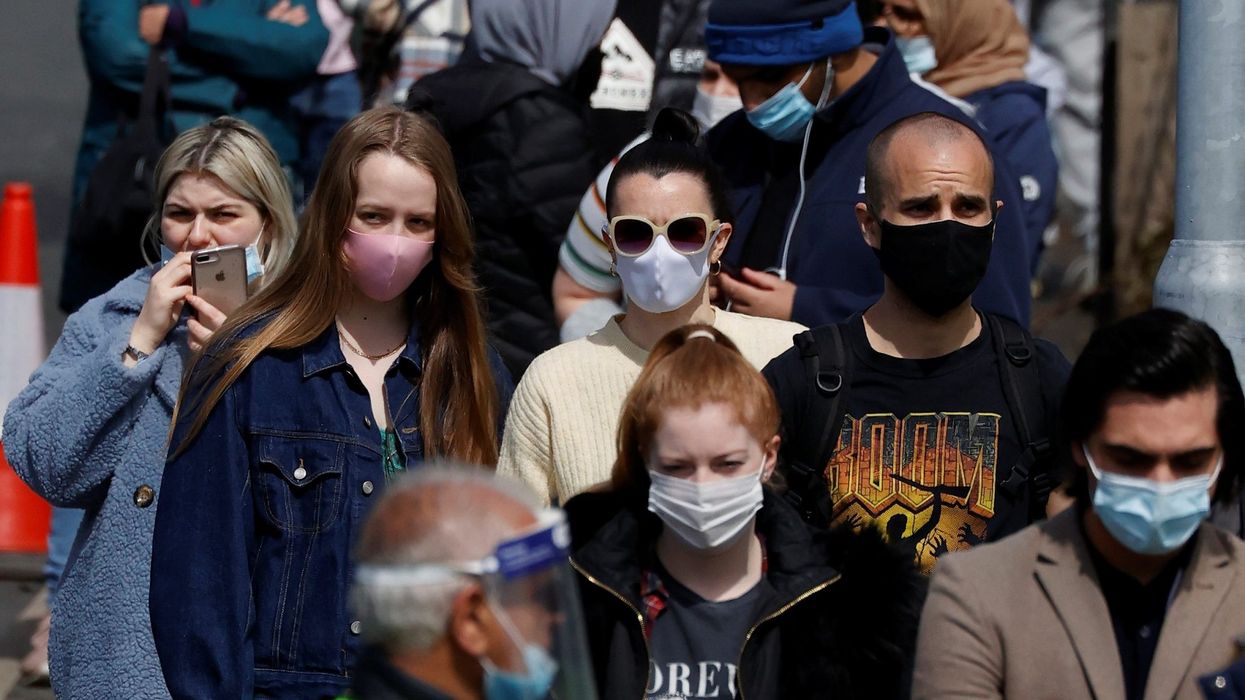

THE coronavirus spread in Bolton has shot up, believed to be because of the Indian variant with 300 cases per 100,000, a latest Public Health England data said.
The numbers have doubled to 301.5 in the Greater Manchester town for a second week, with a mass vaccination drive being launched to vaccinate the residents.
The surge rate is now 14 times the national average and a significant spread across all of Greater Manchester with all but three of the region's 10 boroughs seeing a rise in infections over the last seven days.
Bury, Wigan and Trafford have seen rise of 79 per cent, 23 per cent and 22 per cent respectively. Nearby Blackburn with Darwen also witnessing a spike in infections.
In Bolton, rising hospital admissions are also being reported.
Some 19 patients were being treated for Covid-19 at the Royal Bolton Hospital on Monday (17), according to health secretary Matt Hancock. Of those, five had been vaccinated once and one had been vaccinated twice, he said.
Referring to the Indian variant – officially a variant of concern – he said there had now been a total of 2,323 cases found across the country.
The spike in cases may bring back the local restrictions just days after the country unlocked from lockdown on Monday (17).
Experts had earlier warned prime minister Boris Johnson not to go ahead with the Monday's relaxation with the full opening of the country being scheduled for next month.