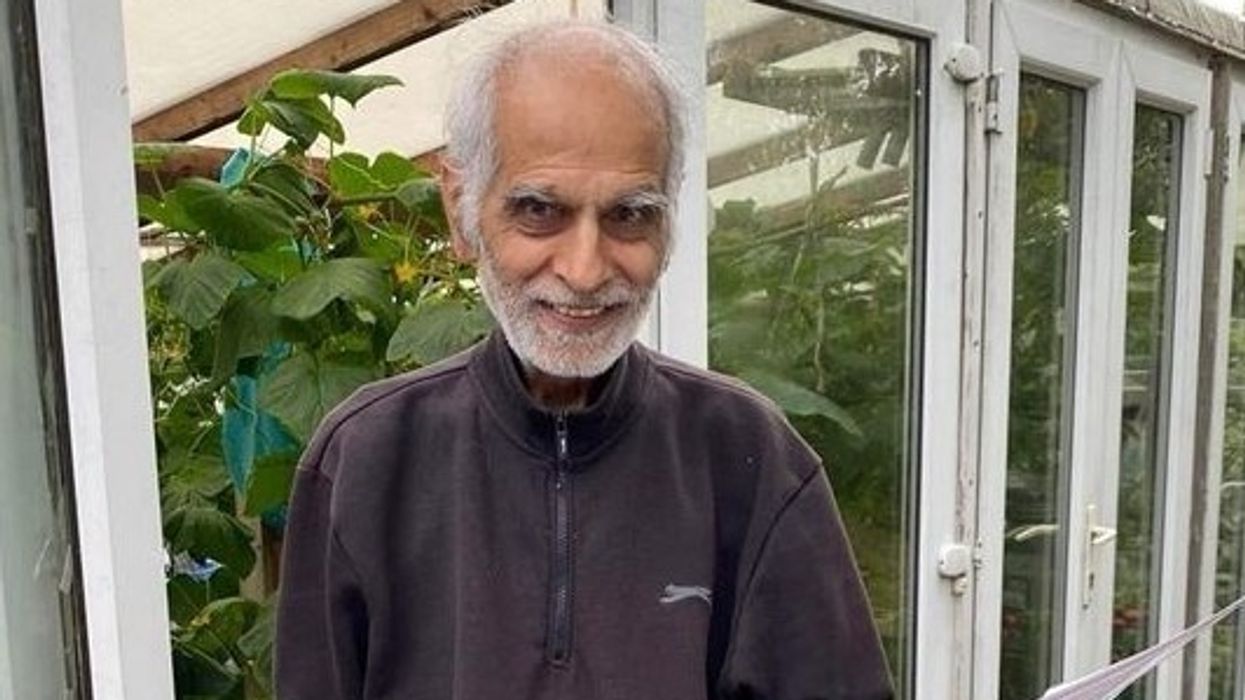

THE seven-year prison sentence handed to a 15-year-old boy convicted of the manslaughter of 80-year-old Bhim Sen Kohli is to be reviewed under the UK’s Unduly Lenient Sentence (ULS) scheme.
The Attorney General’s Office confirmed on Friday (5) that the teenager’s sentence will now be considered by the Court of Appeal.
The boy, who cannot be named due to legal restrictions, was found guilty of carrying out an "unprovoked" attack on Kohli as he walked his dog in a park in Leicester, eastern England, in September last year.
The review follows a detailed assessment by Solicitor General Lucy Rigby KC MP to determine whether the case met the threshold for referral.
“The Solicitor General, Lucy Rigby KC MP, was appalled by this violent, cowardly attack on an innocent man. She wishes to express her deepest sympathies to Bhim Kohli’s friends and family at this difficult time,” said a spokesperson for the Attorney General’s Office.
“After a detailed review of the case, the Solicitor General concluded the sentence of the 15-year-old could be referred to the Court of Appeal. The court will now determine whether the sentence should be increased.”
A 13-year-old girl, who was also convicted of manslaughter for her role in the attack, avoided a custodial sentence. She had filmed the assault while laughing and encouraging the boy, the court heard.
At a sentencing hearing on June 5 at Leicester Crown Court, Justice Mark Turner described the attack as “wicked”. He said he was legally bound to consider the defendants’ ages.
The boy, referred to as D1, was convicted of physically assaulting Kohli, while the girl, referred to as D2, received a three-year youth rehabilitation order with a six-month curfew.
Addressing the girl in court, Justice Turner said that a custodial sentence would likely cause “more harm than good”. It is understood that her sentence will not be referred for review as it did not meet the legal threshold.
During the trial, the court was told that Kohli had been racially abused and repeatedly punched and kicked. His daughter, Susan Kohli, found him lying on the ground after the attack.
“They chose to attack a defenceless pensioner and for that I cannot give them any of my sympathy,” she said after the sentencing.
Kelly Matthews, senior district crown prosecutor at the Crown Prosecution Service, called the incident “tragic” and said it had deeply affected the Leicester community and beyond.
“Kohli set out to walk his dog in his local park, as he did every day, but lost his life in what followed,” she said.
(PTI)