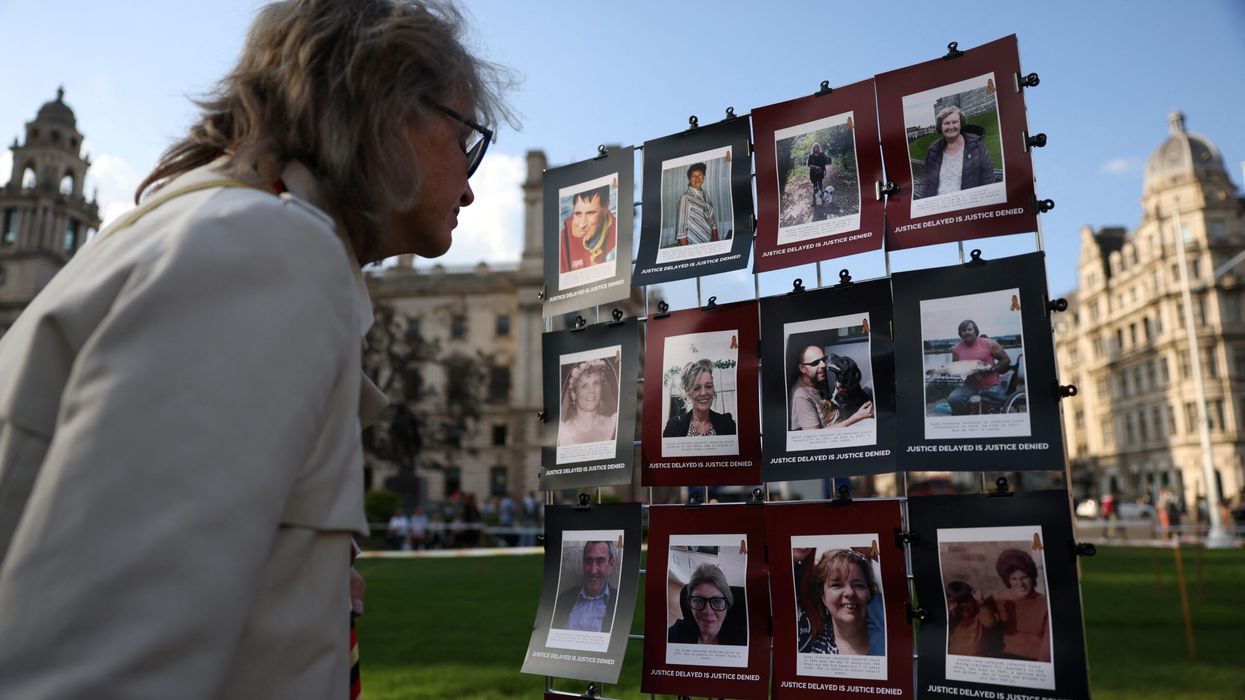

AFTER Judge Brian Langstaff's report on the decades-long contaminated blood scandal became public, the survivors felt vindicated but wanted the government to take prompt action.
Around 3,000 people died and more than 30,000 people, including children, were infected with viruses such as HIV and hepatitis after being given tainted blood and blood products between the 1970s and early 1990s.
The scandal is seen as the deadliest disaster in the history of state-run National Health Service since its inception in 1948.
The report found the tainted blood affair was covered up by successive governments and health officials, and largely could have been avoided.
Prime minister Rishi Sunak issued a "wholehearted and unequivocal" apology and promised compensation for everyone affected.
Many of those affected were people with hemophilia, a condition affecting the blood’s ability to clot.
One of the survivors Suresh Vaghela recounts his horror and traumatic life he led after being infected in the 70s while undergoing haemophilia treatment.
While speaking to Channel 4, he said Langstaff's report makes him feel vindicated for what he said in the past.
Recounting the day 40 years ago, Vaghela said he was in his first year at the university.
A nurse had called and told him his blood test report was ready and offered to tell him the results by phone.
Thinking the results were normal, Vaghela agreed. Then the nurse said, ‘I’m afraid to say that you are HIV positive’. He didn’t really understand what that meant.
When he queried about what treatment he should take, the nurse replied ‘There is no medication, you’ve only got two months to live.’
Since then Vaghela claims he has 'lived in a suitcase'. The thought that he was going to die soon was always there in the back of his mind.
His brother Praful also contracted AIDS from contaminated blood and died in 1995, at the age of 34.
He said that life for him was a 'complete jail sentence'. While trying to make friendships he was guarded about his ailment.
"You were a prisoner in your own body and living a life that you knew wasn’t exactly 100 per cent. Because you’re continually hiding some of the things, and that’s not how you have a friendship," he told Channel 4.
Recalling about his brother, Vaghela said he thinks about him every day. He wished he had lived to see this day, and was part of the campaign.
Vaghela claims he lost many friends over the years, and in one particular year, he went to 70 funerals.
Vaghela is sceptical about the action the government will take. "Until I see the proof of the pudding. I don’t really believe it," he said.