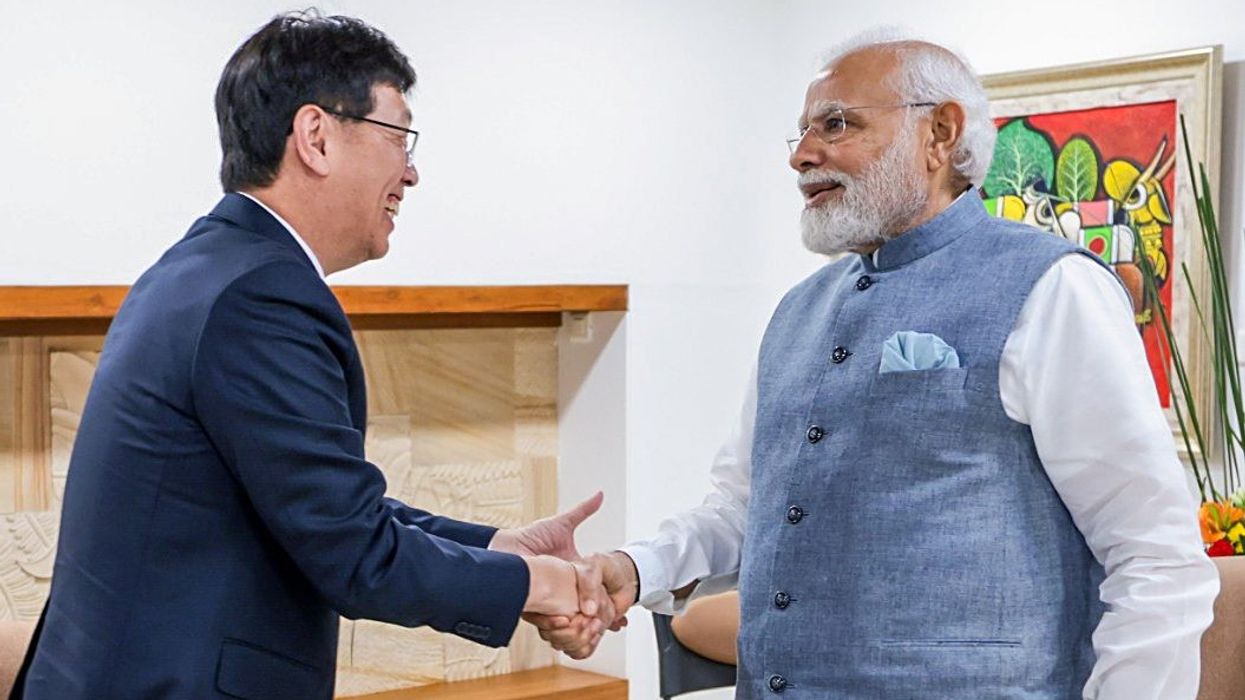
GLOBAL semiconductor majors have committed investments in India as prime minister Narendra Modi offered 50 per cent financial assistance for chip makers setting up plants in the country.
It comes after Modi’s ambitions to promote semiconductor manufacturing suffered a setback last month when Taiwanese tech major Foxconn pulled out of a $19.5 billion joint venture with Vedanta.
During SemiconIndia 2023 which concluded over the weekend in Gandhinagar in Modi’s home state of Gujarat, Advanced Micro Devices (AMD) announced it would invest $400 million in India over the next five years and open a design centre in Bengaluru.
While Micron reiterated it would establish a semiconductor plant in the South Asian country, billionaire businessman Anil Agarwal said his Vedanta Group has identified a technology partner to set up a chip manufacturing facility.
He said Vedanta was in the “process of tying up with a world-class partner” to produce chips in two and a half years. He did not name the technology partner or give details of his plans but told the Mint newspaper that Vedanta would invest $5 bn in the first phase of setting up its semiconductor plant, packaging testing unit and display fab unit.
Modi said during the event that India was establishing an entire ecosystem for the semiconductor industry which he predicted would grow “exponentially.”
“We were offering incentives as part of the Semicon India programme. It has been increased, and now technology firms will get 50 per cent financial assistance to set up semiconductor manufacturing facilities (in India),” the prime minister said.
“A year ago, people used to ask why they should invest in the Indian semiconductor sector. Now they ask why not invest in India,” he said at the three-day event where representatives of major technology companies attended.
India sees an opportunity in the global value chain as chip shortages affected the production of electronic goods and automobile components as the world recovered from the pandemic. The country expects its semiconductor market to grow to $63 billion by 2026.
“India is becoming a grand conductor for investments in the semiconductor sector,” Modi said adding, “The world needs a trusted and reliable chip supply chain.”
Foxconn also backed the country’s semiconductor production ambitions, with its chairman Young Liu saying, “Let’s do it together.”
He said he could “feel” the Indian government’s “determination” and “we are optimistic on where we are headed”.
After its break up with Vedanta, Foxconn had said last month that it intended to apply for incentives under the government’s semiconductor production plan.
Sources said the world's largest contract electronics maker has been in talks with several local and international partners to make semiconductors in India using mature chip manufacturing technology for products including those used in electric vehicles.
Chip makers commit investments in India after Modi's assistance offer
Modi said India was establishing an entire ecosystem for the semiconductor industry which he predicted would grow “exponentially.�