
Highlights
- UK becomes BYD’s biggest market outside China after record September sales
- Seal U plug-in hybrid SUV drives majority of the brand’s growth
- Tariff-free access gives Chinese EV maker a major edge over EU and US rivals
BYD’s record-breaking month in the UK
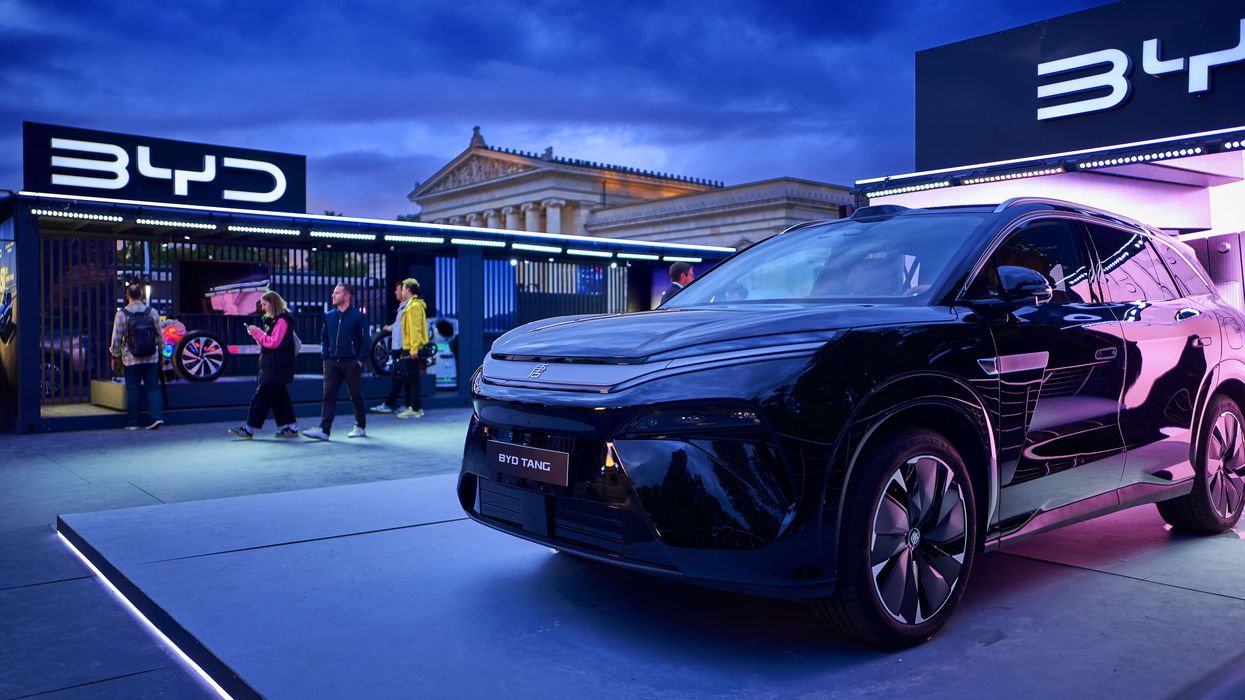
Chinese electric vehicle giant BYD has reported an 880% year-on-year surge in UK sales, marking its strongest performance outside China. The company sold 11,271 cars in September, with its plug-in hybrid SUV, the Seal U, accounting for most of the demand.
The sales boom comes as the UK recorded its highest-ever electric vehicle (EV) registrations, reflecting growing consumer interest and an expanding EV infrastructure. According to the Society of Motor Manufacturers and Traders (SMMT), nearly 73,000 pure battery electric vehicles were sold last month, alongside even faster growth in plug-in hybrids.
UK’s tariff-free status boosts Chinese EV makers
The UK’s appeal for Chinese automakers such as BYD lies in its tariff-free market access, a contrast to the European Union and United States, which have imposed steep levies on Chinese EV imports. In October last year, the EU announced tariffs of up to 45% on Chinese electric vehicles to protect European manufacturers from what it described as state-subsidised competition.
Chinese brands have been largely blocked from the US market due to tariffs backed by both Donald Trump and Joe Biden. This has made Britain a rare open field for Chinese electric car makers to expand aggressively.
Market share and retail expansion
BYD’s share of the UK market climbed to 3.6% in September, placing it firmly among the country’s leading EV sellers. Its Seal U model ranked in the UK’s top ten best-selling cars of the month, alongside established names such as the Kia Sportage, Ford Puma and Nissan Qashqai.
BYD’s UK general manager, Bono Ge, described the company’s prospects in Britain as “hugely exciting”, noting that the brand has just opened its 100th retail outlet. The firm plans to roll out more hybrid and electric models in the coming months to maintain its growth momentum.
Mixed picture for UK’s EV market
Despite record sales of electric and hybrid vehicles, petrol and diesel models still accounted for more than half of all new registrations in September, showing that the UK’s transition to full electrification remains in progress.
Earlier this year, the UK government introduced a £650m incentive package to boost EV adoption, offering car buyers discounts of up to £3,750 on brands such as Nissan, Peugeot and Vauxhall. However, the scheme excludes Chinese-made vehicles, citing emissions concerns linked to their production.
BYD pushes back on subsidy exclusion
BYD criticised the UK’s decision to exclude its models from the incentive programme, warning that it could distort competition and harm the wider EV market in the long run.
Even as domestic sales slow in China, BYD continues to outperform rivals globally. Its overall sales now surpass those of US electric carmaker Tesla and European brands including Jaguar and BMW, underscoring China’s growing dominance in the global electric vehicle industry.