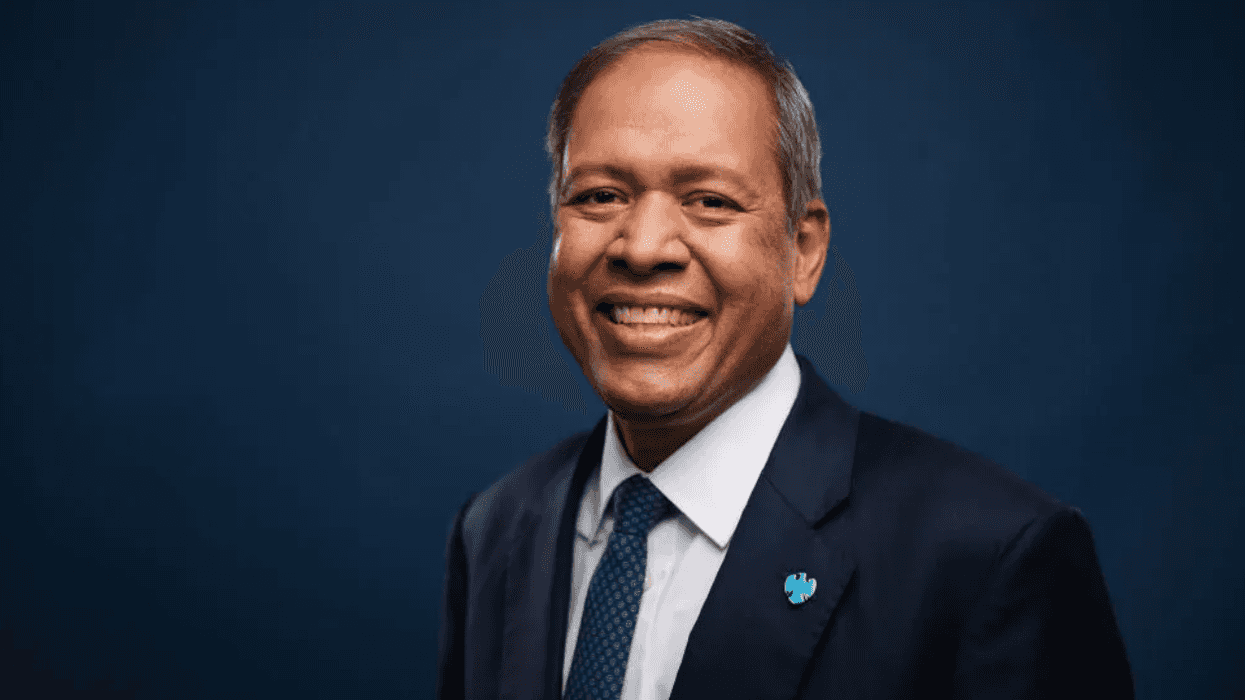

SPEAKING recently at Columbia Business School, Coimbatore Sundararajan Venkatakrishnan paused to reflect on a career that, by his own telling, never quite followed a script. The chief executive of Barclays offered a confession that surprised his audience.
“Of all the job changes I made, I don’t think I asked for a single one. They all came to me,” recalled the Massachusetts Institute of Technology-trained banker.
For Venkat, as he is known, the lesson was not about passivity but readiness. Adaptability, he suggested, matters more than careful planning. Opportunity arrives unannounced; the task of leadership is to recognise it and act.
When pressed on the qualities that define a chief executive, the Indian-born banker spoke first of resilience and adaptability. But above all, he placed integrity. Reputational damage, he warned, can erode confidence faster than financial losses. He often likens banking to medicine: doctors hold lives in their hands, bankers hold livelihoods. Both, he believes, operate on trust.
That philosophy has been tested repeatedly since he took over the 335-year-old lender in November 2021, in circumstances as abrupt as any in his career. Venkatakrishnan, then head of global markets, was elevated after the sudden resignation of his predecessor, Jes Staley, amid a regulatory investigation. Barclays had succession plans, as large institutions do, and Venkatakrishnan was widely regarded internally as a rising force. But the timing was forced by events, thrusting him into the top job at a moment of uncertainty.
He responded not by retreating, but by accelerating change.
In 2024, he unveiled a sweeping restructuring designed to reshape Barclays and convince investors that the bank was worth more than the sum of its parts. He split the group into five operating divisions, sharpening accountability and transparency, while promising £10 billion in shareholder returns through dividends and buybacks between 2024 and 2026.
The results have begun to follow. Barclays reported pre-tax profits of £9.1bn for 2025, ahead of expectations and up from £8.1bn a year earlier, while net profit rose 16 per cent to £6.2bn. Investment banking thrived amid volatile markets, and total income climbed to £29.1bn.
Emboldened, Venkatakrishnan set a new ambition: to “secure sustainably higher returns through to 2028 and beyond” and return more than £15bn in capital to shareholders, driven by efficiency gains and technology, “including AI”.
Yet numbers alone do not capture the deeper test of his leadership.
In November 2022, he was diagnosed with non-Hodgkin lymphoma, a blood cancer. The news landed with the force of an ambush. Rather than step aside, he continued working through treatment, steering the bank while confronting his own mortality. When he achieved remission in March 2023, it marked not just a personal victory, but a defining chapter in his tenure.
Even so, the experience changed him. He later acknowledged that his decision to keep working had been misunderstood.
“I wanted to work because I enjoy it. I quickly clarified that the decision to work was mine alone, and neither Barclays nor I would ever expect others to do the same if they were unwilling, or unable,” he wrote. “My choices were neither a model nor requirement for others, and though they were the right ones for me, I wish I had been more sensitive at the outset to this perception.”
That capacity for reflection – and recalibration – runs through his leadership.
Born in Mysore, in southern India, in 1966, Venkatakrishnan built his intellectual foundations at MIT, earning bachelor’s, master’s and doctoral degrees in operations research. The discipline – grounded in probability, optimisation and decision science — still shapes how he sees the world: as a system of risks to be understood and managed.
He spent two decades at JPMorgan, honing his instincts across trading and risk before joining Barclays in 2016 as chief risk officer. From there, he rose swiftly, earning a reputation for calm authority and analytical clarity. Colleagues saw in him a rare combination: a mathematician who understood markets, and a risk manager willing to embrace opportunity.
Today, he is trying to rebalance Barclays itself.
For decades, the investment bank was both its greatest strength and its greatest vulnerability, delivering profits but weighing down its market valuation due to earnings volatility. Venkatakrishnan’s strategy has been to preserve that edge while building up steadier businesses in UK retail banking, corporate banking and wealth management – a shift intended to make Barclays more resilient, and more predictable.
Technology sits at the heart of that effort. Barclays has deployed Microsoft Copilot across its workforce, allowing employees to summarise documents, analyse data and streamline decisions. Internal hackathons explore new applications, while automated systems now execute much of its electronic trading. But Venkatakrishnan remains clear-eyed about the limits.
Artificial intelligence, he argues, can enhance judgement, not replace it. Clients navigating the sale of a business or the transfer of family wealth still want human counsel – someone who understands not just numbers, but consequences.
His thinking on climate reflects a similar pragmatism. He has consistently argued that banks must help finance the transition to a lower-carbon economy, but in ways that preserve economic stability.
“It’s as wrong to say, ‘I won’t do it because I don’t believe in it,’ as it is to say, ‘I must do this even if it’s uneconomical.’ The answer is somewhere in between.”
That instinct – to seek balance in a world drawn to extremes – defines both the man and his moment.
Venkatakrishnan did not chase the top job. It came to him, as others had. But power, once handed to him, has been exercised with deliberation: reshaping a historic institution, confronting personal adversity, and setting a course that stretches years into the future.
In an industry built on confidence, his authority rests not on grand gestures, but on something quieter and harder won: the trust that he will be ready when the unexpected arrives.
ENDS



