
Highlights
- Burnham and Modi hold first official phone call since the UK prime minister took office.
- Leaders back Vision 2035 and stronger ties in technology, trade and defence.
- Both agree to work together on Middle East de-escalation and reopening the Strait of Hormuz.
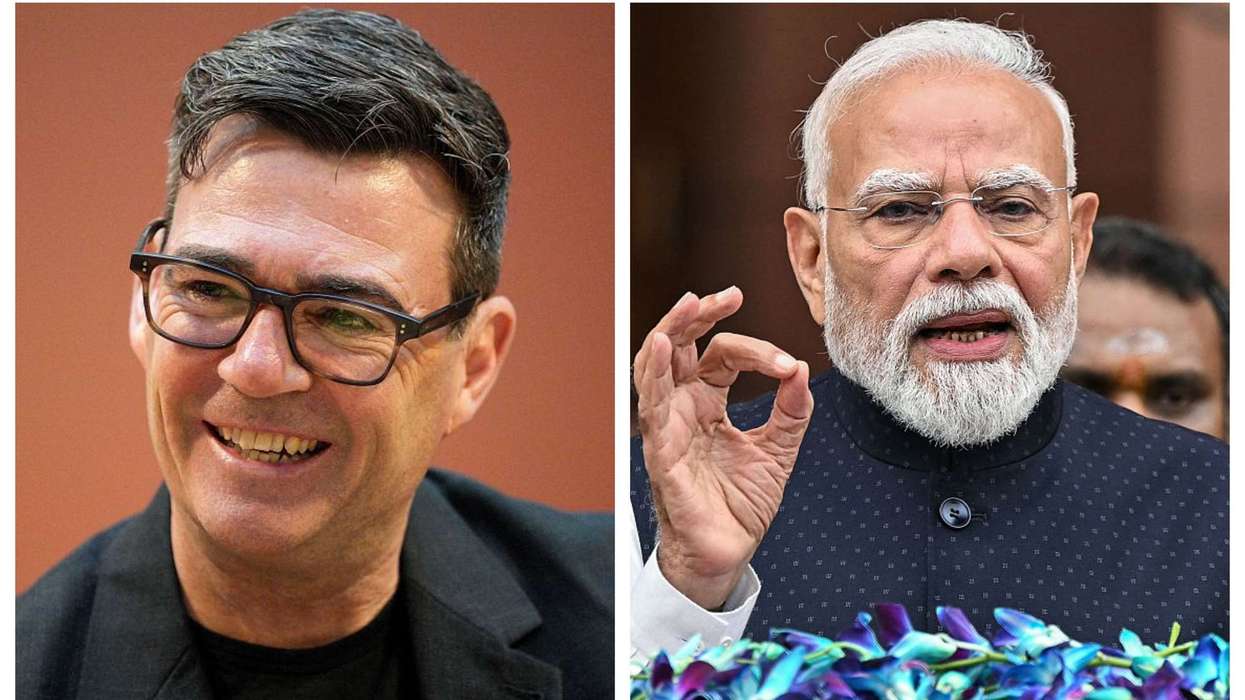
PRIME MINISTER Andy Burnham and India's prime minister Narendra Modi have pledged to deepen UK-India ties, with both leaders highlighting the benefits of the new trade agreement and closer cooperation in technology, defence and security.
During a telephone call on Friday (31), Burnham reflected on the strength of the UK-India partnership and said it had made "a significant impact" on local communities across Britain.
He outlined his ambition to strengthen relations through the UK-India Vision 2035 framework and praised the contribution of Indian communities to British society. Modi highlighted the links between the leaders' home cities of Manchester and Ahmedabad, describing Ahmedabad as the "Manchester of India".
According to a Downing Street spokesperson, Burnham underlined the value of the recently introduced UK-India Free Trade Agreement, saying it "will create opportunities for people across both countries". He also reaffirmed his personal commitment to the UK-India Technology Security Initiative, with both leaders noting the potential to work together on "cutting edge technology, such as AI".
The leaders also discussed the situation in the Middle East, agreeing to "continue to work closely together" towards de-escalation and the reopening of the Strait of Hormuz. Downing Street said both leaders "look forward to speaking again soon and meeting in person at the earliest opportunity."
Downing Street spokesperson added that both leaders looked forward to speaking again soon and meeting in person at the earliest opportunity.
Following the call, Modi said he was "delighted" to speak with Burnham and congratulated him on taking office.
"We agreed to work together across sectors such as technology, innovation, defence, security, clean energy, education and people-to-people ties and take the India-UK Comprehensive Strategic Partnership to new heights," Modi wrote on X.
He added that both countries would "collaborate closely to fully harness the trade and investment opportunities presented by the recently operationalised India-UK Comprehensive Economic and Trade Agreement, for the shared prosperity and well-being of both our people."
Modi had earlier congratulated Burnham on becoming prime minister, saying India and the UK were linked by shared democratic values and broad cooperation across trade, investment, technology, defence and people-to-people ties.
He had said the Comprehensive Economic and Trade Agreement (CETA), which entered into force this month, had put the bilateral partnership in a stronger position and expressed his desire to work with Burnham to deepen the Comprehensive Strategic Partnership and advance the shared Vision 2035 framework.