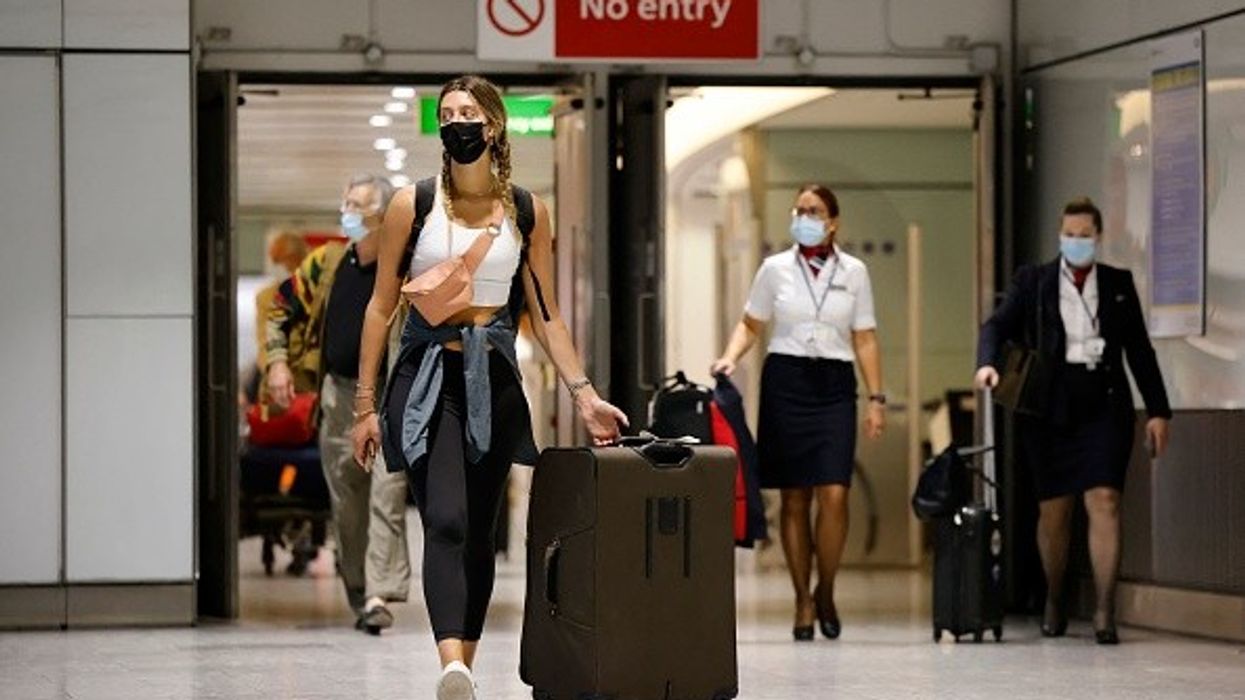

BRITAIN on Friday (17) will consider easing England's Covid-19 rules for international travel after the travel industry complained that a myriad of onerous rules and red tape were hobbling airlines, holiday and tourism companies.
In a bid to slow the spread of the coronavirus, Britain has a maze of different rules requiring expensive private testing and quarantine and a so-called traffic light system which ranks destinations as green, amber and red.
"The Covid sub-committee of cabinet that decides these things will be considering that probably later today," agriculture secretary George Eustice told Sky News.
The British travel industry has called on the government to ease travel restrictions, force companies to offer cheaper testing and allow those who are double vaccinated more freedom.
Tourists and ministers have complained about the price travellers are being charged for obligatory private Covid-19 tests - which are listed as costing around £50 but which can cost up to £399, according to current listings.
Ministers will cut the number of "red list" countries - currently 62 - by removing the "amber list" and those who are double vaccinated will no longer have to pay for costly polymerase chain reaction (PCR) testing, The Times newspaper reported.
For those returning from red-list countries, quarantine hotels are expected to remain in place, the newspaper said.
(Reuters)