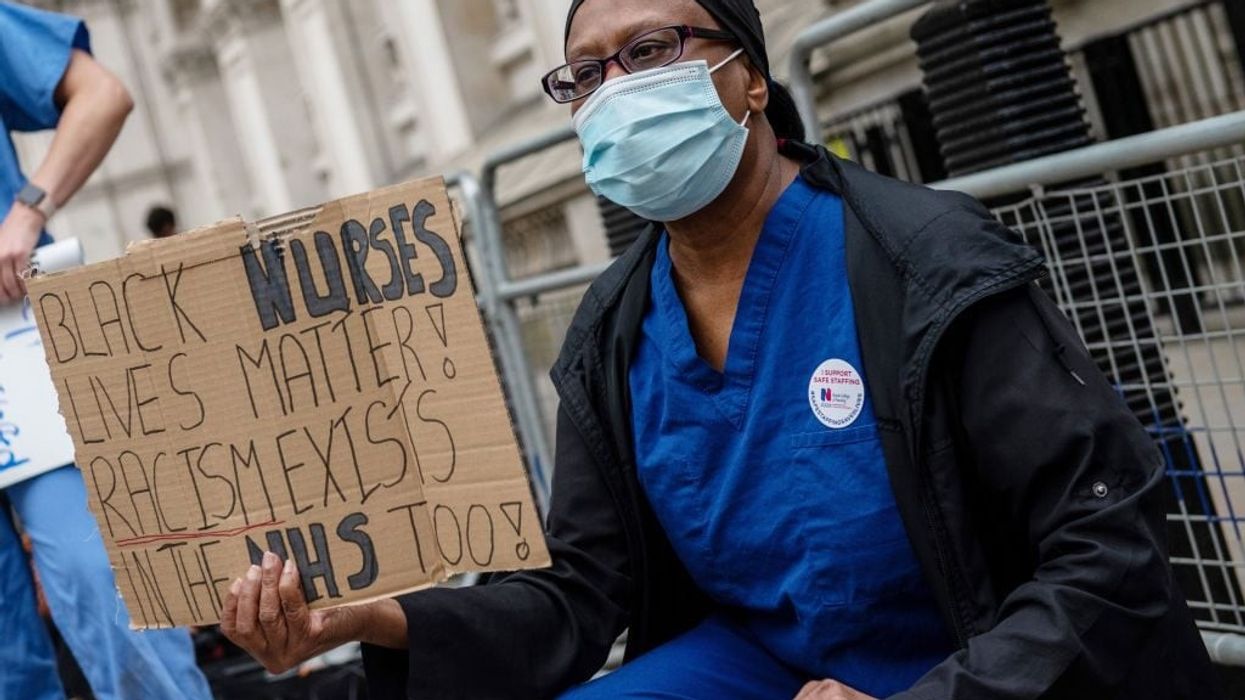

A new study has revealed that NHS nurses from minority ethnic backgrounds were overlooked for promotion due to structural racism, according to a report.
It added that white nurses are twice as likely as black and Asian colleagues to be promoted in the NHS, the Guardian reported.
A survey of almost 10,000 nursing staff by the Royal College of Nursing (RCN) has revealed that those who are white or of mixed ethnic background are more likely than black and Asian colleagues to have received at least one promotion since the start of their career.
According to the research, published at its annual congress in Glasgow, the difference is most stark among those aged between 35 and 44.
As many as 65.9 per cent of white and 64 per cent of mixed ethnic respondents in this age group said they had been promoted, this dropped to just 38.3 per cent of Asian and 35.2 per cent of black respondents, the Guardian report said.
The college called on the government to take action to tackle racism, including a legal requirement to eliminate disparities in recruitment, retention and career progression.
The study also said that black respondents working in hospitals and community care are more likely to report experiencing physical abuse than respondents of other ethnic backgrounds.
“Examples of racism experienced by nursing staff in the workplace are deeply shocking. The pandemic has shone a spotlight on structural racism in health and care services and we must seize this opportunity to stamp out this vile behaviour once and for all," Bruno Daniel, the RCN’s diversity and equalities coordinator, was quoted as saying by the newspaper.
Agency nurse Roseline Sanni-Ajose has alleged that due to the shortage of PPE, black and ethnic minority nurses were not given adequate masks and were told to reuse our protective clothing and wear a gown all day, even if we’d been exposed to Covid-19 patients.”
Saffron Cordery, the interim chief executive of NHS Providers, has said that the findings represented fresh evidence of “the unacceptable presence of structural racism within our health and care system”.
"Every leader across the NHS and government has a duty to actively work to eliminate inequality based on race. NHS boards and senior leaders must demonstrate the behaviours expected and needed – collectively and individually – to dispel prejudices," Cordery said.
Earlier this year, the Guardian revealed that a damning review commissioned by the NHS Race and Health Observatory had found that “vast” and “widespread” inequity in every aspect of healthcare it reviewed was harming the health of millions of patients.
An NHS England spokesperson has said that it is important that there are more minority ethnic nurses in senior roles than ever before.