
Highlights
- New, unverified sculpture appears on Waterloo Place on 29 April 2026
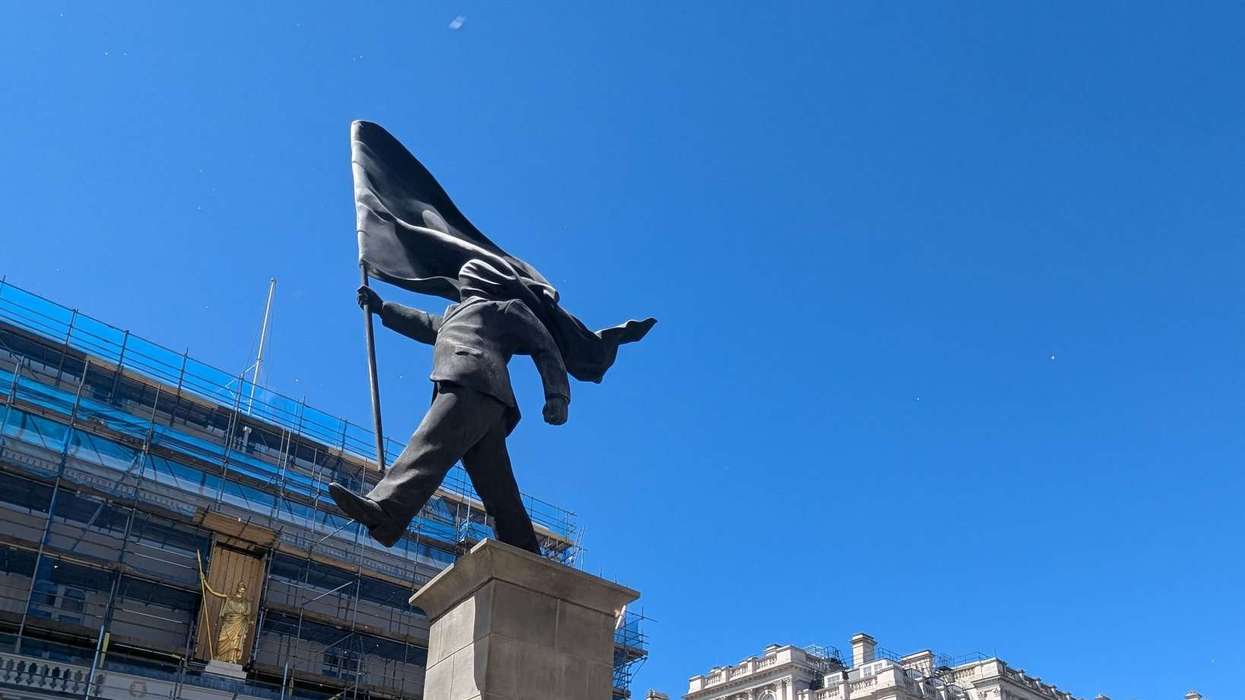
- A suited figure strides forward, blinded by a flag covering his face
- The work shifts focus from power to the risks of unthinking momentum
A confident step in the wrong place
A new sculpture attributed to Banksy appeared on Waterloo Place in central London, catching early viewers off guard. The piece shows a suited man mid-stride, his posture upright and assured. At first, he appears purposeful, almost authoritative.
That impression quickly unravels. A flag, caught in motion, wraps across his face and blocks his sight completely. He continues forward regardless. The plinth beneath him does not lead anywhere. It ends abruptly, suggesting that his next step will take him straight into empty space.
Banksy’s signature has been spotted on the reverse of the plinth, though the artist has yet to confirm the work through official channels.
A historic stage turned uncertain
Waterloo Place was designed to project control and victory, its layout tied to Britain’s triumph over Napoleon. The area is framed by statues of military figures and imperial leaders, each one reinforcing the idea of direction and command.
Placing this figure here changes how that setting reads. Surrounded by monuments that imply certainty, this man embodies the opposite. He moves with confidence but without awareness. The contrast is quiet but difficult to ignore.
Across from the Athenaeum Club, the statue of Athena, a long-standing symbol of wisdom, overlooks the scene. Her stillness sharpens the sense that this is not just about movement, but about the absence of judgement.
A warning in plain sight
The strength of the work lies in its simplicity. There is no visible struggle, no dramatic gesture. The figure does not appear reckless. He appears certain.
That certainty is the problem. The flag, often used to signal identity or purpose, becomes something that prevents him from seeing clearly. His forward motion, usually associated with progress, turns into a risk.
Rather than focusing on power itself, the sculpture highlights a more fragile moment. It captures what happens when someone keeps moving forward without understanding where they are headed.