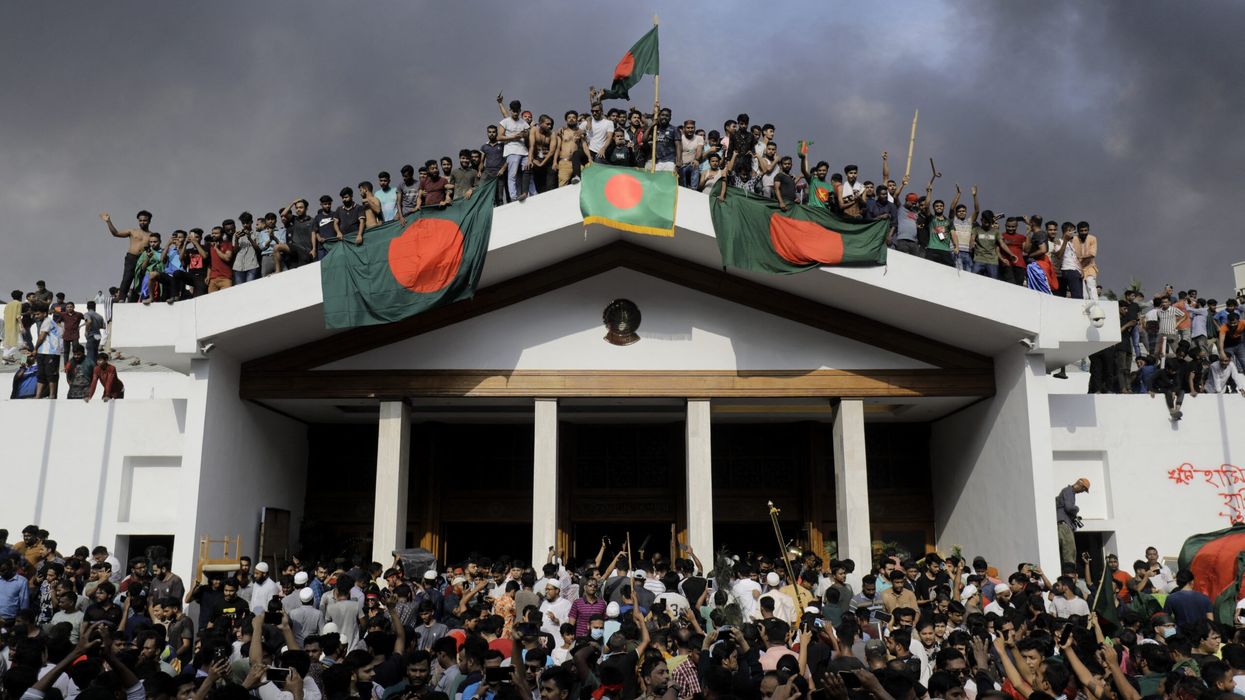
TWO documentaries on the July 2024 pro-democracy protests in Bangladesh were screened at the House of Commons on 20 May. The event was hosted by Apsana Begum MP, Chair of the All-Party Parliamentary Group for Bangladesh, at Portcullis House.
The screening featured the international premiere of Deepak Kumar Goswami Speaking, a 21-minute film narrated by a member of Bangladesh’s Hindu minority. It covers the student-led protests and subsequent state crackdown, also examining global financial systems linked to authoritarian regimes.
“This story is not just about one country. It’s about the global systems that allow authoritarian regimes to suppress dissent, launder wealth, and manipulate international opinion — and what happens when those systems begin to unravel,” said director Deepak Kumar Goswami.
An excerpt from July Women was also shown, presenting first-hand testimonies from two women involved in the protests.
The panel discussion, chaired by Apsana Begum MP, included photographer Shahidul Alam, writer Farrukh Dhondy, protest participant Nowshin Noor, and anthropologist Professor Nayanika Mookherjee.
The event follows a UN OHCHR report that found credible evidence of extrajudicial killings, arbitrary arrests, and torture during the 2024 protests under the former Awami League government.
“These films are more than documentation. By giving these voices a platform, we reaffirm the need for a worldwide commitment to human rights, democracy, and justice globally. The world must stand with the people of Bangladesh as they navigate the path to accountability and true democratic reform,” said Apsana Begum MP.