
- The $999.99 Ring Rover Cam is designed to patrol business premises and investigate security alerts
- The robot builds on technology from Amazon's Astro home robot, which debuted in 2021
- Ring has also introduced a $249.99 indoor drone camera, raising fresh questions about automated surveillance
Amazon is giving its home security technology a new role in the workplace, turning its Astro robotics experience into a mobile guard designed to patrol offices, warehouses and other commercial premises.
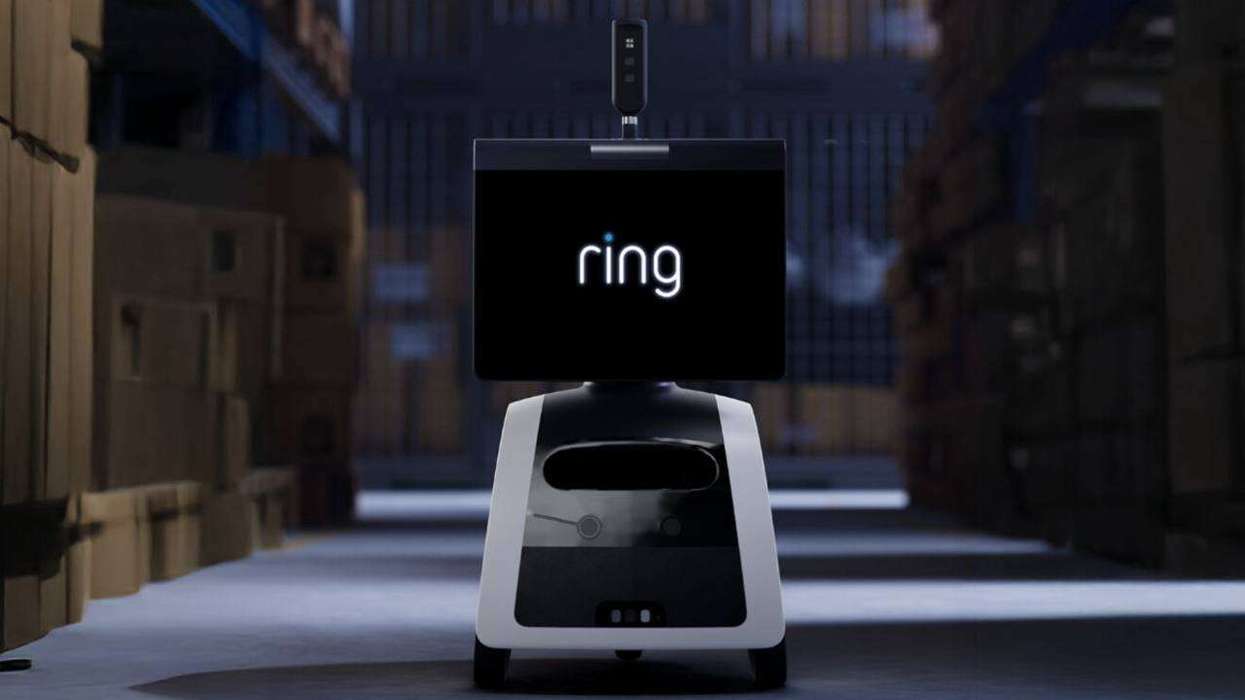
The new Ring Rover Cam, priced at $999.99, is part of a product range called Ring Robotics, unveiled by the company on November 10. It can move around a business autonomously, investigate disturbances and stream footage to users through the Ring app.
The launch marks a further expansion for Ring, which Amazon acquired in 2018 and built into a wider smart security business around video doorbells, cameras, alarms and sensors.
The Rover is based on technology developed for Amazon's Astro home robot. However, Ring describes it as a purpose-built security device rather than a general household robot adapted for commercial use.
How does the Ring Rover Cam work?
The robot has a display mounted on a two-wheeled base, with an extendable periscope camera that can rise above counters and shelving. It can record in up to 4K resolution, carry out a 360-degree scan when it reaches a patrol point and respond to alerts from connected Ring devices.
It also features two-way audio, a built-in siren and a light tower that projects illumination on to the ceiling, helping staff identify its location.
Businesses can set automated patrol schedules or send the Rover to investigate a particular area when a sensor or alarm is triggered. The robot uses Amazon's AI Pilot system, which combines cameras, vision models, onboard sensors and cloud processing to map premises, identify patrol points and navigate around obstacles.
Ring says the technology is designed to reduce the need for fixed cameras in every corner of a building, allowing one mobile device to check several areas instead. The Rover is scheduled to begin shipping to US customers on December 16, with pre-orders open at $999.99. A compatible Ring Protect subscription is required for certain features.
The product also marks another attempt by Amazon to establish itself in the business security robot market. It previously launched Astro for Business in November 2023, targeting small and medium-sized businesses with a mobile security device priced at $2,349.99.
However, Amazon discontinued that product less than a year later, saying it wanted to concentrate on developing its household robotics offering. The devices stopped functioning in September 2024, with affected customers offered refunds and a $300 credit towards replacement workplace security solutions.
Ring says the new Rover was inspired by feedback from Astro customers who particularly valued its ability to move around premises and provide security patrols. The company says it has taken the most useful elements of that experience and developed a device focused specifically on commercial protection.
Could mobile security cameras create new privacy concerns?
The Rover's ability to move through workplaces also raises questions about how businesses manage surveillance of employees, visitors and customers.
Ring says privacy is built into the product. Its devices have visible LED indicators when recording, while the Rover includes a Sleep Mode that retracts its camera and switches off its microphone. The company also says footage is protected through its Throw Away the Key encryption system.
However, Ring's wider surveillance business has faced scrutiny over privacy and police partnerships. Its proposed integration with Flock Safety, a company known for automated number plate recognition technology, was cancelled following public backlash earlier this year.
The company has also faced criticism over how its camera footage could be accessed and shared. Those concerns have become more significant as Ring moves beyond fixed doorbells and cameras towards devices that can actively monitor different parts of a property.
Alongside the Rover, Ring has introduced the $249.99 Drone Cam, an indoor flying security camera designed for homes. It can follow preset routes, respond to alerts from connected devices and investigate activity in rooms where fixed cameras may not provide coverage. It is scheduled to ship in the US on January 27, 2027, subject to Federal Communications Commission approval.
Together, the two products signal Amazon's ambition to take security technology beyond stationary cameras. Whether businesses and households are comfortable with autonomous devices moving through their premises, however, will depend not only on their surveillance capabilities but also on how reliably they work and how much control users retain over the footage they collect.