
The Turner and Constable exhibition at Tate Britain, which ends on 12 April 2026, is pure magic.
They are two of the greatest landscape artists, not just in Britain, but in the world.
The exhibition, which displays nearly 200 of their works side by side, began on 27 November last year. On Friday (3) when Eastern Eye visited Tate Britain, there were still queues of people waiting to get in. They were given timed slots for entry such has been the overwhelming demand for tickets (not cheap at £24). Inside, people lingered before each and every painting.
Personally, I prefer Constable. As a young reporter working on the Hampstead News, the vicar of Hamspead Parish Church, Rev Richard Truss (uncle of Liz Truss), proudly drew my attention to Constable’s grave in his churchyard.
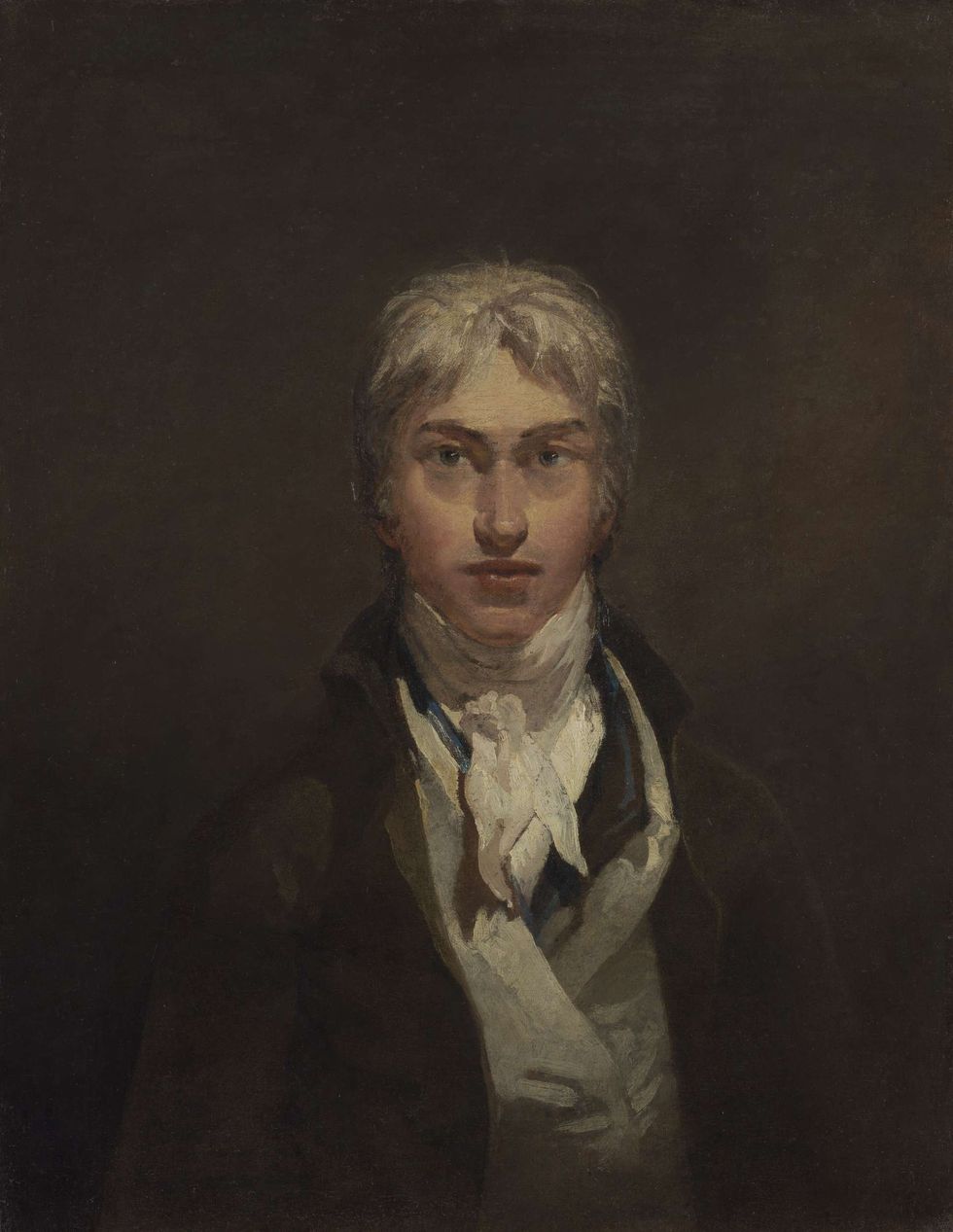 JMW Turner, Self Portrait (1799)Tate
And when I visited “Constable country” in Flatford in Suffolk last year, the words of the Indo-Persian sufi poet Amir Khushrau came to mind: “Gar firdaus bar-rue zamin ast, hami asto, hamin asto, hamin ast.”
Perhaps his sentiment – “If there is a paradise on earth, it is here, it is here, it is here” – could be applied in an English context to Flatford where Constable painted The Hay Wain, depicting a cart in a shallow part of the River Stour.
This hangs in the National Gallery and is possibly the most famous painting in England.
It could perhaps be the lament for a lost, idyllic England that has persuaded so many people to come to Tate Britain to see the exhibition called Turner & Constable: Rivals & Originals. It has been described as the “definitive exhibition of two pivotal British artists in the 250th year of their births”.
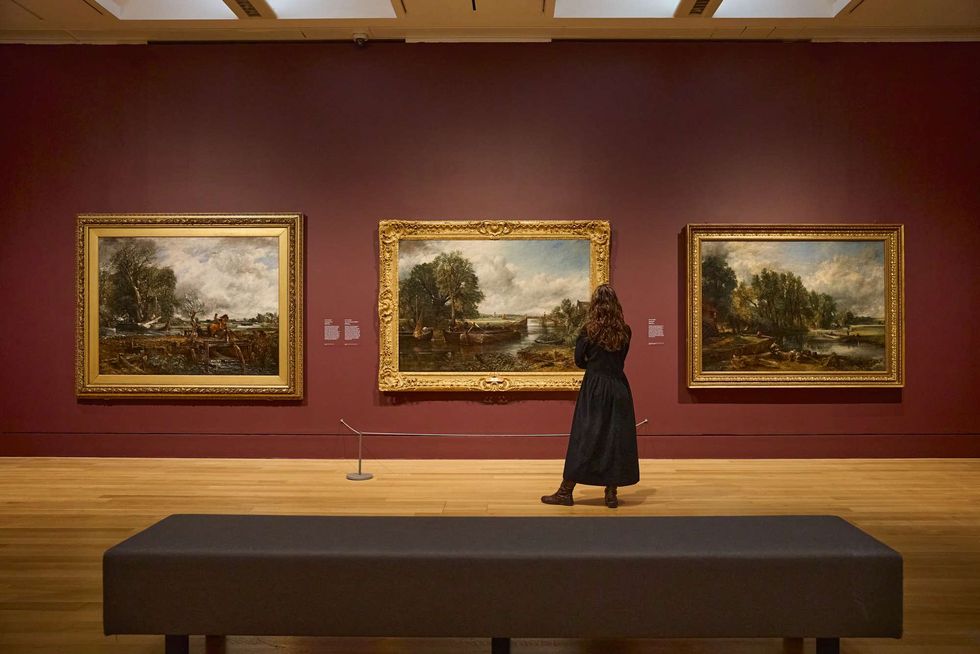 Turner and Constable at Tate Britain.Tate Photography (Yili Liu)
There are 12 galleries setting out their work, often as rivals. An attempt has been made to show them as the Kate (Princess of Wales) and Meghan (Duchess of Sussex) of their day.
According to Tate Britain, this is “the first major exhibition to explore the intertwined lives and legacies of Britain’s most revered landscape artists: JMW Turner (1775–1851) and John Constable (1776–1837). Radically different painters and personalities, each challenged artistic conventions of the time, developing ways of picturing the world which still resonate today. Marking the 250th anniversary years of their births, this exhibition traces the development of their careers in parallel, revealing the ways they were celebrated, criticised and pitted against each other, and how this pushed them to new and original artistic visions. It features over 190 paintings and works on paper, from Turner’s momentous 1835 The Burning of the Houses of Lords and Commons, lent by Cleveland Museum of Art and not seen in Britain for over 60 years, to The White Horse 1819, one of Constable’s greatest artistic achievements, last exhibited in London two decades ago.
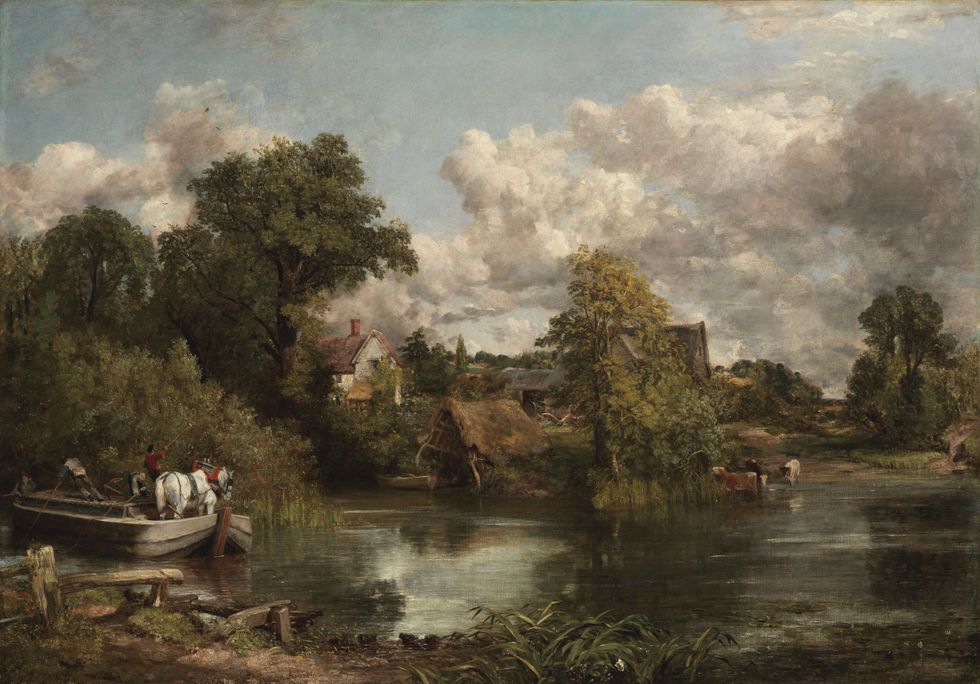 John Constable, The White Horse, (1819)The Frick Collection
”It added: “Born only a year apart – Turner in London’s crowded metropolis and Constable to a prosperous family in the Suffolk village of East Bergholt – their contrasting early lives will begin the exhibition. Turner was a commercially minded, fast-rising young star who first exhibited at the Royal Academy in 1790 aged just 15 and created ambitious oil paintings like recently-discovered The Rising Squall, Hot Wells, from St. Vincent’s Rock, Bristol, before he turned 18. By contrast, largely self-taught Constable undertook sketching tours to create early watercolours like Bow Fell, Cumberland 1807 and demonstrated a fierce commitment to perfecting artistic techniques, not exhibiting at the Royal Academy until 1802. Having both emerged amid an explosion in popularity of landscape art, the two were united however, in their desire to change it for the better.”
It went on: “The exhibition explores how both artists developed distinct artistic identities within the competitive world of landscape art, spotlighting their methods, evolution and overlap. Constable built his reputation on the Suffolk landscapes of his childhood, opting to sketch in oils outside amid the vast views of Dedham Vale and the river Stour, which often recurred in his work. His painting box and sketching chair are displayed, with visitors able to chart the development of Constable’s skilful draughtsmanship and radical handling of paint to add ‘sparkle’. A group of Constable’s cloud studies have been brought together for the exhibition. Reflective of his belief that the sky was key to the emotional impact of a painting they are now one of the most celebrated aspects of his output and underpinned the powerful skyscapes in the artist’s monumental six-foot canvases. Late works such as Hampstead Heath with a Rainbow 1836 illustrate his deft interweaving of personal and historic memories.
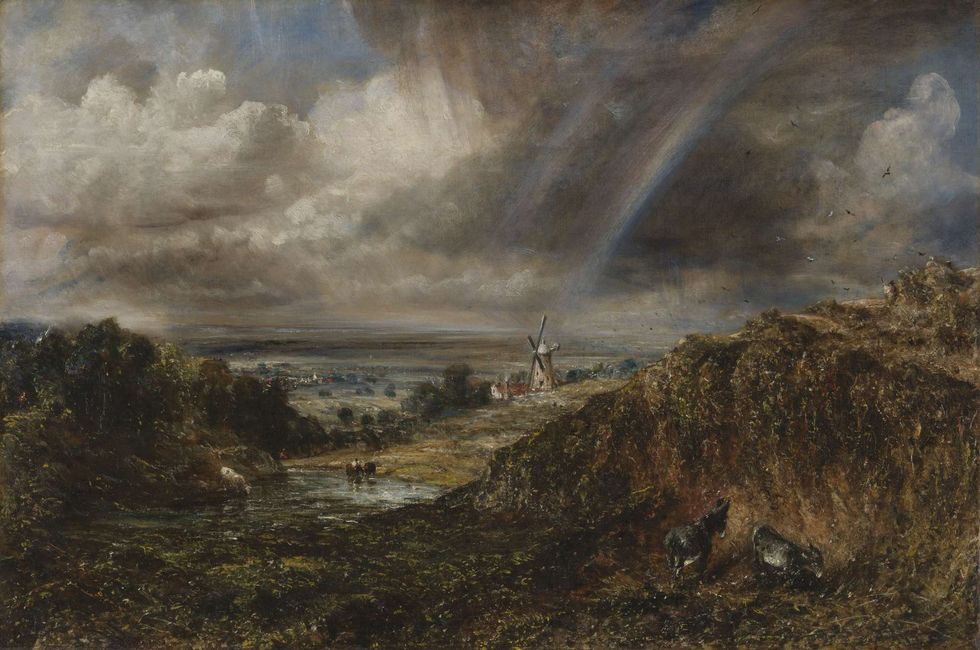 John Constable, Hampstead heath with a Rainbow, (1836)Tate
“By contrast, Turner travelled widely across Britain and Europe filling sketchbooks with quick pencil studies. This offered creative inspiration, influencing sublime Alpine scenes such as The Passage of Mount St Gothard from the Centre of Teufels Broch (Devil’s Bridge) 1804, as well as commercial opportunities to have prints made after his watercolours. The exhibition explores how Turner developed original ways to apply paint and depict light, capturing the raw power of nature. Some of Turner’s most celebrated late works are featured, including Ancient Italy – Ovid Banished from Rome, first exhibited in 1838 and not shown in London in over 50 years.
“By the 1830s, both Turner and Constable became recognised for taking landscape painting in bold new directions. The stark differences between their work spurred art critics to pit them against one another and to cast them as rivals. In 1831 Constable himself played into this, placing his and Turner’s work side by side at the Royal Academy exhibition. This showing of Turner’s Caligula’s Palace and Bridge next to Constable’s Salisbury Cathedral from the Meadows, prompted a flurry of comparisons between the sun-drenched heat of Turner’s mythical Italian scene and Constable’s damply atmospheric Britain; they were ‘fire and water’. Now placed head-to-head at Tate Britain, the artists’ most distinctive and impressive paintings highlight how, despite their differences, they made landscape a genre worthy of grand canvases and prime importance.
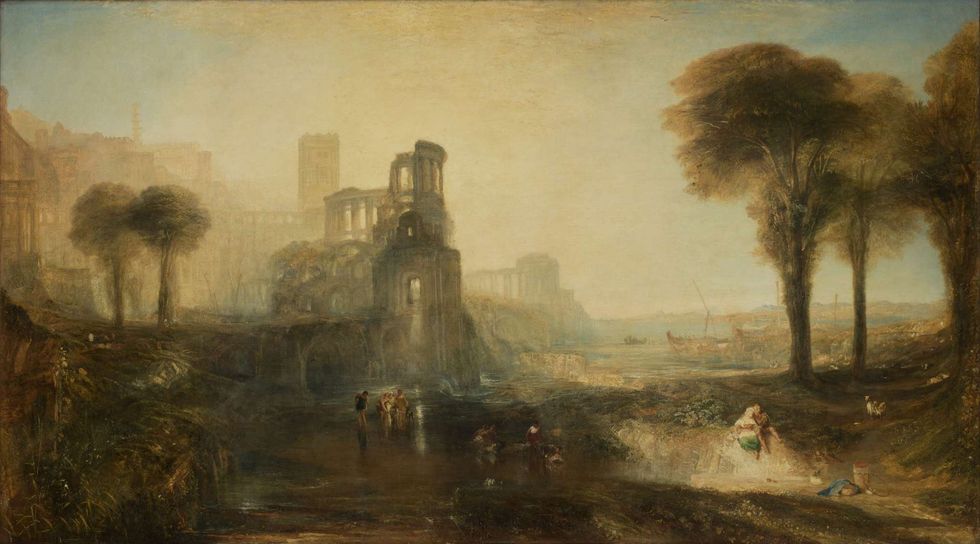 JMW Turner, Caligula's Palace and Bridge (1831)Tate
“Creators of some of the most daring and captivating works in the history of British art, Turner and Constable changed the face of landscape painting with their two competing visions, elevating the genre with their recognition of its endless potential to inspire.”
In the second gallery it is pointed out that “Constable started to use oil paints outdoors in 1802. By 1810, he had mastered the art of the oil sketch and had begun to create the body of work that would serve him in the studio for decades to come. Painting outside is inherently challenging: gusts of wind, rain showers, insects, passers-by or even curious animals can hamper the process. Under these conditions, rapid brushwork was necessary. Constable's mastery of this skill and his economic application of multiple colours within a single brushstroke are evident in his sketches. He also adopted the same techniques when making sketches in the studio to help him work out his ideas for larger paintings.
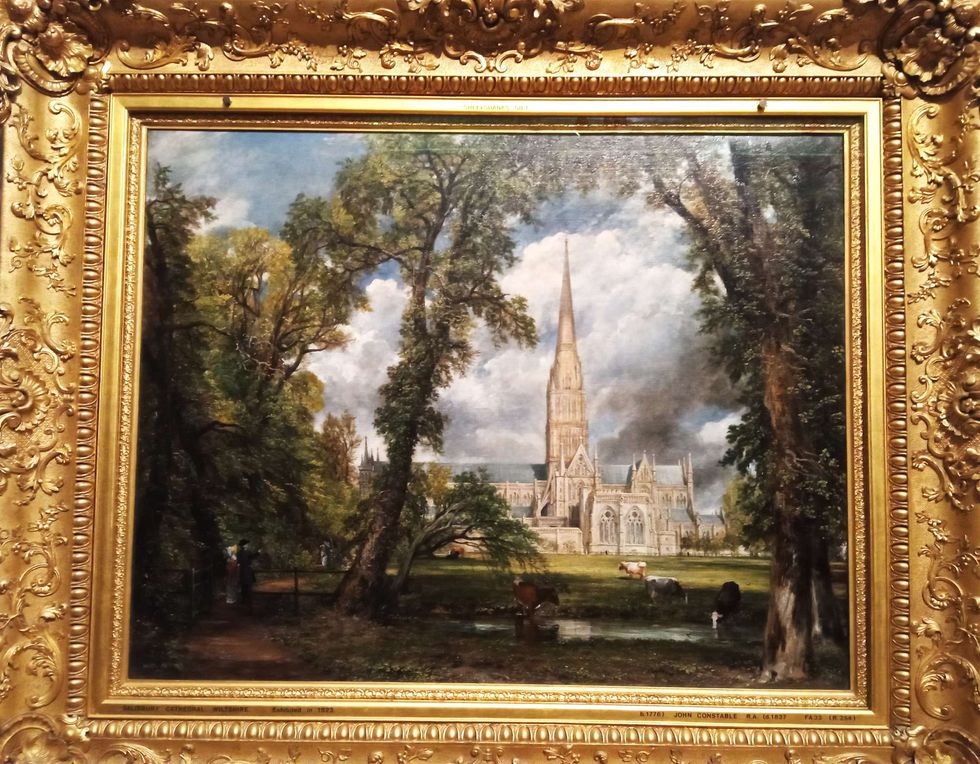 Constable's Salisbury Cathedral Amit Roy
”The third gallery focuses on Turner’s travels in Europe: “Travel throughout Britain and Europe was the backbone of Turner’s art. Two locations particularly sparked his creativity: the Alps and Italy. He saw them first through the eyes of other artists, since the Napoleonic Wars restricted travel to Europe until 1815.
“A pause in hostilities in 1802 meant that the 27-year-old Turner could finally go abroad. Journeying through Paris and exploring its art collections, he made his way to the Alps. His tour took in France, Switzerland and a short excursion to Italy's Val d'Aosta. It did not disappoint. Turner’s experiences of the region’s magnificent glaciers, peaks and passes were revelatory. They sharpened his interest in the ‘sublime’—making pictures that generated the strongest possible emotion, close to terror. Later, he described this tour as ‘no small wonder’.
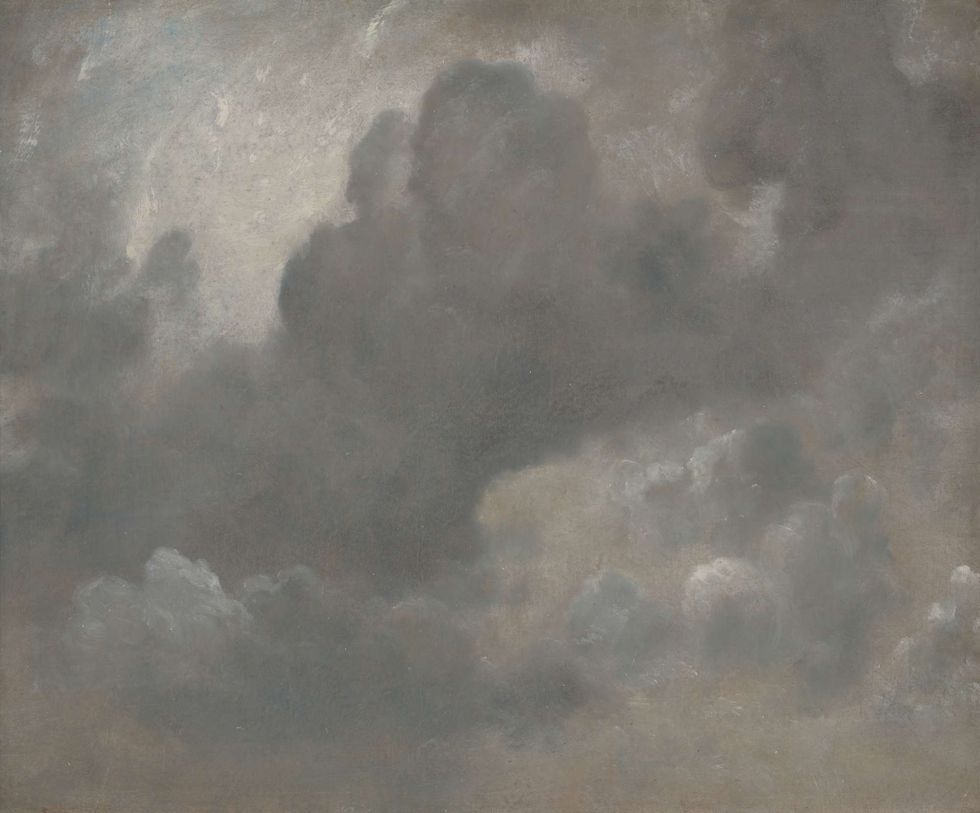 John Constable, Cloud Study (1822) Tate
“When peace in Europe was restored, Turner could finally explore Italy. By this time, he was an established artist of 44. Despite having hardly been there, he was already associated with the country thanks to his depictions of its landscape and scenes from classical literature. He filled 23 sketchbooks, coming home with imagery that would underpin decades of finished paintings.”
There is something about introducing children to colour at an early age. In the fourth gallery, we are told that “watercolour is a vital part of Turner’s story. From the moment he received a set of watercolours as a child, this medium played an important role in his career. Associated in the 18th century with amateur artists, it was regarded as a lesser medium than oil paint. Combining innovative handling and highbrow subject matter, however, Turner raised its status. He chose to display his watercolours close-framed in gilt surrounds, just like oil paintings.
”In the seventh gallery, visitors are told: “For Constable, Turner and their contemporaries, the Royal Academy’s annual exhibition was where artistic reputations were made and lost. It was a mass shop window with a fashionable audience of potential buyers and patrons. Walls were crammed with pictures hanging frame to frame. For artists, the challenge was making art that stood out from the crowd.
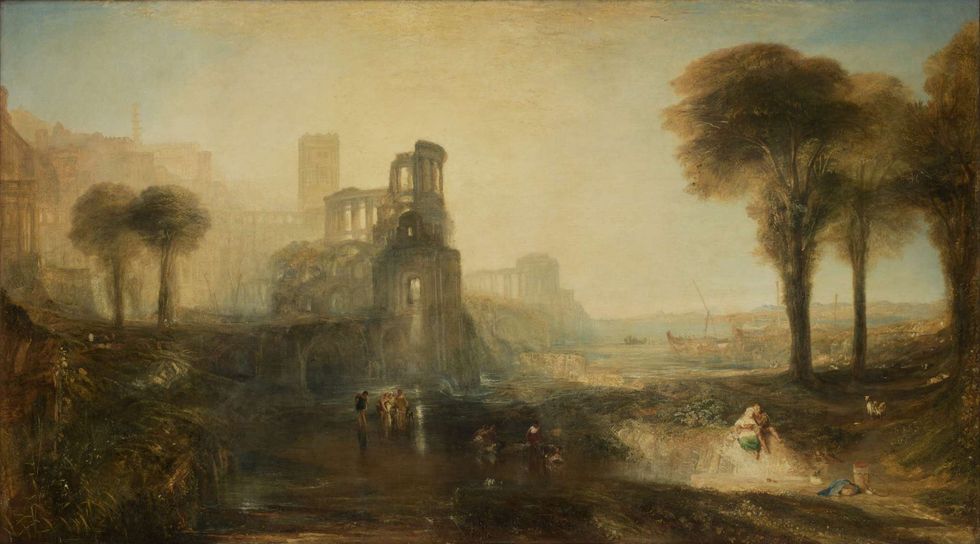 JMW Turner, Caligula's Palace and Bridge (1831)Tate
“Turner soon learned ways to command attention through scale and increasingly intense colour. His choice of subjects showed off his versatility, from ancient history to modern technology. Critics were divided. The same painting might be praised by one as ‘transcendent!’ but condemned by another as ‘not true to nature’.
“In the 1810s, Constable was struggling to get noticed. A friend told him candidly that his paintings did not ‘solicit attention’. This spurred an important development, the making of large-scale paintings known as ‘six-footers’. When the first of these, The White Horse, was exhibited in 1819, it prompted the first comparison between Constable and Turner. According to one reviewer, Constable’s White Horse had ‘none of the poetry of Nature like Mr. Turner, but ... more of her portraiture’. The painting also led to Constable’s election as an Associate Member of the Royal Academy. Scaling up had paid off. Turner and Constable’s paintings were also exhibited beyond London, for example in Manchester and Birmingham.”
There is a sort of summing up in the 11th gallery: “Constable died in 1837, aged 60, and Turner in 1851, aged 76. Both remained intellectually and artistically active in their last years, though illness became a more frequent obstacle.
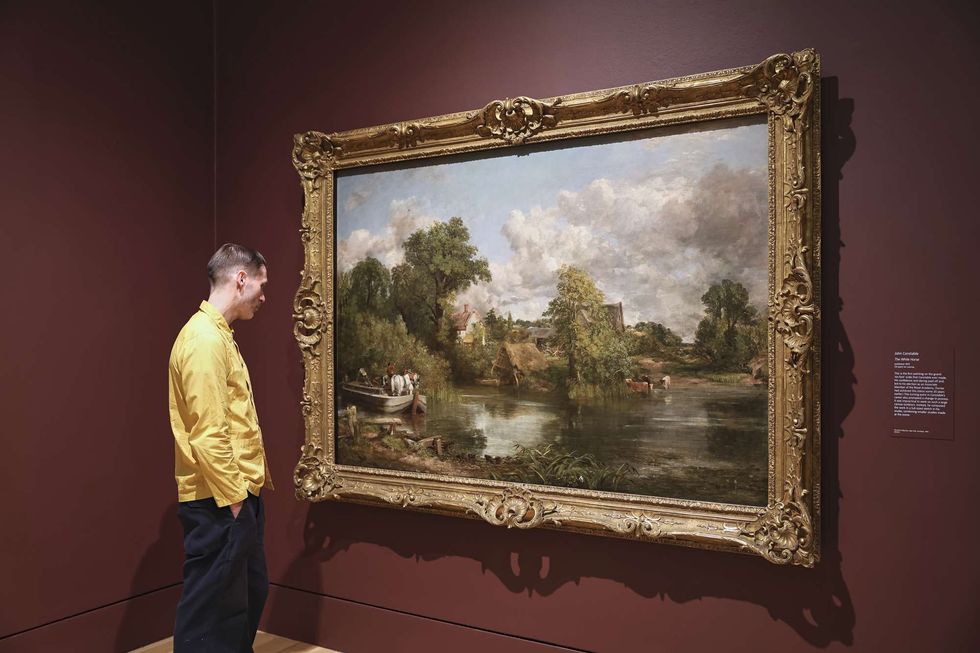 A view from the exhibition Tate
“The intense atmosphere of Constable's late work reflects his inclination to melancholy. In 1835, he received the warmest critical reception of his career, calling it 'the best year of my life – as to my being "liked"'. But, he added, the 'happy years are gone'. He found solace in painting: 'my canvas soothes me'. The results are often far from peaceful, reverberating with restless energy.
“After years of showing reworked canvases, in 1850 Turner exhibited new paintings. Their subjects, drawn from classical mythology, were now unfashionable, but his way of painting was unparalleled. Critics acknowledged him as a ‘great master’ while remarking on the ‘eccentricities’ of his old age, ‘It would seem as if Mr. Turner had possessed in youth all the dignity of age to exchange it in age for the effervescence of youth.’
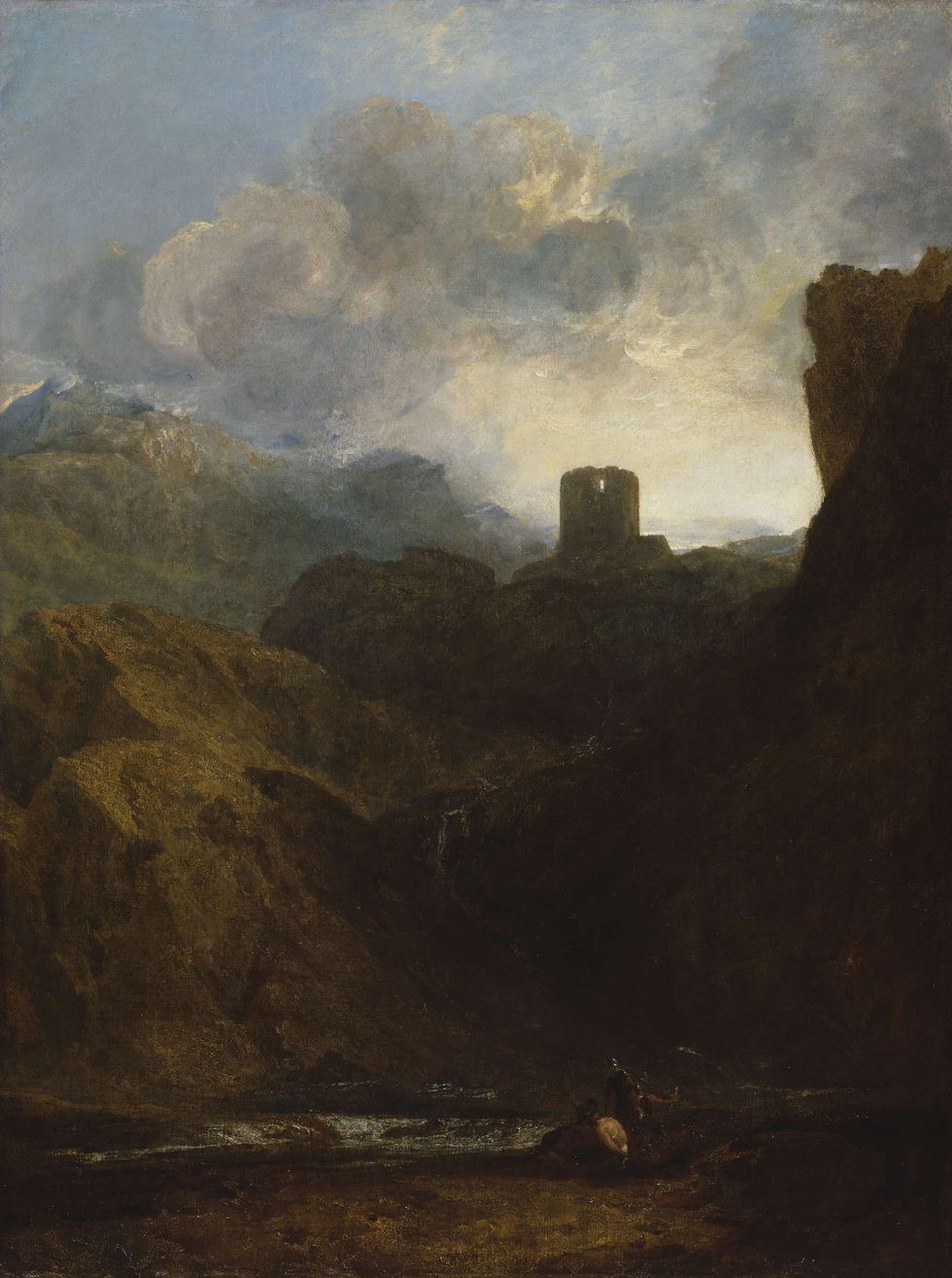 JMW Turner, Dolbadern Castle, North Wales (1800)Royal Academy of Arts, London
“The artists both looked backwards to create new works out of old. Two unfinished paintings are prime examples of this tendency. Both are based on earlier compositions they had shared in printed manifestos on the possibilities of landscape painting. Stoke-By-Nayland is a last investigation of light and shade in nature, Constable’s lifelong preoccupation. Norham Castle shows the evolution of Turner’s vision for landscape. Despite their apparent differences, these late works reflect their makers’ drive to convey the spirit of a place and their fascination with painting light.”
In the final gallery, there is a film in which various contemporary artists explain how Turner and Constable have guided their own artistic journeys.
For example, Bridget Riley said of Constable: “He’s one of my heroes. He made nature a real subject, which it had not been before. The light in Constable’s paintings is right – it doesn’t feel artificial. His painting has broken colour, broken marks, it’s not smooth. This gives it an immediacy and brings it closer to our own experience of being outside in the country.
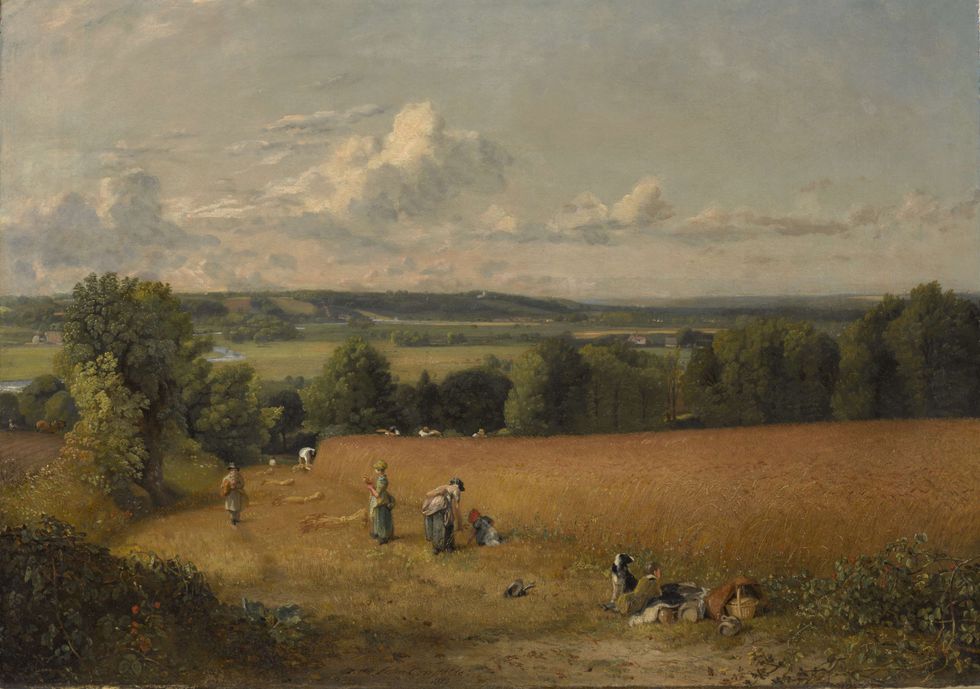 John Constable, The Wheatfield Clark Art Institute
”And Frank Bowling spoke about Turner: “The abstraction you get in Turner, the tumultuousness of the paint handling, that's what particularly excites me about it still. It went through his body, a real feeling for paint. The magic, the turmoil in the work, it’s attracted me for a long, long time.”
The Tate Britain shop, selling Turner and Constable memorabilia, such as prints, postcards, books, catalogues, fridge magnets (I bought a Turner to add to two Constables) and the like, is also a place to linger. There is also a wonderful play area where toddlers can be exposed to art at an early age.