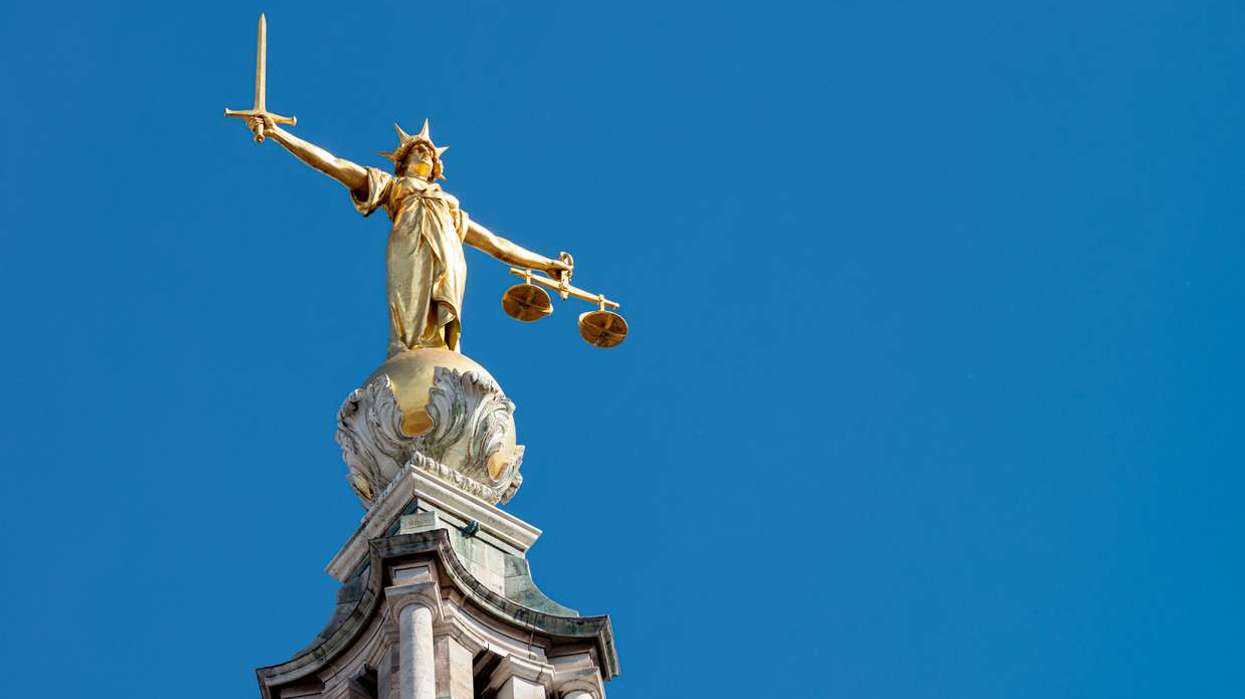

WHO watches the watchdogs? Who judges the judges? And who protects the public when the very institutions meant to uphold justice try to silence those who expose their failings?
Late last Friday (5) evening, a First-tier Tribunal answered those questions with rare clarity. It refused the Judicial Appointments Commission’s (JAC) attempt to saddle me with more than £14,000 in legal costs – a move which would have chilled investigative journalism and sent a message that challenging powerful public bodies comes with a financial noose. That bid for costs came after I had already won, in part, the underlying battle. In March 2025 the same tribunal allowed my appeal and ordered the JAC to disclose information it had previously refused to release.
Instead, the tribunal declined to make me pay. It held that costs are not a tool of punishment. That it was not unreasonable of me to use the only mechanism available to enforce a tribunal order which I genuinely believed the JAC had not met. That refusal restored some of my diminishing faith in our justice system.
Because let’s be clear: this was never about me. It was about the fact that since 2020, I waged a campaign to put the judiciary under the spotlight. How insiders secretly block candidates and judges they don’t like. How senior judges and staff bully, gaslight, make racist and misogynistic remarks with the confidence to know they will never be punished. I wrote more than 20 articles for Eastern Eye.
It was about the public’s right to know. It was about the principle that journalists are not civil servants – we are public servants. We do not serve the state. We serve you – the people. Our words are our weapons, and we wield them to defend the voiceless, to expose wrongdoing, and to hold power to account.
And power does not like being held to account.
“I’m a journalist - not a shrinking violet”
The tribunal criticised my tone. Good. Let’s talk about tone.
I’m a journalist. We are not shrinking violets. We are robust – especially when we think public bodies, which are meant to work for us, are hiding things from us, operating in secret, or actively working against us.
If we were polite, if we were accepting, if we weren’t healthily sceptical, we would never have uncovered the corruption in the Post Office scandal or how MPs abused their expenses.
And let’s put this in context.
Every day, Nick Robinson – a white presenter on BBC Radio 4’s Today programme – challenges and harangues his guests without fear or favour. It is celebrated as rigorous journalism. So, my question is this: why should I, as a brown man, not be allowed to use ‘robust’ language? Why am I not allowed to challenge? Why must I remain deferential to a once-colonial power?
This is 2026, not 1926.
The tribunal found my conduct unreasonable and my language intemperate – I do not hide from that. But it also accepted that it was not unreasonable for me to bring, and to maintain, my application. My words may appear to be sharp. But that’s what we must do as public servants. The underlying fight was, in my view, a legitimate one.
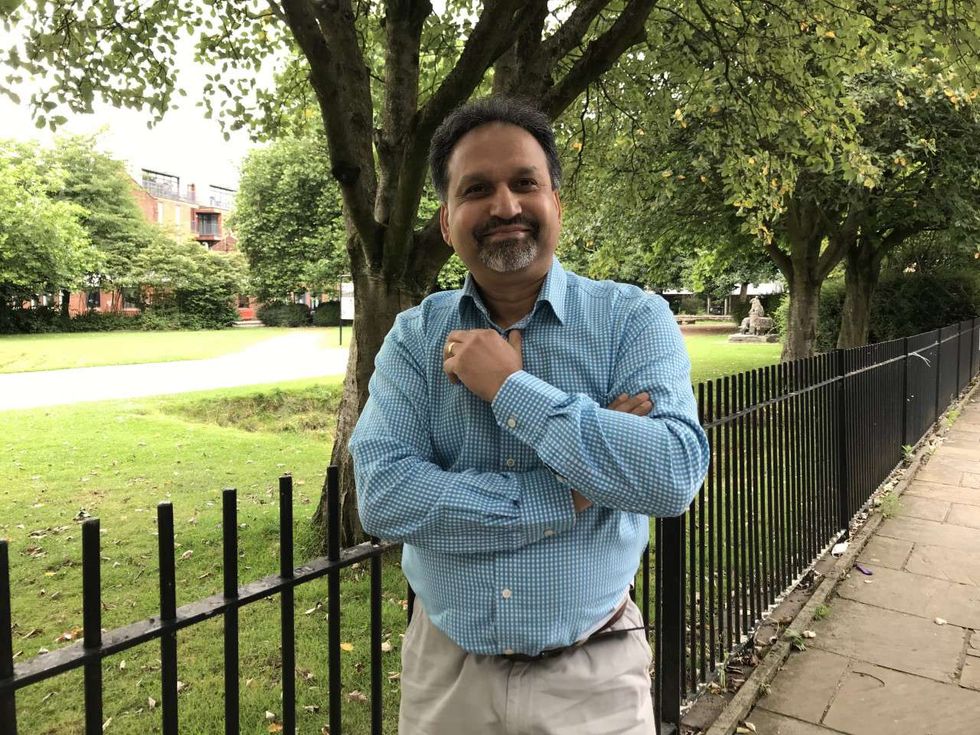 Barnie ChoudhuryBarnie Choudhury
And if the JAC had been transparent from the start, if it had answered my simple questions with honesty and clarity, there would have been no need for sharpness at all.
A body which cannot tolerate scrutiny
From where I sat, information emerged as drip-feed rather than all at once, and further material followed only after I applied for contempt of court. The JAC said it provided everything within scope, and that the later disclosures were either out of scope or answers to fresh questions. I did not accept that. When I pressed – as any journalist worth their salt must – the exchanges became adversarial.
The JAC accused me of being unreasonable. It accused me of misconduct. It accused me of making unfounded allegations. Yet the tribunal found that I was entitled to bring my application. I was entitled to maintain it. And I had a reasonable explanation for believing the JAC had not complied with a legally enforceable notice.
In fairness, the tribunal did not accept everything I said: it found that my sharper allegations against the JAC went further than the evidence allowed. I take that on the chin, even as I stand by my reporting. I have a spine. I deal in language. My job is to use it as a weapon for good, an armour to fight for the rights of others.
I used an ‘intemperate tone’ because I became frustrated at being stonewalled and, as I saw it, kept at arm’s length. And yes, I was robust. I make no apology for that. Here is the uncomfortable truth, as I see it: the government’s job is to spin and show what it does in the best possible light. My job is to verify and, like the boy in the Emperor’s New Clothes, point out when the king is naked.
In my experience, information of this kind rarely emerges from public bodies without persistence. I do not believe this material would have surfaced when it did, had I not kept pressing for it. This was always about the public. About taxpayers. About justice.
We must, parliament must, scrutinise the figures from judicial appointments against under-represented groups. If they do, it will raise concerns serious in right minded, thinking people. That is my honestly held opinion, founded on what my public interest journalism has uncovered, and I stand by it. I stand by the fact that brown and black people are disproportionately represented in the judiciary. That means the system must be at fault. And that fits the Macpherson definition of institutional racism, in my honestly held opinion, absent of malice.
Muzzling the press
I accept, as I told the tribunal, that a party is entitled to reserve its position on costs. But I question the message that pursuing a journalist for costs sends to everyone watching: challenge a public body, and you may be the one asked to pay. Whatever the intention, that is the chilling effect.
It reminded me of Shakespeare’s line in Hamlet: ‘The lady doth protest too much.’ The louder the JAC protested, the more obvious it became to me that it could not defend its own behaviour. But the tribunal refused to play along. It refused to be the JAC’s enforcer. It refused to let a public body weaponise costs to silence scrutiny.
In doing so, it proved me wrong in the best possible way. I feared that turkeys don’t vote for Christmas – that judges would instinctively side with their colleagues. They didn’t. They stood firm. They stood independent. They stood for justice. And for that, I am profoundly grateful.
A warning for parliament
But gratitude does not erase concern.
Because while the tribunal acted with integrity, parliament has been asleep at the wheel. The justice select committee – the body meant to oversee the judiciary and the JAC – has yet to grapple with how taxpayers’ money is being spent. I have revealed that the JAC has spent hundreds of thousands of pounds of public money fighting freedom-of-information cases, including mine. It wasted my time. It would have cost me eye-watering six-figure sums in legal fees, had it not been for the generosity of my counsel and those who supported me.
And yet MPs sit on their hands. They do nothing. They ask no questions. They show no curiosity about how a so-called independent body spends public money pursuing a journalist for costs rather than answering his questions.
Shame on them.
British fair play
As I wrote to the JAC during this saga: We are not in Russia. We are not in North Korea. We are not in China. We are in Britain. A country which prides itself on free speech, fair play, and the rule of law.
Last Friday (5) evening, the tribunal lived up to that promise. It sent a clear message that press freedoms are not optional. They are not decorative. They are not negotiable. They are the cornerstone of our democracy.
And for the first time in a long time, I felt proud to be British again.
Thank you
My sincere thanks go to my counsel, my friends who stood by me, the National Union of Journalists, the Press Gazette, the Times and every reader who believes that journalism still matters.
Because it does. It always will. And as long as public bodies try to hide the truth, journalists must – and always will – fight to reveal it.
It takes brave editors and colleagues to back you – especially when you’re David to the JAC’s Goliath. We’ve seen newspapers back down in the face of legal action, when they should have stood shoulderto-shoulder with their readers or someone without a voice.
Since 2020, the Solanki family, who own Eastern Eye,a family newspaper, have stood squarely behind my brand of journalism, never once flinching from the arrows aimed at them. They gave me the space, the platform and the determination to uncover and reveal unpalatable truths – especially as the world seems to be anti-people-of-colour, anti-immigrant, anti-truth.
That’s what true journalism is about. Brave. The Solankis never forgot that we are not civil servants. We are public servants. And we refuse to be silenced.

 The pair with supporters who helped them reach the finish line Minreet Kaur

