by LAUREN CODLING
A LEADING psychiatrist has urged the government to invest in more mental health support for gambling addicts as new figures revealed that the number of gambling-related hospital admissions has more than doubled in the past six years.
The call for action comes weeks after NHS England data highlighted a record number of admissions in 2018 (a total of 321, up from 150 in 2012) that were related to gambling
addiction. They included care for severe mental ill health conditions like psychosis. Figures also showed that pathological gambling – where people turn to crime to fund their addiction – had increased by a third in the past year.
Previous NHS estimates revealed that more than 400,000 people in England have an addiction to gambling. In the NHS Long Term Plan released last year, the health service has committed to opening 14 new problem gambling clinics by 2023-2024. It also plans to set up
a gambling clinic that is aimed at young people – the first of its kind in the UK.
Professor Dinesh Bhugra, emeritus professor of mental health and cultural diversity at the Institute of Psychiatry, Psychology and Neuroscience, King’s College London, said the government needed to educate people on gambling addiction. He also urged increasing funding for public mental health services, and recommended that more psychiatrists, psychologists and mental health professionals be trained in how to deal with gambling addiction.
“Sometimes people don’t realise (about addiction) as they think gambling is fun,” he told Eastern Eye. “I think more can be done by government to tackle this.”
Addiction therapist Stefan Walters echoed his sentiments. He believed there was not enough focus on the causes of the mental health issues behind gambling addiction. Gambling was a symptom of addiction, he told Eastern Eye, and not a cause. “It is all very well investing into
centres that may help people with the symptoms, but the real causes can be the breakdown of a family, social connections and mental health illnesses such as depression or anxiety,” Walters, a member of the British Association for Counselling and Psychotherapy, said.
“These are the problems causing these mental health issues and that is being ignored. I think they are looking at symptoms rather than the causes, which is only a short-term fix approach.”
Walters, who previously worked at an addiction agency for BAME communities in northwest London, believes British Asians may be more drawn to gambling. “There can be a sense of shame when you do something that may be looked down upon by the family within the Asian
community, so I think (Asians) are a bit more drawn to gambling as it is easier to hide,” he
explained. “Using drink or substances is more difficult to conceal, whereas quickly going on
your phone and placing a bet can easily be done in secret.”
Bhugra, a former president of the Royal College of Psychiatrists, noted that some Hindus
and Sikhs were expected to gamble during Diwali as a tradition. While gambling may be
seen as “fun”, he said, it also indicated an underlying cultural acceptance of the activity. As many people see gambling as a habit, Bhugra added, it could also mean sufferers do not seek help.
Claire Murdoch, national mental health director for the NHS said the health service was “fighting back against a rising tide of gambling-related ill health”. “The gambling industry, which
takes upward of £14 billion a year from punters, must take the blame for this increase and ensure a fair amount of its profits help its customers who may suffer from addiction,” she said.
In response to Eastern Eye, a government spokesperson reiterated the Conservative party manifesto which pledged to conduct a review of the 2005 Gambling Act.





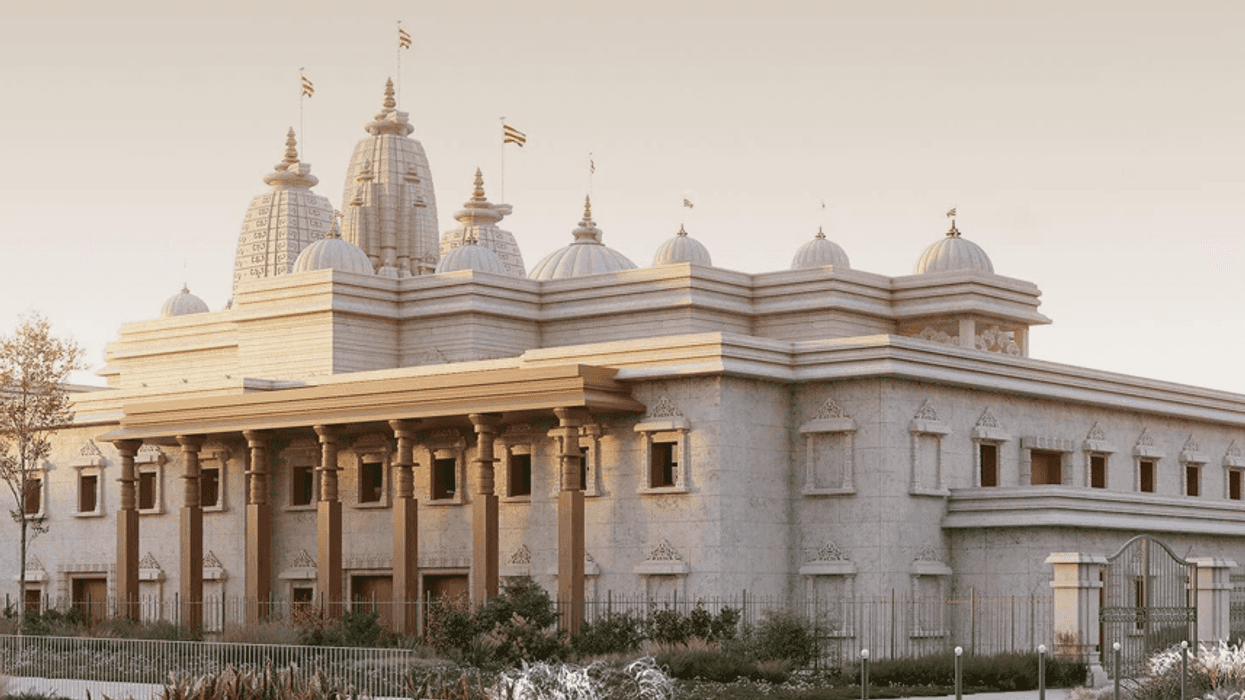
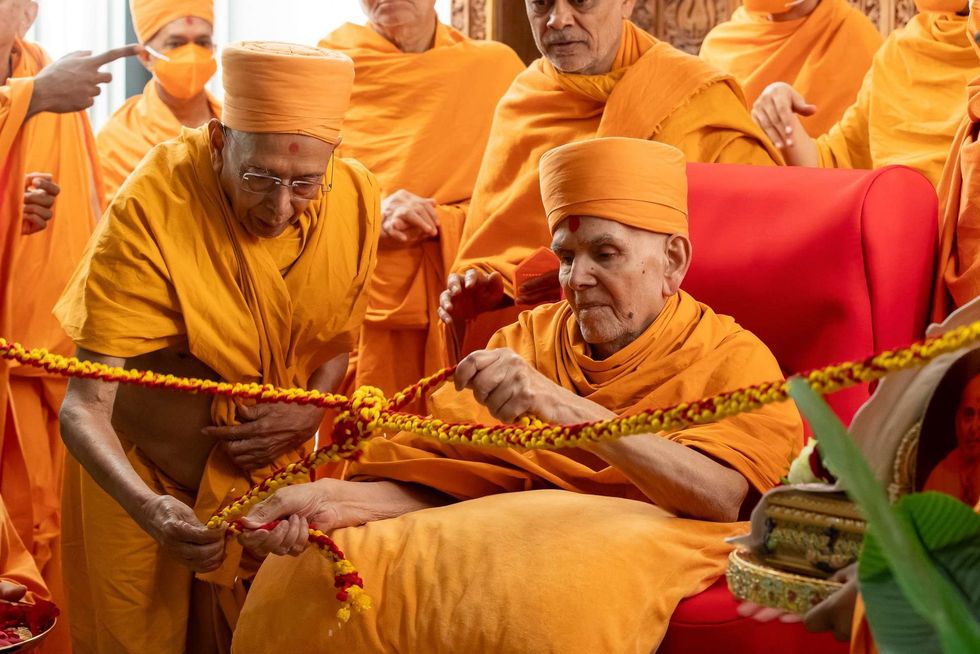 Mahant Swami Maharaj arrives in France ahead of the Paris Mandir Mahotsav BAPS Paris Media
  Historic Jal Yatra starts at the iconic Eiffel TowerBAPS Paris Media
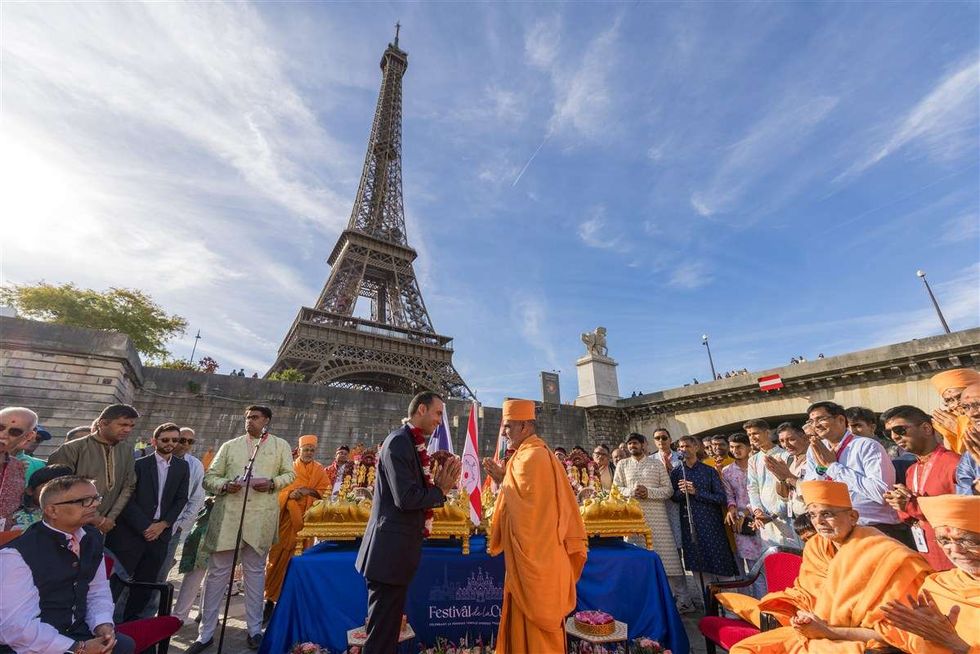 Organisers called it the largest coordinated flotilla to sail the Seine since the opening ceremony of the Paris 2024 Olympic GamesBAPS Paris Media
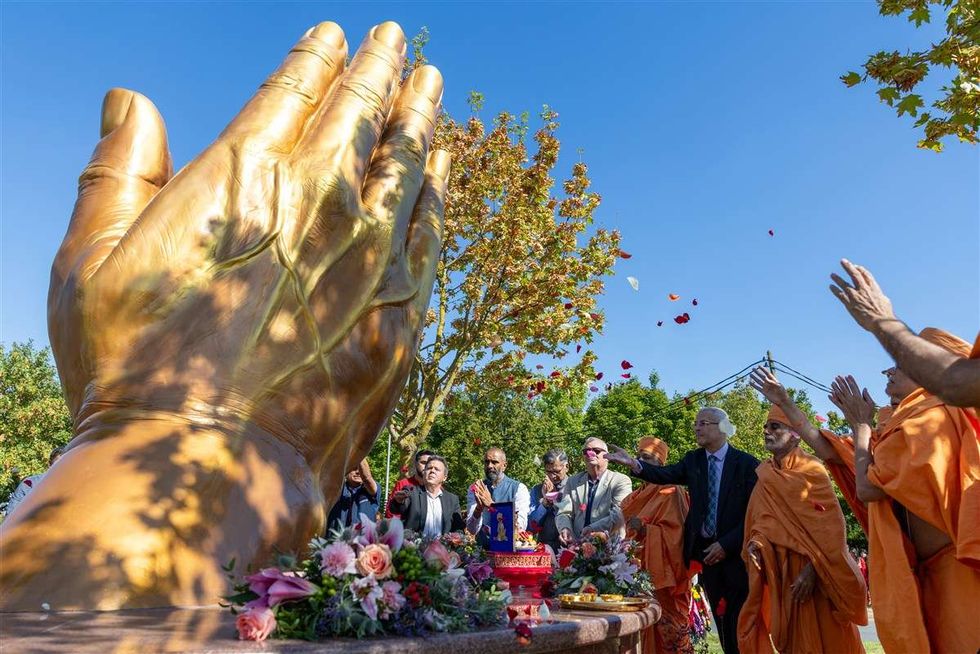 A sculpture of folded hands in the traditional Indian gesture of namaste was unveiled at a roundabout in Bussy-Saint-Georges this weekBAPS Paris Media