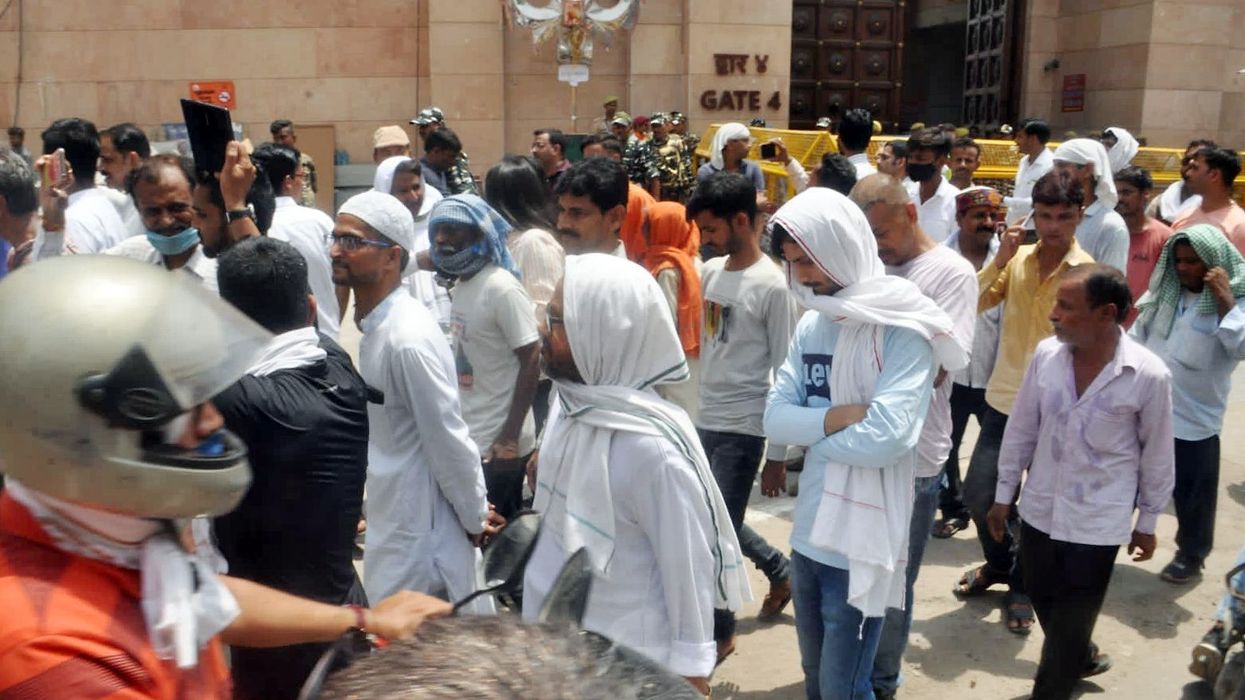

INDIA's Supreme Court overturned a local order to ban large Muslim prayer gatherings in a high-profile mosque in north India after a survey team said it found relics of the Hindu god Shiva and other Hindu symbols there.
The top court on Tuesday (17) in an interim order stated Muslims' right to prayer should not be disturbed, and simultaneously the area where Hindu religious relics were said to be found should be protected.
The disagreement over rights to worship at the mosque follows a decades-long campaign by Hindu activists to show that key Muslim-built buildings in India sit atop older holy sites. A previous dispute 30 years ago led to fatal rioting.
The Supreme Court order comes a day after a local court in Varanasi - Hinduism's holiest city and the site of the historic Gyanvapi mosque - ruled Islamic gatherings there should be limited to 20 people.
The local court had ordered the survey of the mosque after five women sought permission to perform Hindu rituals in one part of it, saying a Hindu temple once stood on the site.
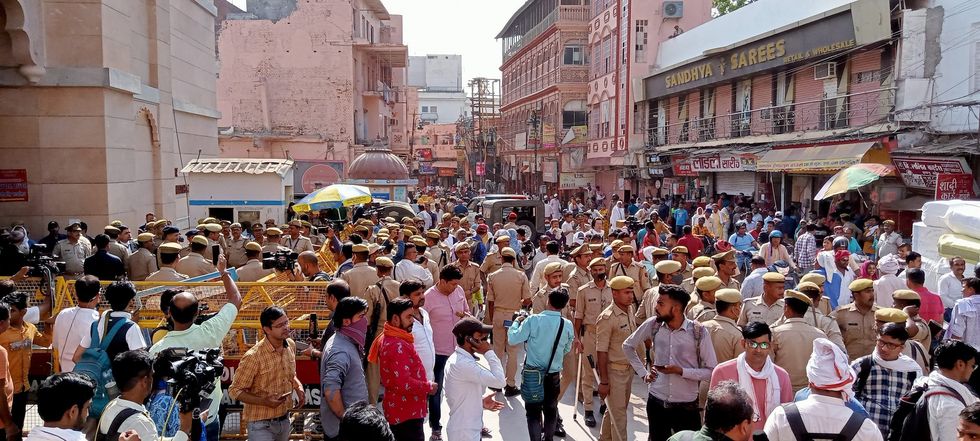 Police personnel deployed outside Gyanvapi Masjid over a survey of the mosque in connection with the Shringar Gauri worship case, in Varanasi. (ANI Photo)
The Gyanvapi mosque, located in the constituency of prime minister Narendra Modi, is one of several mosques in northern Uttar Pradesh that some Hindus believe was built on top of demolished Hindu temples.
Hardline Hindu groups tied to Modi's Bharatiya Janata Party (BJP) have stepped up demands to excavate inside some mosques and to permit searches in the Taj Mahal mausoleum.
Judges of the top court will continue hearing from Hindu and Muslim petitioners this week.
Leaders of India's 200 million Muslims view the survey inside the mosque as an attempt to undermine their rights to free worship and religious expression, with the BJP's tacit agreement.
The BJP denies bias against minorities including Muslims, and says it wants progressive change that benefits all Indians.
In 2019, the Supreme Court allowed Hindus to build a temple at the site of the disputed 16th-century Babri mosque that was demolished by Hindu crowds in 1992 who believed it was built where Hindu Lord Ram was born.
The demolition led to religious riots that killed nearly 2,000 people, mostly Muslims, across India.
(Reuters)



