SRI LANKA defaulted on its $51 billion (£39.23 bn) foreign debt on Tuesday (12) as the island nation grapples with its worst economic crisis in memory and widespread protests demanding the government's resignation.
Acute food and fuel shortages, alongside long daily electricity blackouts, have brought widespread suffering to the country's 22 million people in the most painful downturn since independence in 1948.
Public anger has flared in recent weeks with crowds attempting to storm the homes of government leaders and security forces dispersing protesters with tear gas and rubber bullets.
Sri Lanka's finance ministry said the country was defaulting on all external obligations, including loans from foreign governments, ahead of an International Monetary Fund bailout.
"The government is taking the emergency measure only as a last resort in order to prevent further deterioration of the republic's financial position," a statement from the ministry said.
Creditors were free to capitalise any interest payments due to them or opt for payback in Sri Lankan rupees, the ministry added.
Sri Lanka's snowballing economic crisis began with an inability to import essential goods after the coronavirus pandemic torpedoed vital revenue from tourism and remittances.
The government imposed a wide import ban to conserve its foreign currency reserves and use them to service the debts it has now defaulted on.
Economists say the crisis has been made worse by government mismanagement, years of accumulated borrowing and ill-advised tax cuts.
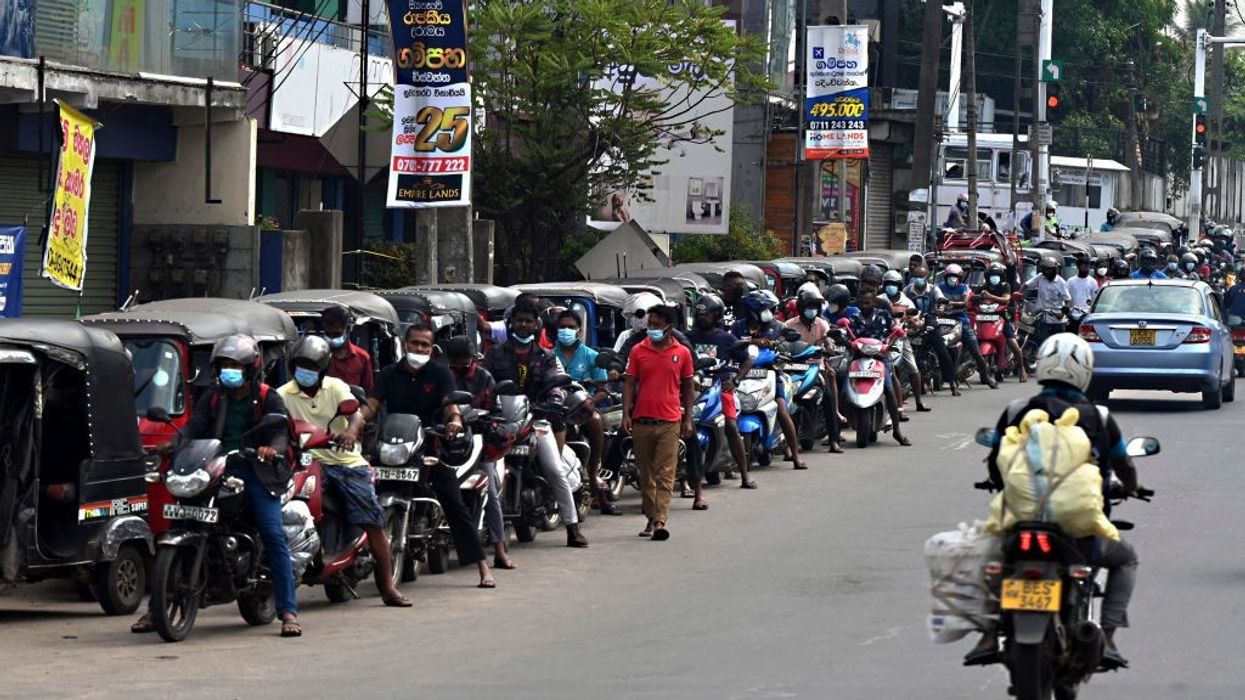
Public frustration with the government is widespread, with long queues around the island nation forming each day to buy scarce supplies of petrol, gas and kerosene for cooking stoves.
Thousands of people were camped outside president Gotabaya Rajapaksa's seafront office in Colombo on the fourth straight day of protests calling for him to step down.
Rating downgrade
International rating agencies also downgraded Sri Lanka last year, effectively blocking the country from accessing foreign capital markets to raise new loans and meet the demand for food and fuel.
Sri Lanka had sought debt relief from India and China, but both countries instead offered more credit lines to buy commodities from them.
Official figures show that China and Japan, two key bilateral sovereign creditors, hold about 10 per cent each of Sri Lanka's foreign debt while India's share is under five per cent.
Just under half of Sri Lanka's debt is market borrowings through international sovereign bonds and other similar instruments.
Estimates showed Sri Lanka needed $7 bn (£5.38 bn) to service its debt load this year, against just $1.9 bn (£1.46 bn) in reserves at the end of March.
(AFP)
Sri Lanka defaults on all foreign debt