
Highlights:
British south Asians are increasingly turning to family, friends and social media for health information when official advice does not feel relevant to their everyday lives. A new UK study suggests that WhatsApp, in particular, has become an important part of how some communities discuss illnesses, medicines, and treatment.
A study published in early September 2026 by National Center for Biotechnology Information suggests that when official health information does not feel relevant to people's lives, they often turn to family, community networks, and social media instead.
The qualitative study, published in PLOS One on September 2, examined how south Asian and Black communities in the UK decide whether health information is trustworthy. Researchers from Kingston University and City St George's, University of London, spoke to 68 people, including 42 South Asian and 26 Black participants.
The research is particularly striking because it shows that this is not simply a case of people rejecting doctors or the NHS. South Asian participants often held GPs in very high regard. The problem was access, communication, and whether the information offered felt relevant to their cultural experiences.
When the GP is trusted but hard to reach
Some participants described GP appointments as rushed, with one saying doctors seemed to give patients only a couple of minutes before sending them away.
Being directed to a website instead of having a conversation could leave people feeling that their concerns had not been taken seriously. In one case, a woman struggling to get an appointment for pain in her side was eventually helped by a local charity leader and sent to hospital, where an X-ray found a broken bone.
The researchers found that official health messaging often assumes the NHS website and GP are the obvious starting points. But participants wanted more personalised information, including advice around diet, nutrition, and natural remedies, as well as information about how particular conditions may affect south Asian communities.
When those gaps appeared, people looked elsewhere.
The family WhatsApp group steps in
For first-generation south Asian immigrants in particular, WhatsApp and Facebook were important sources of health information. Instagram and YouTube videos were also shared through WhatsApp, effectively turning the messaging app into a bridge between social networks and health advice.
One participant described people using WhatsApp and social media to ask family members about their ailments or medicines they had been prescribed.
That reliance makes sense within close family networks, where relatives may have personal experience of a condition or treatment. But it also creates a problem: being trusted does not necessarily mean being medically accurate.
The researchers warn that when mainstream health information feels impersonal or culturally disconnected, people may move towards non-medical online sources, increasing exposure to misinformation.
When WhatsApp medicine becomes risky
The concern is not hypothetical. Separate research into the global south Asian diaspora found that COVID-19 misinformation circulated through WhatsApp included false claims about how the virus was transmitted, prevented and treated. Some messages used scientific language and referred to major health organisations or public figures to make misleading information appear credible.
The new UK study is based on fieldwork carried out in February and March 2022, even though the paper was published in September 2026. That timing is an important limitation when considering how social media habits may have changed.
Still, the researchers' central warning remains relevant: health information has to reach people through channels they trust and in ways that reflect their lives.
Their recommendations include culturally sensitive resources, trusted community intermediaries and communication through platforms communities already use.
For British south Asians, that may increasingly mean meeting people where health conversations are already happening, including the family WhatsApp group.




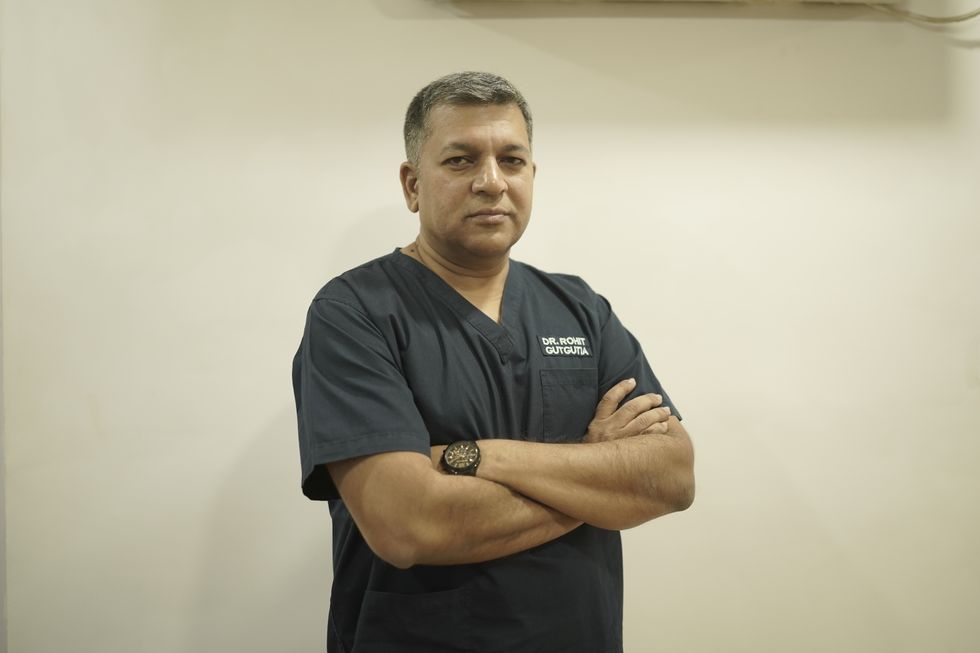 Dr Rohit Gutgutia is a fertility and IVF specialist with more than two decades of experience in reproductive medicine. He holds an MBBS and DGO in Gynaecology and Obstetrics and trained in advanced IVF in Israel in 2005.