THERE is a wonderful true-life story which happened during the second World War in the ill-famed German concentration camp in Auschwitz.
Every day numbers were called out, and people were led to the extermination area, because the camp became full. If a person’s number was called, it meant they were going to be shot dead and buried en masse.
One man whose number was called was terrified. Standing next to him was a young and healthy Christian missionary, whose number was not called. Seeing the man’s fear he said, “Don’t fear. I will take your place.” The man felt ashamed, but at the same time could not refuse the offer. He wanted to live. The missionary was shot. A few days later, the Germans
lost the war and the man was among those who were freed. For many years he lived with this sense of defeat and shame. He later revealed the story of his survival and realised his life was somebody else’s charity. It was because of another man’s greatness that he was alive. Otherwise, he would have been shot that day; his number had been called.
The missionary, who did not know him – he was not a friend, a father, a son or anything – just to ease his fear and suffering, took the call. That man, not the one who stayed alive, will know what life is. Only he can experience a certain strength, a certain power within himself that somebody who is trying to protect himself will never experience.
This does not mean you have to go sacrifice yourself. The man who went to his death was not thinking in terms of sacrifice. He just did it; that is all. It was not that he was waiting to sacrifice himself for somebody else. At that moment, he saw what was needed and just did it without a second thought. That is fantastic; but if you are trying to sacrifice yourself because you are going to get strength, or you are going to go to heaven, that is not it. That is really not it.
If you can run your life without the offer of heaven, you are on the path; but, if by taking the offer and by cutting a deal you can still run in the right direction, go ahead and do it.
If such a situation arises, and if you have maturity of thought that you do not need any deals and you can still do it, it is good. If you have grown out of this limitation that something has to be offered for you to do something, where no increments are needed and you still are willing to work overtime, then you have a different kind of strength.
A person who does only as much as is needed will only get that much. They will always remain a beggar in his life. They will not know what strength really is, they will never know what divinity is; they will never know what godliness is, simply because divinity does everything purposelessly.
Just see, everything is done purposelessly.
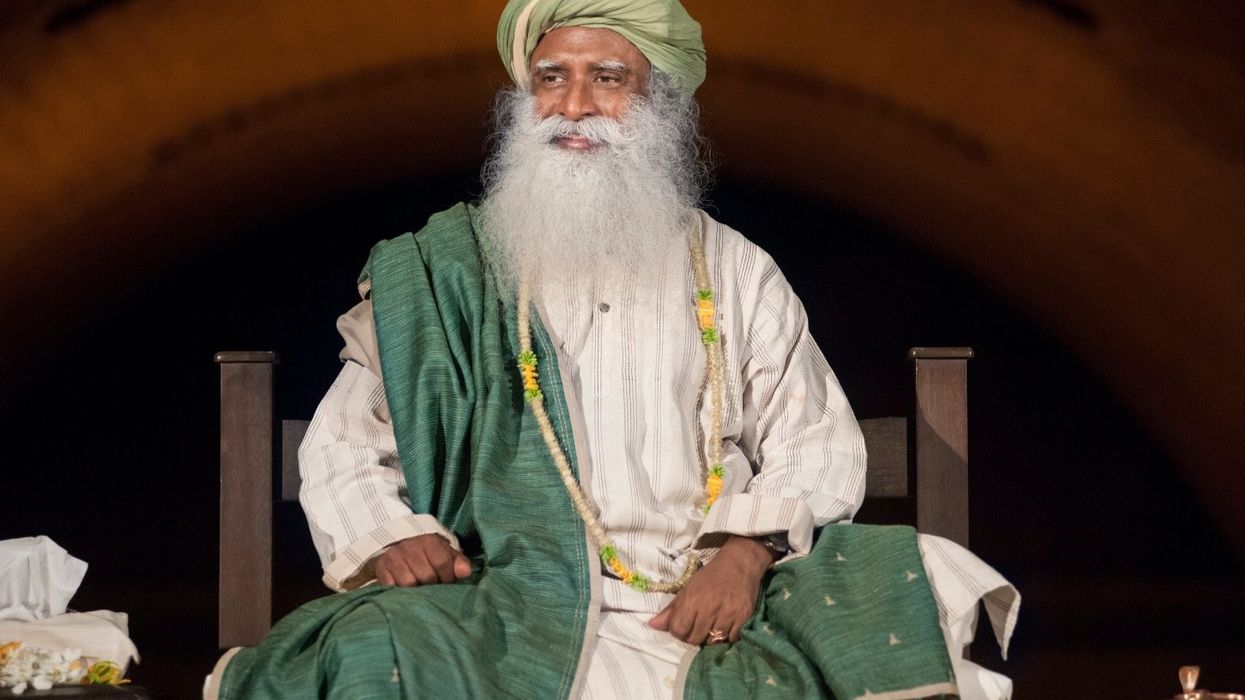
Ranked among the 50 most influential people in India, Sadhguru is a yogi, mystic, visionary and bestselling author. Sadhguru has been conferred the Padma Vibhushan, the Indian government’s highest annual civilian award, in 2017, for exceptional and distinguished service.