FROM Indian poet and philosopher Thiruvalluvar to English great William Shakespeare, MPs quoted extensively from literature to put across their arguments over the Manipur violence.
Opposition parties moved a no-confidence motion against prime minister Narendra Modi’s government over Manipur. The motion was defeated by voice vote on Thursday (10) but the speeches by lawmakers became talking points during the debate.
While Shakespeare's Julius Caesar was invoked the most, members of the lower house of parliament also cited English poets Joha Donne's and John Milton's works to buttress their points.
"Injustice anywhere is a threat to justice everywhere," said Congress MP Gaurav Gogoi quoting American activist Martin Luther King.
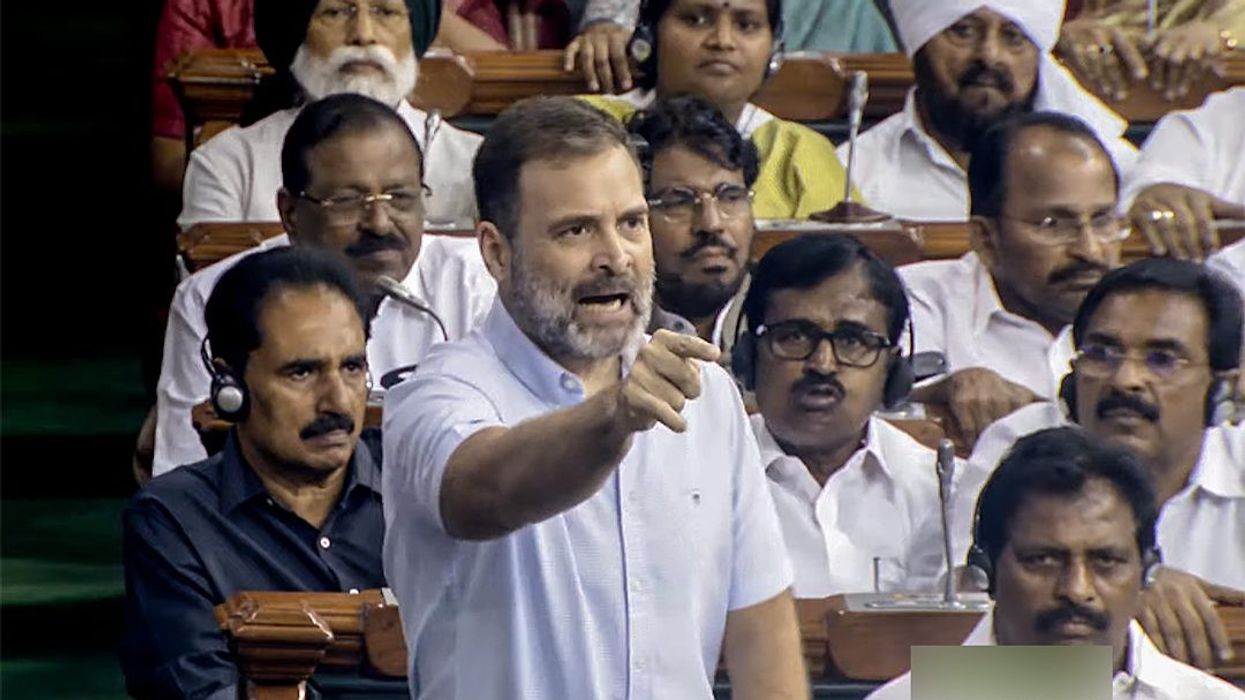
Former Congress president Rahul Gandhi invoked 13th century Persian poet Rumi to say he would speak not from his mind but from his heart.
"My BJP friends," he said referring to Modi’s Bharatiya Janata Party, "You need not be afraid because my speech today will not be focussed on us. Rumi said words spoken from the heart reach the heart," he said.
Dravida Munnetra Kazhagam (DMK) party's T R Baalu quoted from Tamil classic Thirukkural which when translated means, "He who defies righteous order, oversteps limit and enjoys self-aggrandisement gets lost first."
He also invoked Lord Krishna and his teachings. "Krishna advised that you are not killing your friends but evil...the same thing I am doing. There was no other way than to bring a no-confidence motion to get the presence of prime minister in the House," he said.
Trinamool Congress MP Saugata Ray, a former physics professor quoted from Shakespeare's Julius Caeser, Rabindranath Tagore and even metaphysical poet John Donne while launching a scathing attack on the government.
"But as Brutus said in Julius Caesar, Not that I love Modi less, but I love India more," he said.
In Bengali, he recited one of Tagore's most heartfelt songs which when translated means: "I shall not fear and I shall not die twice before dying actually."
During his speech, the veteran MP also said he would like to remind the House of what Mark Antony said in Shakespeare's Julius Caesar.
"I will paraphrase it and say, 'You blocks, you stones, you worse than senseless things! O You hard hearts, cruel men of BJP.' You have no compassion. That is why, you have not gone to Manipur as all the Opposition parties have gone," he said calling the central government "heartless".
He then went on to quote English poet Donne as he was quoted in Ernest Hemingway. "Each man's death diminishes me, for I am involved in mankind. Therefore, ask me not for whom the bell tolls. It tolls for thee."
Nationalist Congress Party’s Supriya Sule too made use of literary works to explain her stand on the Manipur issue.
"In the epic poem, 'Paradise Lost' by John Milton, the character of Satan displays hubris when he attempts to rebel against the God's rule in Heaven, he eventually declares that it is better to reign in Hell than serve in Heaven," she said.
Quoting American economist Milton Friedman's emphasis on evaluating policies on the basis of outcomes rather than the intention, Sule said she did not intend to take away from the intention of the government but underlined that it was the outcomes that she had a problem with.
With the opposition members taking digs at the government using literary aids, BJP MP Heena Gavit too chipped in by quoting Swami Vivekananda, encouraging her partymen to rise and achieve their goals.
"Arise awake and stop not till the goal is achieved," she said.
Quotes from literature mark debate on no-trust motion against Modi
MPs invoke Shakespeare, Tagore, Donne, Rumi and John Milton during discussion