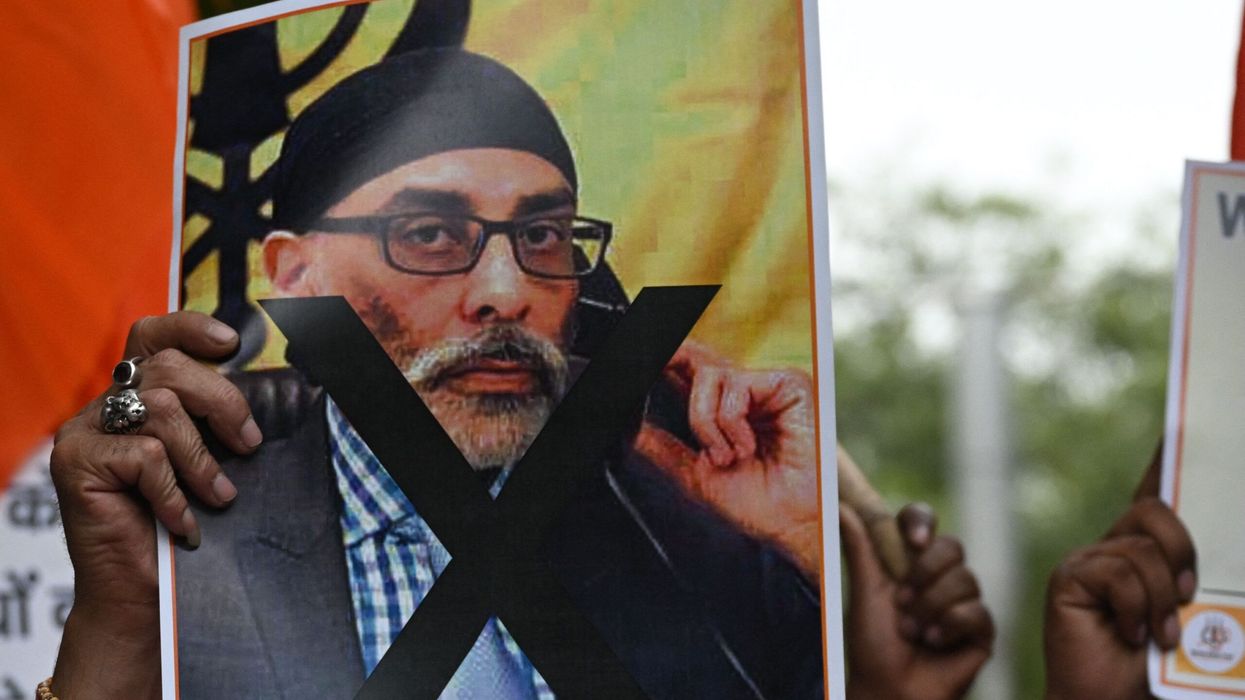

KHALISTANI separatist Gurpatwant Singh Pannun has filed a civil lawsuit against the government of India and its national security advisor (NSA) Ajit Doval.
Following the filing, a US court has issued summons in the case.
India's foreign secretary, Vikram Misri, described the lawsuit as “completely unwarranted and unsubstantiated” during a press briefing in New Delhi on Thursday.
Pannun leads the group Sikhs for Justice (SFJ), which has been declared unlawful under India’s Unlawful Activities (Prevention) Act.
“As we’ve said earlier, these are completely unwarranted and unsubstantiated imputations. Now that this particular case has been lodged, it doesn’t change our views about the underlying situation. I would only invite your attention to the person behind this particular case whose antecedents are well known,” Misri said to the media.
The US district court for the Southern District of New York has stated that a response to the summons must be filed within 21 days. This development comes just days before Prime Minister Narendra Modi’s visit to the US from September 21-23, where he will attend the Quad Leaders’ Summit and address the UN's Summit of the Future.
The lawsuit alleges that the Indian government engaged Nikhil Gupta to hire an assassin in New York to kill Pannun. Gupta was indicted by federal prosecutors last November for allegedly working with an Indian government employee in the foiled plot. He was extradited to the US from the Czech Republic in June and has pleaded not guilty to the charges.
The 28-page complaint also references the death of Sikh separatist Hardeep Singh Nijjar in Canada, claiming that these efforts were overseen by Vikram Yadav, identified in the lawsuit as a Senior Intelligence Officer in India’s Research and Analysis Wing (R&AW). The lawsuit names Yadav, Doval, and R&AW chief Samant Goel as those who approved the alleged operations.
“The US captured and indicted Gupta. But the Government of India denies responsibility,” the lawsuit states. Pannun is seeking compensation, holding the Government of India, Doval, Goel, Yadav, and Gupta accountable for their alleged involvement in the assassination plot. Pannun, who holds dual citizenship of the US and Canada, is wanted in India on terror charges.
Responding to a question on the lawsuit, Misri said, “I would also underline the fact that the organisation—so-called that this person represents—is an unlawful organisation, has been declared as such under the Unlawful Activities Prevention Act of 1967, and it has been done so on account of its involvement in anti-national and subversive activities aimed at disrupting the sovereignty and territorial integrity of India.”
(With inputs from PTI)