
THE frontrunner party for Pakistan’s delayed elections began campaigning on Monday (15), after a weekend court decision effectively pushed the opposition party of ex-prime minister Imran Khan out of the race.
Pakistan’s vote next month has been marred by claims of pre-poll rigging, with analysts saying that the army establishment is orchestrating Khan’s exclusion even while backing three-time prime minister Nawaz Sharif.
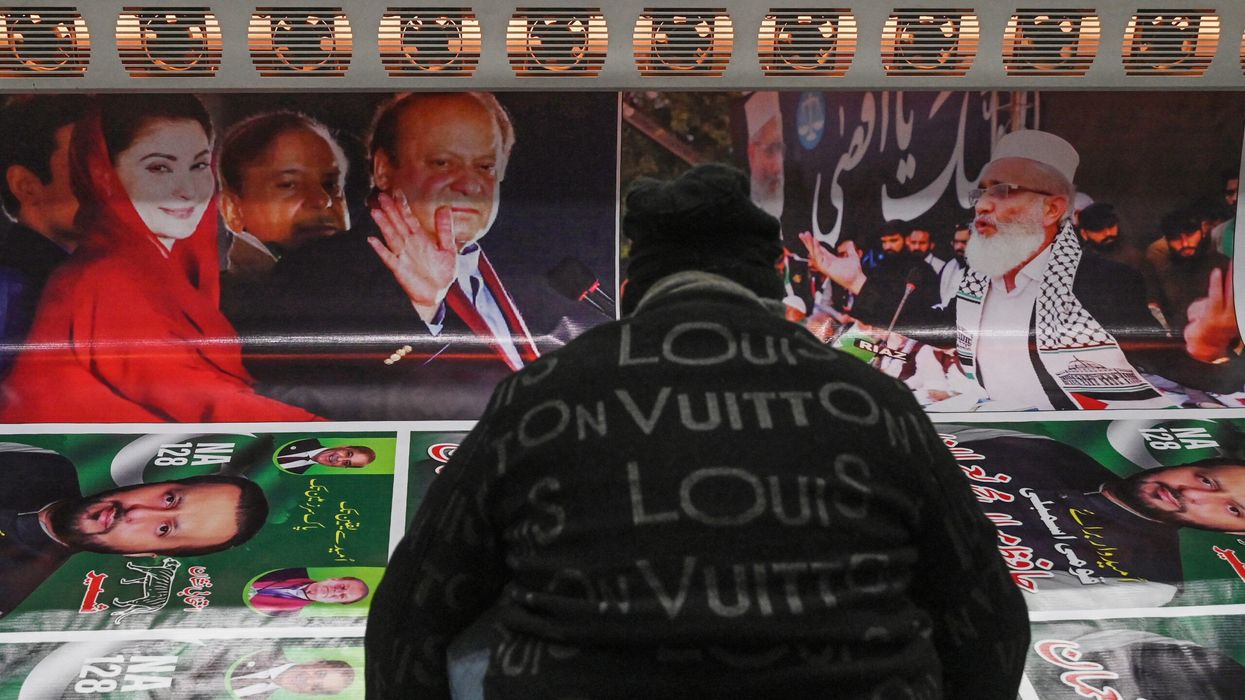
On Monday, Sharif’s Pakistan Muslim League (Nawaz) party kicked off campaigning in the eastern city of Okara, where thousands of supporters thronged to listen to speeches by senior leaders.
“Those who love this country can’t vote for anyone else but Nawaz Sharif,” said his daughter, Maryam Nawaz Sharif, a vicepresident of the PML-N party.
“The more you vote for us the more you will see your household expenses going down,” she said. However, inflation in the country has been hovering around 30 per cent in recent months.
Sharif, who returned from self-exile in London late last year, has pledged to rebuild the country’s £276.9 billion economy, which is battling high inflation, an unstable currency and low foreign exchange reserves, despite averting a debt default with an IMF bailout last summer.
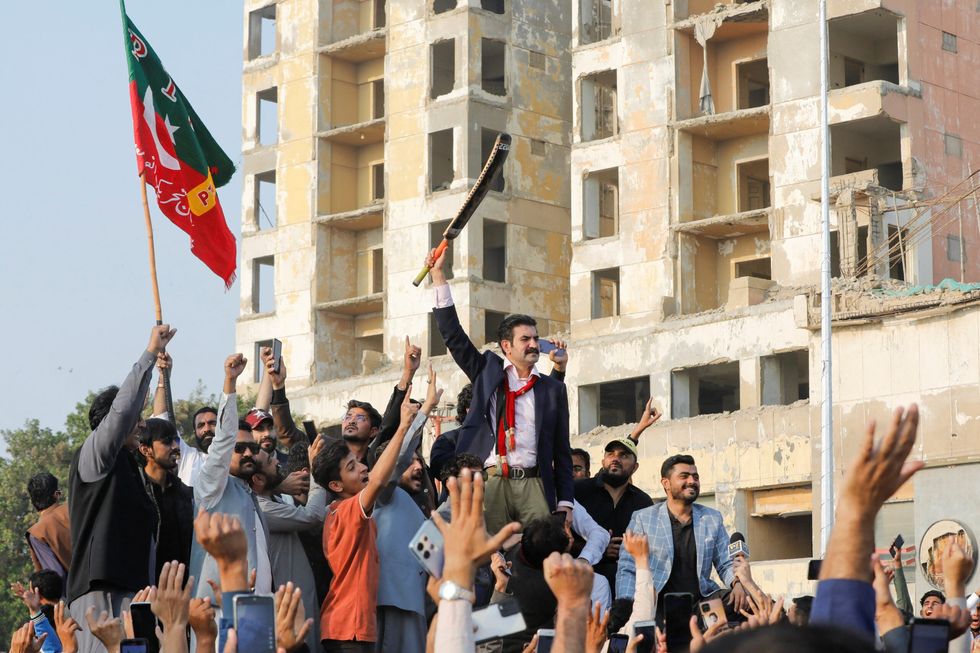 PTI workers protesting the denial of its election symbol
Meanwhile, Khan is languishing in jail and barred from standing as a result of cases that he claims have been confected by the establishment.
The Supreme Court last Saturday (13) dealt a fresh blow to his Pakistan Tehreek-eInsaf (PTI) party by denying it the cricket bat election symbol on ballot papers.
The move effectively forces PTI candidates to run as independents and disallows them an icon vital for allowing millions of illiterate voters to identify party nominees February 8.
PTI once had huge street power, able to muster thousands in carnivalesque rallies across the country until authorities staged a months-long crackdown.
A PTI gathering in Karachi last Sunday (14) was disbanded by police who arrested the organisers.
The poll will take place amid increasing militant attacks and an economic nosedive that has ravaged the rupee and sent the cost-of-living soaring.
Originally due in November, the election commission delayed the vote in order to redraw constituencies after a new census.
Analysts suggest the hold-up has benefited the powerful army establishment, seen as the chief architects of an ongoing crackdown that is denting the prospects of Khan and PTI.
However, the military denies any accusation of influencing the election and says it remains apolitical.
“It’s going to be a controversial election; one party sees it as a complete negation of democracy,” Tufts University history professor Ayesha Jalal said.
Major players such as the Pakistan People’s Party (PPP) of late prime minister Benazir Bhutto have already begun campaigning, but these have been muted compared to past polls.
Nawaz Sharif did not appear at Monday’s rally and has been largely absent from the public eye since returning from self-imposed exile in Britain late last year.
Since then, the 74-year-old - last ousted in 2017 - has seen the myriad corruption cases plaguing him dissolve in the courts, an apparent sign of his reformed relationship with the army establishment.
The military has directly ruled Pakistan for decades of its history and continues to wield huge influence behind the scenes.
Onetime cricket star Khan blames the army for an avalanche of court cases burying him since he was ousted by a no-confidence vote in 2022 - saying they were triggered to prevent his return to power.
Despite a narrowing margin, a Gallup Pakistan poll taken in December showed that 71-year-old Khan still has a five-point margin over Sharif in approval ratings. (AFP, Reuters)