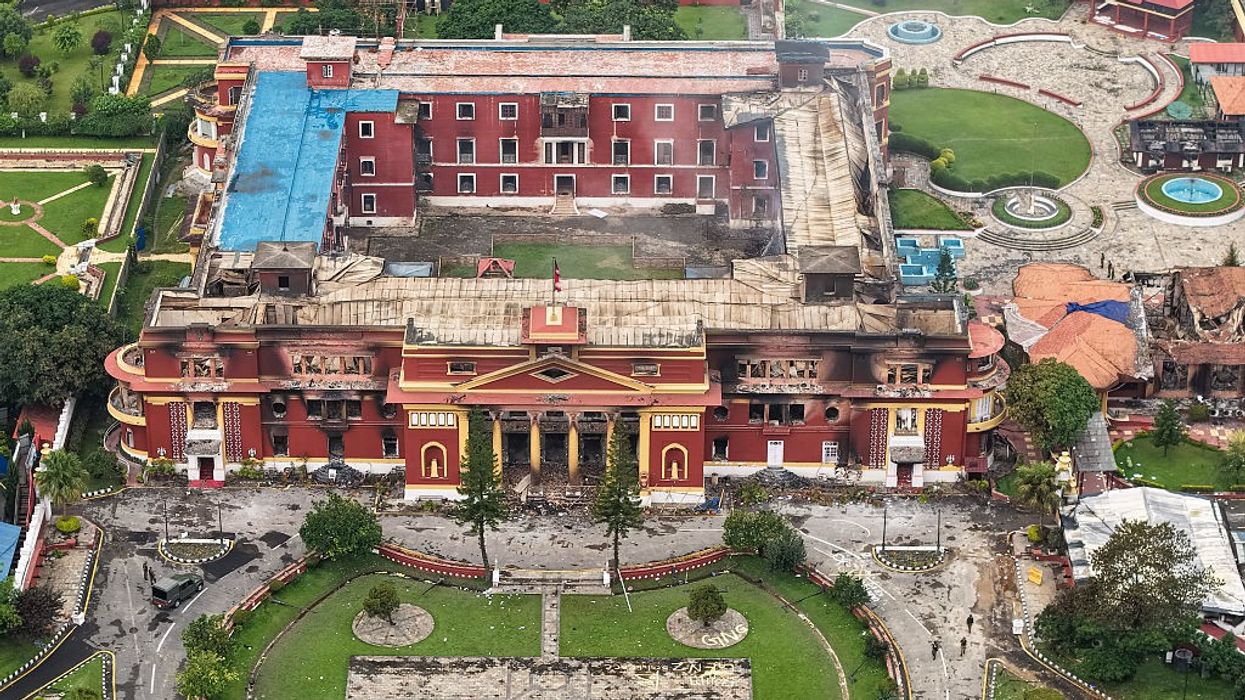

NEPALI soldiers patrolled the streets of Kathmandu on Wednesday (10), seeking to restore order after protesters set parliament ablaze and forced the prime minister to quit in the worst violence to hit the Himalayan nation in two decades.
Soldiers issued orders via loudspeakers enforcing a curfew during the political vacuum, as armoured personnel carriers rumbled past the carcasses of burnt vehicles and buildings on the largely quiet streets.
Nepali Army chief, General Ashok Raj Sigdel, has appealed for all protesters to "call it off and engage in dialogue".
Demonstrations began Monday (8) in the capital against the government's ban on social media and over corruption, driven by angry young protesters who dubbed themselves the "Gen Z" movement.
But they escalated into an outpouring of rage nationwide with government buildings set on fire after at least 19 people were killed in a deadly crackdown.
The rapid descent into chaos shocked many, and Nepal's military warned against "activities that could lead the country into unrest and instability".
The army warned Wednesday that "vandalism, looting, arson, or attacks on individuals and property in the name of protest will be treated as punishable crimes".
Kathmandu's airport is expected to resume operations later on Wednesday.
Smouldering plumes of smoke rose from the government buildings, residences of politicians, supermarkets and other buildings targeted by protesters, an AFP reporter said Wednesday.
On the fire-blackened wall of Nepal's parliament building, protesters had daubed an obscene farewell message to the toppled government telling them they had picked "the wrong fight" -- and signed it "Gen Z".
Gangs on Tuesday (9) had attacked and set fire to the house of KP Sharma Oli, the 73-year-old, four-time prime minister and leader of the Communist Party.
He later quit to allow "steps towards a political solution". His whereabouts are not known.
Retired police officer Dev Kumar Khatiwada, 60, chatting with friends at a tea stall said the ousted government had only itself to blame.
"This is the result of our leaders' bad deeds," he said, but adding he condemned the wanton destruction that saw major buildings set on fire.
"Vandalism was never a proper way out of this problem."
The International Crisis Group called it a "major inflection point in the country's uneasy experience with democratic rule".
United Nations secretary-general Antonio Guterres has urged "restraint to avoid a further escalation of violence", his spokesman Stephane Dujarric said in a statement.
What happens next is unclear.
"The protesters, leaders who are trusted by them and the army should come together to pave the way for a caretaker government," said constitutional lawyer Dipendra Jha.
Crisis Group analyst Ashish Pradhan echoed that, saying a "transitional arrangement will now need to be charted out swiftly and include figures who still retain credibility with Nepalis, especially the country's youth".
But with the speed of the youth-led uprising, it remained uncertain who protesters would mobilise behind.
More than a fifth of people aged 15-24 are unemployed in Nepal, according to the World Bank, with GDP per capita just $1,447.
Several social media sites -- including Facebook, YouTube and X -- were blocked last Friday (5), after the government cut access to 26 unregistered platforms, before they were restored.
Since then, videos contrasting the struggles of ordinary Nepalis with the children of politicians flaunting luxury goods and expensive vacations have gone viral on TikTok, which was not blocked.
(AFP)